

Meerasim. Thank you, now I have an audience. The Pakistani drama Tere Bin has been going viral, garnering millions of views – no, record-breaking views – within an hour of being aired – for all the wrong reasons! Read with caution.

Having grown up in the 90s, we heard our parents talking about the brilliant dramas produced by our people, with strong characters, solid storylines that challenged the taboos of those times, meaningful narratives, plain settings, and excellent OSTs. One comparable drama that nearly harnessed equal fame was Humsafar, starring Mahira Khan, and Fawad Khan in the lead. I was in my early 20s, and I was as smitten by it, as the young Pakistani masses are by Tere Bin, right now. In hindsight, though, I realize there were major issues with it, too. As the elders said, ‘roads par traffic nahe hoti thi 8pm par’. Shocking! Social descent is the word.
Fast forward to 2023, 11 years later, we hit a new low. Tere Bin has not only become popular in Pakistan, but is trending top in the neighbouring counterpart, India, despite copyright issues. I will not review the drama, I’d like to highlight the issues I have with it, under the lens of ‘is this responsible?’.
With Great Power Comes Great Responsibility
Visual media is an integral part of social fabric. It leaves an immense impact on the audience – it can change mindsets, it can influence opinions, it can create an emotional connection. It holds the power of gaining the audiences who want to invest in media consumption. With this power comes great responsibility.
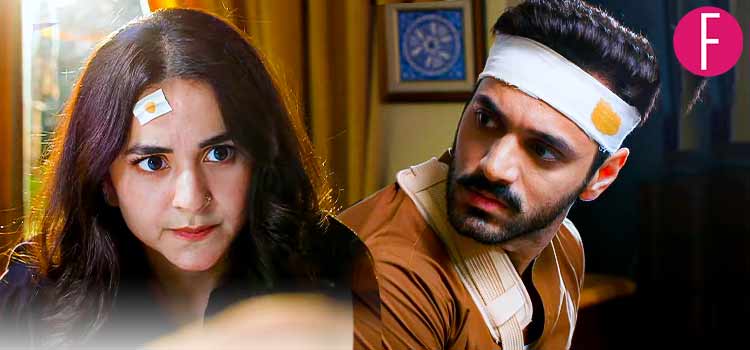
I realize that two decades ago, the television industry was churning actors, directors, and writers, who happened to be artists. Pakistan has never had any educational institute or other training ground to enable creative sensibilities. And despite that, our dramas were forward-thinking, leaving us with a treasure trove to hold dear. Today, when we can boast such literate and cultured actors, can highlight social disorders with more outreach and better technology, why are we producing mediocrity?
They have an extraordinary ability and drive to cascade physical actions and mental processes. Might as well be positive and encouraging.
The Fame Is Troubling
I understand how life-changing one drama can be for an actor, director, writer, and other BTS leads. Many struggles for years, before they get a breakthrough. Many lose hope and exit the industry to do something commercially viable. Of course, the industry is there to make business, and it is all about the numbers.

Fine, well-groomed actors like Yumna Zaidi, and Wahaj Ali are few and far between. They are a rarity to come by – they are good looking, who know their craft well, and who bring a good body of work with themselves. I wonder what made them choose this script. Read commercial viability again. We wish they would do more responsible roles, as they have done in the past. They shoulder the responsibility of shaping the future mindsets of our generation – that is already fighting for gender equity and empowerment, and against patriarchy and social wildfires (love obsession, physical abuse, suicide, self-harm, gun violence, etc.)
Honestly, this kind of fame is troubling – socially, morally, communally. The difference between being famous and great begins with making good choices. I’d like to see them both focusing more on impact. Because the more positive impact you create, the more successful you’ll become. This is the metric that matters.
The State Of The Industry Is Like The State Itself – Clueless And Deteriorating
Cracking the plotline, from the beginning, Meerab is shown as a vocal, articulate, bold girl who knows right from wrong. Yet we see her as a damsel in distress – a done to dusted, intolerable character written poorly. And frankly we need not teach these lessons to the lot of girls who are watching this as ‘entertainment’.

The recent episode showing Meerab making an attempt to jump off the terrace to prove one’s point/loyalty is NOT a lesson we need to teach the girls. Why must we show this to the masses who are already fighting a toxic, patriarchal culture?
With Haya’s character attempting to cut her wrist for not being able to marry whom she wanted is troubling. The WHO estimates show there were 19331 suicidal deaths (females 4560, males 14771) in 2019. It further states that for every suicide, there are at least 10–20 acts of self-harm. Hence, there may be an estimated 140 000–300 000 acts of self-harm in Pakistan annually. Again, irresponsible? Times hundred.
The writer is a woman. The irony.
Final Verdict
Stories can be a powerful tool for persuasion. When we feel emotionally invested in a story, as the whole nation is with Tere Bin, we are more likely to be convinced by its message. This is why stories and narrative-building are used in advertising and marketing campaigns. Having said that, I hope and wish this drama does not leaving a lasting impact on the youth. I hope the flippant youth of today would use this flippancy to dismiss it as ‘drama ko drama ki tarah dekhen’. I hope they don’t overthink like I am. I hope they don’t have to rethink what they liked when they were in their early 20s, ten years down the line (like I question Humsafar’s narratives now). Perhaps, the viewers already know all this, and they are only probably enjoying it. Regardless, it is important to note that the choices we make today will determine our future.
Also, watch Sar-e-Rah! Saba Qamar beats her own best with each performance.


It’s interesting to see how “Tere Bin” has sparked such divided opinions. The emotional depth in the storyline is undeniable, but it seems like the controversies surrounding it overshadow the actual message. I’m curious to see how this will affect its popularity in the long run.
This post perfectly captures the mixed reactions surrounding “Tere Bin.” It’s frustrating to see something with such potential get overshadowed by controversy. I appreciate the insights and think it’s important for audiences to approach it with a critical eye. Looking forward to more discussions like this!
I appreciate the insight on “Tere Bin.” It’s fascinating to see how a show can garner both attention and criticism. The discussions around its themes and portrayal of characters are definitely important. I can’t help but wonder if the controversy will lead to positive changes in future storytelling!