

Elections 2024 – It’s the next day & we are STILL waiting!
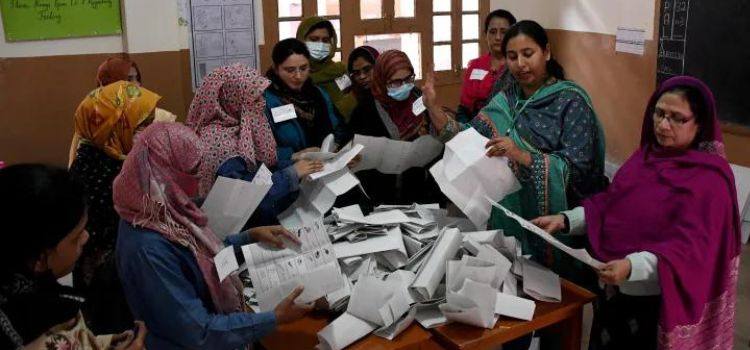
As the nation eagerly awaits the election results, there’s no denying that a lot has been happening across the country. With the outcome still trickling in at a snail’s pace, it’s easy to feel overwhelmed by all the information. So, here’s a quick refresher course on the election process to help make sense of it all!
How The Elections Work
In Pakistan’s parliamentary democracy, citizens above the age of 18 have the right to vote for both the National Assembly and their respective provincial assemblies. The National Assembly comprises 336 seats, with 266 determined through direct voting in constituencies that were recently adjusted based on the 2023 census data. The remaining 70 seats are reserved, with 60 allocated for women and 10 for minorities, distributed proportionally among parties based on their representation in the assembly.
A party or coalition must secure at least 134 seats to form a government. In the latest election, around 128 million eligible voters out of a total population of 241 million were able to cast their ballots. A total of 5,121 candidates are competing for seats in the federal legislature, while 12,695 are vying for positions in the provincial assemblies.
Winning candidates in the National Assembly elections become its members, and independent candidates have the option to align with any party afterward. Following the formation of the National Assembly, a parliamentary vote is held to elect the leader of the house, who then assumes the role of prime minister. To win this vote, a candidate must garner a simple majority of at least 169 members’ support.
Once elected, the prime minister is sworn in and proceeds to select cabinet ministers to form the federal government.
Key Forms In The Election Process
In a move to ensure transparency and accuracy in Pakistan’s electoral processes, Chief Election Commissioner Sikandar Sultan Raja has issued directives emphasizing the proper handling of Form 45, also known as the ‘Result of the Count’. This form holds significant importance in compiling election results by providing detailed information regarding polling stations, constituency names, registered voters, total votes cast, and the distribution of votes among candidates.
Alongside Form 45, other essential documents such as Form 46, Form 47, Form 48, and Form 49 play crucial roles in the electoral process. Form 46 contains vital details about received and removed ballot papers, as well as information on invalid and canceled ballots, ensuring the integrity of the electoral process. Form 47 offers insights into the unconfirmed results of a constituency, including the number of votes cast and canceled.
Form 48 is fundamental in preparing election results as it contains comprehensive data on the number of votes garnered by each candidate in a specific constituency. Lastly, Form 49, known as the Final and Official Result Form, is published in the Gazette of Pakistan. It includes the names of candidates, their affiliated political parties, and the total votes obtained in the respective constituency, serving as the official record of the election outcome.
Want to add something? Let us know in the comments!

