

Ever stopped to ponder about the lesser-known heroes of the sub-continent whose lives were engulfed in the relentless fight for freedom? We often hear about Muslim leaders like Jinnah, but what about the non-Muslim figures who played their roles ever so silently, yet occupy a crucial place in history? Read on as we uncover their stories in this series!
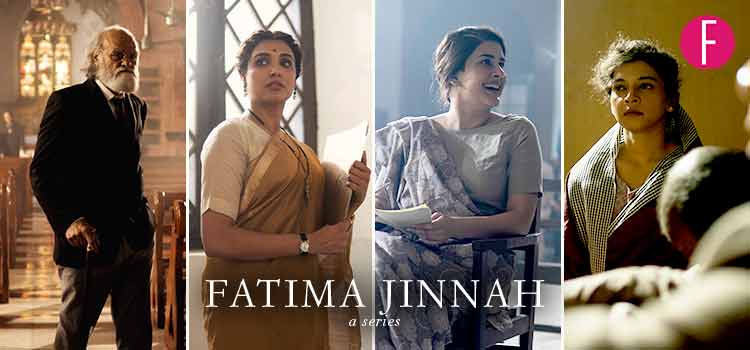
Fatima Jinnah, Muhammad Ali Jinnah’s trusted sister and confidante, observed India’s struggle for independence from a unique perspective. Through her lens, we’ll explore the unsung allies – those non-Muslim individuals who, though not always visible in the public eye with Jinnah, made significant contributions to the cause.
1. Shaheera Jalil as Vijaya Lakshmi Pandit – Hindu

Vijaya Lakshmi Pandit, sister of Jawaharlal Nehru, embarked on a forbidden romance with Hussain, who was 12 years her senior. They married according to Muslim customs but were subsequently admonished by Mahatma Gandhi and had to annul their marriage. She also later became the first female president of the United Nations General Assembly in 1953.
Vijaya Lakshmi Pandit was a remarkable figure in India’s struggle for independence and a trailblazer for women in diplomacy. Born into a prominent political family, with her father being Motilal Pandit and her brother Jawaharlal Nehru, she inherited a legacy of political activism. Inspired by Mahatma Gandhi, she became deeply involved in the nationalist movement from a young age.
During the tumultuous mass movements of the 1930s, Vijaya Lakshmi Pandit fearlessly engaged in acts of political defiance against British imperialism, resulting in her enduring three separate prison sentences. The culmination of her acts of resistance led to her final incarceration, she found herself imprisoned alongside her twenty-year-old daughter in Naini prison, located in Allahabad.
She not only played significant roles in India’s political landscape but also made her mark on the international stage. Pandit’s eloquence as a public speaker and her staunch anti-colonial stance garnered her admiration and influence, from the likes of prominent figures such as Eleanor Roosevelt, Marlon Brando, and Winston Churchill.
Much like Fatima. Vijaya Lakshmi has quite an interesting story with another Muslim elite lawyer in Bombay. Their love affair defied societal norms of the time, particularly considering their different religious backgrounds. Gandhi’s famous quote to Vijaya Lakshmi, “tum aik musalman ko achi nazar say dekh bhi kaisay sakti ho” (How can you look at a Muslim with a good eye?), highlights the challenges they faced due to religious prejudices.
At the young age of 19, Vijaya Lakshmi embarked on a forbidden romance with Hussain, who was 12 years her senior. Despite societal disapproval and familial pressure, they eloped and married according to Muslim customs. However, the union faced strong opposition, particularly from Vijaya Lakshmi’s father, Motilal Pandit, and Mahatma Gandhi himself.
Under immense pressure from her family and Gandhi, the couple reluctantly annulled their marriage. Gandhi, known for his strict adherence to moral and ethical principles, personally intervened and admonished the couple for their decision. Hussain, who was already scheduled to travel to London to advocate for the Khilafat movement, was hastily sent away, while Vijaya Lakshmi was sent to Sabarmati Ashram for six months as a form of spiritual purification.
2. Amna Ilyas as Sarojini Naidu – Hindu/Bengali Origin
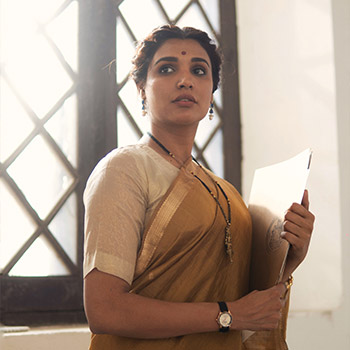
Sarojini Naidu shared a profound friendship with Jinnah, admired him for his physical and intellectual prowess, and also served as a mentor for his sister, Fatima Jinnah. Sarojini stood by Jinnah till the very end.
Sarojini Naidu, often referred to as ‘The Nightingale of India,’ was a renowned poetess and a prominent female leader in the Indian National Congress during the first half of the 20th century. She had a profound friendship with Muhammad Ali Jinnah, whom she admired deeply for both his physical appearance and intellectual prowess. Despite their differing political ideologies, Naidu openly praised Jinnah and wholeheartedly supported him in political and social circles.
She also served as a mentor to his sister, Fatima Jinnah. Fatima looked up to Naidu for guidance and support, recognizing her as a figure of inspiration and wisdom.
She compiled Jinnah’s speeches and writings in the form of a book Mohammad Ali Jinnah: An Ambassador of Unity. In her pen-portrait of Jinnah, published in the book in November 1917, she described him in these words:
“Tall and stately, but thin to the point of emaciation, languid and luxurious of habit, Mohammad Ali Jinnah’s attenuated form is a deceptive sheath of a spirit of exceptional vitality and endurance… an intuition quick and tender as a woman’s, a humour gay and winning as a child’s … the obvious sanity and serenity of his worldly wisdom effectually disguise a shy and splendid idealism which is of the very essence of man.”
3. Manzar Sehbai as Pherozeshah Mehta – Parsi/Zoroastrian
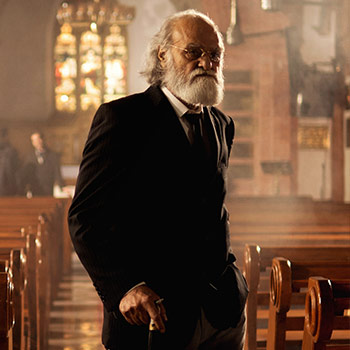
Pherozeshah Mehta, one of the founders of Indian National Congress, was also known as Ferocious Mehta. His role in Jinnah achieving prominent lawyer status in Bombay is pivotal.
Pherozeshah Mehta, also known as Firoz Shah Mehta or Sir Pherozeshah Mehta, was an iconic figure in Indian history, particularly during the British Empire era. He rose to prominence as one of the most influential leaders in Bombay, earning titles such as the “uncrowned king of Bombay” and the “lion of Bombay” due to his immense popularity and influence over the city’s politics and society.
Mehta played a pivotal role in India’s struggle for independence, serving as a prominent figure within the Indian National Congress (INC). He held the position of President of the INC in 1890 and advocated for moderate politics, believing in constitutional methods and gradual reforms to achieve India’s self-governance within the British Empire.
Beyond his political endeavors, Mehta was deeply committed to social reform movements. He championed causes such as women’s rights, education, and social equality, leaving a lasting impact on Indian society. Mehta’s dedication to improving urban infrastructure led to his instrumental role in the formation of the Bombay Municipal Corporation, where he served as President multiple times. Under his leadership, significant advancements were made in sanitation, public health, and urban development in Bombay.
One notable aspect of Mehta’s legacy is his influence on Muhammad Ali Jinnah, who would later become a leading lawyer in Bombay. Mehta’s representation of Jinnah in the famous Caucasus Case of 1907 further solidified their connection.
4. Kubra Khan As Homai Vyarawala – Parsi/Zoroastrian
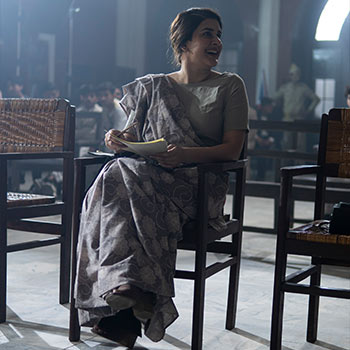
Homai was not the biggest fan of Mohammad Ali Jinnah – Yes, take a moment for that to sink in. She was also critical of his exuberant lifestyle. Homai was, on all counts, fond of photographing Indian nationalist Jawaharlal Nehru and could often be seen, dressed in signature sari-clad outfits, camera in hand, taking candid shots of the personalities that ruled public and political opinion of the times.
Due to her being a lone female figure in the world of journalism at the time, she was able to catch personal and rare moments of popular historical and political figures of the time. Her photography archive boasts a collection that makes up a photographic essay of the era, one that captures memorable moments that stay with us long past the people who were at the crux of the debate at the time.
5. Mamya Jaffer As Ruttie Jinnah – Parsi/Zoroastrian
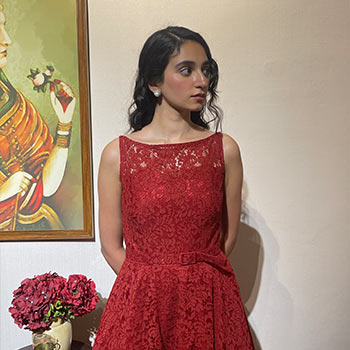
Ruttie was abdicated by her community the moment she married Jinnah, and thus began the infamous love story. Despite the years separating them, Ruttie will resonate the most with today’s Gen Z.
Rattanbai ‘Ruttie’ Petit, born into the affluent Petit family of Bombay, was a captivating figure known for her charm, intellect, and independent spirit. Growing up in an environment teeming with intellectual discourse and social gatherings, Ruttie was exposed to the crème de la crème of Bombay’s high society from a young age.
Despite her privileged upbringing, Ruttie possessed a natural charm and wit that endeared her to those around her. Her passions for literature, fashion, and compassion for animals defined her persona, earning her the nickname “Flower of Bombay.” Ruttie’s elegance and sense of style made her one of the most admired women in Bombay’s elite circles.
However, beneath her glamorous exterior lay a compassionate and humanitarian soul, known for her generosity and outspokenness against animal cruelty. While politically aware, Ruttie preferred to steer clear of political engagements, focusing instead on her personal pursuits and advocacy for causes close to her heart.
Ruttie’s tragic love story with Muhammad Ali Jinnah, which ended in heartbreak, serves as a poignant reminder of the complexities of love and societal expectations. Despite her youthful exuberance and zest for life, Ruttie’s character resonates deeply with the modern generation aka the Gen Z.
6. Sarmad Khoosat As Mahatma Gandhi – Hindu
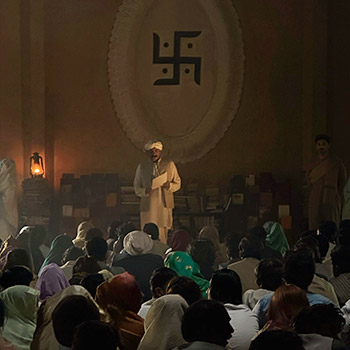
Mahatma Gandhi, also known as Mohandas Karamchand Gandhi, was a preeminent leader of the Indian independence movement against British rule. Upon returning to India in 1915, Gandhi became involved in the Indian independence movement, advocating for nonviolent civil disobedience to achieve self-rule. He led numerous campaigns and protests, including the Salt March in 1930, which protested British salt taxes and galvanized mass support for the independence movement.
Gandhi’s leadership and philosophy inspired millions across the world, earning him the honorific title of “Mahatma,” which means “Great Soul.” He emphasized the importance of truth, nonviolence, and self-sacrifice in the pursuit of justice and social change.
Gandhi, a proponent of nonviolent resistance and Hindu-Muslim unity, initially held a respectful but distant relationship with Jinnah, who was a prominent leader of the All-India Muslim League. Gandhi’s vision for India emphasized unity among all communities, regardless of religious or cultural differences. However, Jinnah’s demands for greater political rights and representation for Muslims within India began to create tensions between the two leaders.
7. Laila Wasti As Lady Dinabai Petit – Parsi/Zoroastrian
Dina Wadia, Ruttie’s mother stands by her daughter despite her decision to marry a Muslim. She also named Jinnah’s daughter Dina. However, eventually she turned against Jinnah for unhappy marriage suffered by her daughter Ruttie, in her last days.
Laila Wasti will portray the character of Lady Dinabai Petit, who, alongside her husband Sir Dinshaw Petit, was a prominent figure in Bombay society during the early 20th century. Their images frequently graced the pages of English journals, particularly in publications like “Men and Women of India,” which specialized in featuring notable figures from the native community.
Lady Petit’s social influence extended beyond mere appearances; she actively participated in various committees and events, representing the Parsi community. Notably, she served on the working committee for the women’s section of the industrial exhibition in Bombay in December 1904. Additionally, she was selected to be part of the reception committee for Indian ladies during the visit of the Prince and Princess of Wales in 1905, where she played a ceremonial role in welcoming the royal guests.
In her attire and demeanor, Lady Petit epitomized a fusion of Eastern and Western cultures. Clad in an English lace blouse, and French chiffon sari, and adorned with pearls and diamonds, she effortlessly blended traditional Parsi dress with modern English tastes. Her adaptability extended beyond fashion; she also demonstrated flexibility in Parsi rituals, as seen during her participation in ceremonial duties during the royal visit.
Lady Petit and her husband were dedicated parents, providing their children with the best opportunities while entrusting their upbringing to foreign professionals, a common practice of the time. Ruttie, like her siblings, was raised by English nannies, nurses, and governesses, receiving a privileged education that included riding lessons and attendance at an English school.
Despite her husband’s reservations, Lady Petit maintained a fondness for Jinnah, her son-in-law, appreciating his old-world manners and courtesy toward women, ‘always so gracious to ladies’, as her daughter-in-law once told Bolitho.
Although Lady Petit had not met her granddaughter until after Ruttie’s separation, the bond between grandmother and granddaughter was profound. The child, still unnamed at the time, spontaneously chose to adopt her grandmother’s name, Dina. Dina fondly recalled her grandmother’s pivotal role in her life, especially after her mother’s death, expressing deep gratitude for Lady Petit’s nurturing presence.
8. Omer Abdullah Khan as Joseph Masih
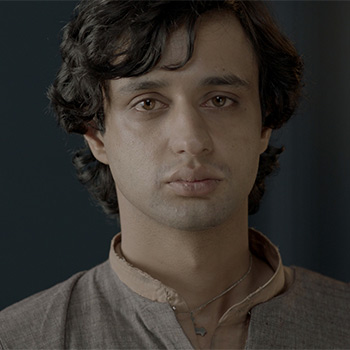
The narrative explores Fatima Jinnah’s unique friendship with Joseph Masih, a Christian-Kashmiri individual, who was her steadfast companion even after she migrated to Pakistan. Director Danial K Afzal’s highly anticipated series promises to shed light on this remarkable connection, unearthing the layers of their relationship.
Within the historical context, Joseph Masih played a pivotal role in the life of Fatima Jinnah during the 1910s. A journalist associated with the Bombay Chronicle, he penned numerous provocative articles advocating Swaraj (self-governance) and the right to self-determination, challenging British colonial rule. His fervent stance led to his arrest and torture under the Rowlatt Act of 1919. However, Fatima Jinnah orchestrated efforts to secure his release, utilizing her influence and connections to ensure his freedom. This lesser-known episode reflects the depth of their relationship and underscores the extent of Fatima Jinnah’s dedication to her associates and causes that echoed her beliefs.
The series, Fatima Jinnah, a creative venture from Aur Digital, is set to air on TV screens in August 2024. Season 1, Volume 1, is where the historical tableau unfurls between 1910 and the Lucknow Pact. This volume will vividly depict the sweeping events and visceral emotions that forge an era’s identity. As Volume 1 draws to a close, we will witness the departure of Fatima Jinnah from the Jinnah House, gracefully making way for Ruttie Jinnah to step into the spotlight—a pivotal moment that lays the foundation for the chapters ahead.
Featuring a stellar cast including Sundas Farhan, Amna Ilyas, Kubra Khan, Aamir Qureshi, Shehrzade Noor Peerzada, Mamya Shahjaffer, Saad Qureshi, Samina Ahmed, Manzar Sehbai, Omer Abdullah Khan, Komal Jamil, Shamim Hilaly, Mohammed Ehteshamuddin,Sarmad Khoosat, Usman Mukhtar and Samar Abbas Jafri, created by Danial K. Afzal, this production is brought to life by Executive Producer Moazzam Majeed. The soundtrack, creatively conceived by Sana Ejaz and Danial K. Afzal, is complemented by Director of Photography Salman Aslam’s vision. With Lead Art Director Reza Shah, Line Producer Rumaan Afsar, and music by Shehreyar Khan.

