

So, like every other curious person on the internet, I jumped on the Nadaaniyan bandwagon, thinking, “How bad could it be?” Two hours later, I had my answer.
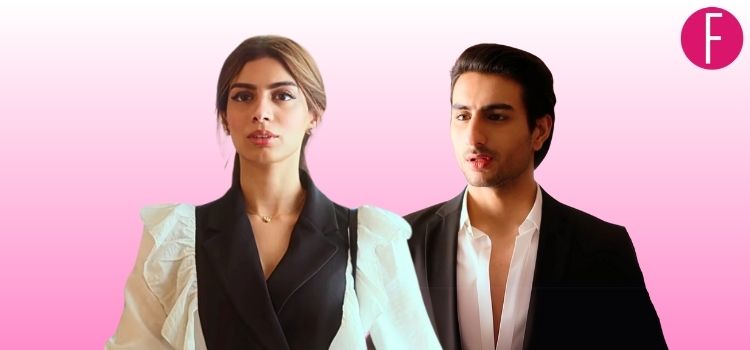
Starring Khushi Kapoor as Pia, a privileged South Delhi girl determined to create the perfect love story, and Ibrahim Ali Khan as Arjun, an overachieving Noida boy with big ambitions, Nadaaniyan tries to pass off a fake-dating-to-real-love setup as fresh and exciting. Spoiler alert: it’s neither.
If I’m being honest, I had some expectations from Ibrahim Ali Khan. And if I’m being completely honest, I had hopes for Khushi Kapoor too. I mean, it’s her third project! Surely, she’s improved? Maybe she’d prove the haters wrong, the way Ananya Panday quietly leveled up her game or how Alia Bhatt went from SOTY to Gangubai Kathiawadi.
The real letdown was the script. Nadaaniyan is what happens when Bollywood refuses to update its software. Fake dating? Done to death. Rich girl falls for middle-class boy? Yawn. A debate competition where a guy wins by flashing his abs? Somebody, please, tell me this is satire.
A fake dating trope? A reheated class divide storyline? Bollywood, is this what you think Gen Z relationships look like? Do you genuinely believe we’re still swooning over rich-girl-meets-middle-class-boy drama in 2025? Come on, let’s talk. Grab a chai, because I’m about to give you a crash course on what modern dating actually looks like for Gen Z—spoiler alert: it’s a whole lot messier, way more interesting, and, shockingly, not just about landing a boyfriend.
Bollywood, we need to talk.
Do you really think this is what keeps us up at night? Do you think we’re lying awake, staring at the ceiling, wondering if our fake relationship with the class topper will accidentally turn into real love? Let me tell you what we’re actually thinking about: rent prices, career anxiety, situationships that have lasted longer than some marriages, and whether the person we just texted is going to reply or leave us on delivered for eternity.
So, dear Bollywood, if you really want to make a love story that speaks to Gen Z, maybe start by understanding what modern relationships actually look like.
1. Love in the Age of “What Are We?”
You know what’s way more common than fake dating? Situationships. Those confusing, emotionally exhausting, commitment-averse messes where two people a re kind of together but also kind of not. No grand confessions, no dramatic gestures—just two people texting at odd hours, sending memes as love letters, and refusing to define whatever this is.
Why don’t we have more movies about that? A story about two people navigating the emotional minefield of almost-love, afraid to admit their feelings because “labels are scary.” A film that actually explores the hesitation, the overthinking, the passive-aggressive Instagram story reactions. Now that’s relatable.
2. Career First, Romance Later (Or Maybe Never?)
Bollywood loves telling us that love conquers all. But Gen Z? We’re not buying it. For a lot of us, career comes first. Relationships don’t exist in a vacuum—they exist in a world where we’re constantly worried about making rent, landing a stable job, and not having our parents side-eye us for choosing an “unstable” profession.
Give us a romance where two people genuinely struggle to balance love and ambition. Where they don’t just drop everything for each other but make tough choices about career moves, long-distance relationships, and personal growth. Where a female lead actually prioritizes her dreams instead of conveniently giving them up in the name of love.
Not every romance needs to end with a couple walking hand in hand into the sunset. Sometimes, it ends with one of them catching a flight to their dream job while the other claps for them from afar. And you know what? That’s okay.
3. Therapy Struggles
If there’s one thing Gen Z is doing differently from previous generations, it’s acknowledging that love alone doesn’t fix everything. We don’t want a love interest who “saves” the other person—we want characters who know they need to work on themselves. We don’t need another hero who treats emotional unavailability like a personality trait. Give us couples who go to therapy, who have difficult conversations, who actually talk about their issues instead of just singing sad songs about them.
4. Texting, Ghosting, and the Horror of the Three-Dot Bubble
If there’s one thing that should be in every modern rom-com, it’s the pure, unhinged chaos of texting culture. The way we overanalyze a “Hey” from someone we like. The anxiety of seeing “typing…” only for the message to never arrive. The absolute agony of being left on seen after pouring your heart out.
Love today doesn’t just play out in coffee shops and moonlit streets—it happens in DMs, WhatsApp voice notes, and late-night TikTok scrolls. Show us a love story where the protagonist falls for someone purely through unhinged 2 a.m. texting. Where ghosting isn’t just a plot device but a real emotional gut punch. Where the climax isn’t an airport chase but a long-awaited, anxiety-ridden “We need to talk.”
5. Class Conflict, But Make It Real
If you’re going to show class differences in relationships, at least do it properly. In Nadaaniyan, we’re somehow supposed to believe that a guy with a doctor dad and a teacher mom in Noida is struggling while living in a huge house. That his ticket to a better life is winning a school debate. Bollywood, please. Have you seen what Gen Z is actually dealing with?
Show us a couple where one person is drowning in student loans while the other has a family business to inherit. Where one is working three side gigs just to survive while the other is breezing through life with generational wealth. That’s the class conflict we actually know. Not “my mansion is smaller than yours.”
Bollywood, It’s Time to Evolve
Gen Z wants to see love stories that look like our lives—messy, awkward, sometimes hilarious, sometimes painful, but always real. We want romance that acknowledges mental health, financial struggles, and the weirdness of modern dating. We want characters who feel like us, not some out-of-touch fantasy versions created by filmmakers who still think we care about fake dating tropes.
So, the next time you decide to make a “Gen Z rom-com,” maybe put down the Kuch Kuch Hota Hai playbook and take a good, hard look at the way we actually love today. Trust me, the real stories? They’re far more interesting than anything Nadaaniyan tried to sell us.

