

Alright, before you start thinking this is one of those articles debating if Nashwa did the right thing marrying Ammar without telling Bisma—hold your horses. No, this isn’t that deep. And honestly? Sorry, I’m a bit late to the Qarz-e-Jaan party, so I’m not about to join the bandwagon, trying to guess Nashwa’s next move. I’m still catching up, okay?
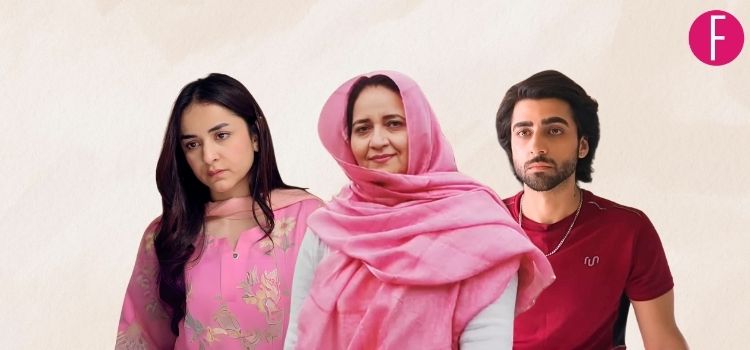
But here’s the thing—there’s this moment in the show that you might have missed, well, because, honestly, with all that’s going on on the Nashwa front, anything else is too much to handle, right? But honestly, it needs to be talked about. I see you though, way ahead in the Qarz e Jaan timeline, and here’s me, still stuck in time, pondering over a dialogue that the Gen Z sitting inside me just couldn’t let slide. But here’s why you need to click rewind.
Did I catch your curiosity? Good, carry on reading then! (And don’t miss writer Rabia Razzaque’s take on the dialogue we’re about to unpack here).
You see, Pakistan might be sitting at 145 out of 146 countries on the Global Gender Gap Report 2024 (yep, that’s a fun fact you didn’t ask for), and if you need a visual representation of that delightful ranking, just flip on the TV. It’s everywhere, but here’s the thing—this one moment in Qarz-e-Jaan actually hit me harder than any plot twist. And it’s not about who married who or who’s hiding a secret. It’s about a dialogue that perfectly sums up why Pakistan is in the mess it’s in when it comes to gender equality.
“Usmein kisi cheez ki kami nahi hai, ziyadti hai usmein. Dekha hai uska dimagh kaisay chalta hai?”
That’s Ammar talking about Nashwa in Qarz-e-Jaan. She’s a lawyer. She’s smart. And, apparently, that’s a problem.
It’s not that she lacks anything—no, no, that would be easier to digest. The issue, as Ammar puts it, is that she has too much – too much intelligence, too much ambition, too much dimagh. It’s a statement that captures the struggle of the average South Asian woman in one neat, subtly condescending, sentence. Because, let’s be honest, society doesn’t mind capable women. It minds women who are aware of their capabilities.
And that, right there, is the tragedy of being a woman in South Asia.
From the moment a girl is born, she’s handed an invisible checklist. Be smart, but not so smart that you intimidate. Be accomplished, but not so accomplished that you overshadow. Be independent, but not so independent that you don’t need a man. Be everything, but not too much of anything.
Because once you tip the scale, once you cross that unspoken limit, you’re no longer admirable—you’re excessive. You’re Nashwa. The woman people talk about in hushed tones at family gatherings. The one aunties call “zid ki pakki” because she has opinions and isn’t afraid to voice them. The one men hesitate to marry because “dimagh bohat tez hai.”
It’s a lifelong tightrope walk.
The ziyada woman—the one who refuses to shrink—has always been a problem. If she is vocal, she’s badtameez. If she is ambitious, she’s selfish. If she knows her worth, she’s arrogant.
Think about it: No one ever tells a man he is “too much.” No one tells a man to tone down his intelligence, his drive, or his ability to lead. In fact, we celebrate these traits in men. But the moment a woman exhibits the same qualities, they become undesirable. They become flawed.
It’s almost poetic how South Asian society idolizes the idea of a woman who is “perfect,” yet punishes her the second she actually meets those standards. If she’s lacking, she must improve. But if she’s extraordinary? Then she must tone it down.
This one dialogue from Qarz-e-Jaan had me pausing mid-watch, not because I hadn’t heard it before, but because I’d heard it too many times. From uncles at family gatherings, from rishta aunties whispering it over chai, from colleagues who say it with a smile but mean it as a warning.
And let’s be real—it’s not just men saying this. Women, too, are often the gatekeepers of this mentality. Mothers advising their sons to go for achhi larkiyan (read: soft-spoken, pliable, unthreatening), sisters warning their brothers that a wife with zyada dimagh means zyada maslay. Women shaking their heads at girls who are too independent, too ambitious, too aware of their worth.
Dear Men, Why Is a Smart Woman a Red Flag?
You say you want a partner, not a burden. You say you admire intelligence, confidence, and ambition. But when a woman actually possesses these traits, suddenly, she’s too much?
Why does her independence threaten you instead of impressing you?
Is it because you were raised to believe that a man should always be ahead of a woman? That you should be the one guiding, teaching, leading? And if a woman already knows where she’s going, what does that make you?
This isn’t just about Nashwa in Qarz-e-Jaan. It’s about every woman who has been told she needs to be less so a man can feel like more.
We reached out to writer Rabia Razzaque of Qarz e Jaan to get more insights into the dialogue. After all, how could we not?
If anyone considers a woman’s courage or strength as ziyadti (excessive), then the man standing before her first needs to take a long hard look at himself, and examine himself first (before the woman he’s sharing his life with.) It may be that the kami (deficiency) is on the other side. And the two people are not able to strike a balance between each other. And that the partner of such a woman should in fact celebrate and support her approach, her ambitions and her goals. Just like they say that every successful man has a woman behind him to support him, I believe that every successful woman has the support of her husband, her family and her family’s strength. This strength is the same as the confidence that she gets from her father, brother, husband or son. – Writer Rabia Razzaque, Qarz e Jaan
Dear Women, Why Are We Policing Each Other?
And to the women reinforcing these ideas—why do we do this to each other?
Why do we lower our voices and shrink ourselves, then tell younger girls to do the same? Why do we celebrate a girl’s intelligence when she’s a child but start warning her against it when she’s of marriageable age? Why do we tell women to be independent but then whisper, “Bus, zyada over mat hona.”
The truth is, we’ve been conditioned to believe that a woman’s worth is tied to how well she fits into a man’s life. And if she doesn’t fit neatly, if she dares to live on her own terms, society sees her as flawed.
But here’s the thing—what if the problem isn’t her?
Credit where it’s due—kudos to writer Rabia Razzak for writing a dialogue that hits uncomfortably close to home. It’s the kind of sentence women hear in different forms all their lives, but for once, someone said it out loud—unfiltered, unapologetic, and brutally honest. And that’s exactly why it’s a conversation starter. Because this issue has existed for far too long, whispered in corners, disguised as concern for a woman’s future. But now, it’s out there for everyone to hear, and maybe—just maybe—it’s time we finally start questioning why we’re still having this conversation in 2025.
Qarz e Jaan: An Emotionally Packed Journey, A Confession, But Zero Reveals
Watch the latest FUCHSIA Drama Gup on Qarz e Jaan and more

