

Inspiration, Plagiarism or Mere Coincidence? Unpacking The Laapataa Ladies vs
Burqa City Debate
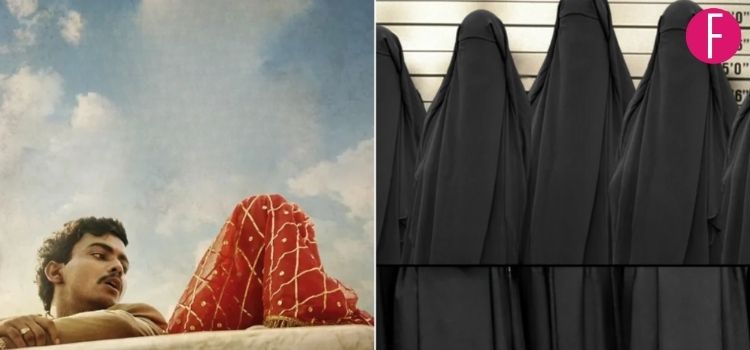
The recent controversy surrounding Netflix release Laapataa Ladies has sparked a fascinating, if slightly exhausting, debate—one that forces us to ask: where exactly does inspiration end and plagiarism begin? For those just tuning in, Kiran Rao’s quietly brilliant film about swapped brides at a rural Indian railway station is being accused of not being so original after all. First, veteran filmmaker Ananth Mahadevan came forward to point out the eerie similarities between Laapataa Ladies and his 1999 telefilm Ghunghat Ke Pat Khol, which, surprise surprise, also featured brides getting mixed up after a wedding and ending up in the wrong household. And just when the pot was beginning to simmer, the internet unearthed Burqa City, a 2019 French-Arabic film with—you guessed it—another bride-swapping situation involving burqas and mistaken identities. Suddenly, Laapataa Ladies, which had been celebrated for its simplicity and heart, was now the target of social media sleuthing and cinematic side-eyes.
But here’s where things get interesting—and, dare I say, messy. Kiran Rao didn’t just retreat into silence or hide behind PR fluff. She came armed with proof. Documents, dates, drafts. She revealed that Laapataa Ladies was adapted from a short story called Two Brides, written by Biplab Goswami, which had already been turned into a short film in 2018. That’s a full year before Burqa City even released. So the idea that her film is a rip-off? Well, the math just doesn’t math.
Furthermore, Biplab Goswami, the screenwriter behind Laapataa Ladies, has firmly stated that the film’s story, characters, and dialogues are entirely his original creation. According to him, the idea was conceived years before Burqa City even existed. In fact, Goswami shared that the concept—originally titled Two Brides—was officially registered on July 3, 2014. He also provided supporting documents to back his claim. The screenplay, he said, evolved over several years and was deeply rooted in firsthand research on gender roles and social structures in rural India, making it not just a fictional tale but a reflection of real societal dynamics.
Still, the conversation isn’t so easily put to rest. Because, yes, even with the receipts, the resemblance is uncanny. And that leads us to the real question simmering under all this noise: can two people arrive at the same story independently? And if they can, how do we know when it’s “coincidence” versus “copy”? The truth is, storytelling isn’t a vacuum. Stories seep into each other. Ideas float around in the ether. Mistaken identity, swapped lives, marital confusion—these aren’t exactly new. In fact, they’ve been around for centuries. Rabindranath Tagore’s Noukadubi, written in 1906, revolves around a newlywed man whose bride turns out to be someone else due to a boat accident. It’s practically the great-grandparent of Laapataa Ladies. So does that mean Tagore should’ve copyrighted the bride-swap trope?
This is where things get murky. The issue isn’t necessarily the what, but the how. Themes can overlap—hell, they often do—but execution is everything. And Laapataa Ladies doesn’t just recycle a concept; it reshapes it. The film is steeped in small-town Indian quirks, rooted in rural sociology, and, most importantly, layered with feminist undertones. It’s a story about how invisible women can reclaim their voice, even in the most absurd of circumstances. So even if the seed resembles someone else’s plant, the fruit it bears is different. That’s not theft—that’s evolution.
But that said, would a little acknowledgment have hurt? Probably not. Mahadevan’s frustration is understandable. If you’ve made something that quietly disappeared into the archives, and someone else—years later—puts out something eerily similar and it goes viral, it stings. It’s not always about legalities. Sometimes, it’s just about recognition. And in that sense, even if Rao didn’t “owe” anyone anything, a respectful nod could’ve gone a long way in softening this whole situation. Not because she did something wrong, but because creators live in ecosystems, not bubbles. We all influence each other, even when we don’t mean to.
The bigger problem here, though, is how we as audiences and industry folks are so quick to jump to binaries. Plagiarism or originality. Genius or fraud. But the reality of artistic creation is far more complex and layered. Maybe two writers did stumble upon the same core idea. Maybe they didn’t. Maybe there was some unconscious influence. Maybe not. But we have to allow space for coincidence, parallel thinking, and yes, shared inspiration. Because if we start gatekeeping every common narrative twist, we’ll be left with a barren creative landscape where no one dares write anything unless it’s so wildly unique that no one understands it.
That said, we also need to allow space for genuine coincidence. Ideas travel in strange ways. Two people, sitting thousands of miles apart, can arrive at the same concept independently. We’ve seen it in science, in literature, in film. This is why cries of “plagiarism” must be handled with both seriousness and skepticism. We need to investigate—not jump to conclusions. And more importantly, we need to move the conversation beyond cancel culture and into policy and process.
We need structural change in the way credit and originality are discussed in creative industries. First, let’s establish an independent, non-legal but ethical review board for creative disputes—one that allows creators to confidentially submit timelines, pitch decks, and drafts to help establish a record of origin. Second, we must normalize credit-sharing in public conversations. If your film builds on a commonly used trope or idea that’s been done before, a simple acknowledgment in the credits or interviews can go a long way.
So what’s the solution? Honestly, there isn’t a perfect one. But what we need is more transparency, more open credit-sharing, and less outrage-fueled discourse. If you were inspired, say so. If you’re accused, show your process. Let there be dialogue, not just defense. And maybe we as an audience need to stop assuming that two similar stories mean someone’s been wronged. Maybe it just means good ideas tend to occur more than once. Because if we really believe in the power of storytelling, then surely we must also believe that stories—like people—are allowed to have cousins.

