

A coordinated militant assault on Cadet College Wana in South Waziristan on 10–11 November was successfully repelled by Pakistani security forces after an overnight clearance operation.
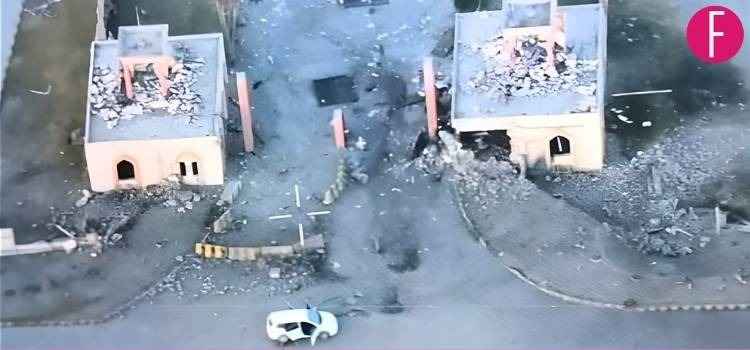
On the evening of 10 November 2025, a group of militants launched a brazen assault on Cadet College Wana, a military-run residential institution in Wana, South Waziristan District, Khyber Pakhtunkhwa. According to statements issued by the Inter‑Services Public Relations (ISPR), the attackers first attempted to breach the outer perimeter and when that failed, rammed an explosives-laden vehicle into the college’s main gate, causing it to collapse and damaging adjacent infrastructure.
Immediately following the blast, the militants entered the campus and made their way toward the administrative block. Security forces on site – comprised of Pakistan Army and paramilitary elements – responded swiftly. They engaged the attackers in a firefight, evacuated cadets and staff, and launched a clearance operation to secure the entire facility. According to the ISPR, the assailants were described as “khawarij” – a term used by Pakistani military authorities to refer to militant extremists – and were alleged to be affiliated with the banned Tehrik‑e‑Taliban Pakistan (TTP) and directed from Afghan territory.
By the morning of 12 November the authorities reported that all of the attackers inside the college had been killed and the complex had been cleared of explosive devices and booby traps. No cadets or teaching staff were reported injured. The number of students and staff evacuated from the site was estimated in various reports at around 550-650 people.
Damage, Evacuation And Human Impact
The initial explosion caused significant structural damage: the college’s main gate collapsed under the impact of the vehicle-borne bomb, and nearby buildings sustained damage or partial collapse owing to the blast’s force. Local hospital officials reported that several civilians – including men, women and children living in nearby houses – were injured when debris and collapse of adjacent structures struck them.
Inside the college, cadets and staff were swiftly evacuated. Armoured vehicles, ladders and windows were used to extract students from dormitories while the gunfight and clearance operation were still ongoing. Students interviewed after the incident expressed shock and relief, and thanked the security forces for their swift action.
Officials emphasised that the successful evacuation – without loss of student lives – represented a major operational success. Nonetheless, the community in Wana and surrounding areas were reminded of the fragility of security in the region, and of the ever-present threat militants pose to educational institutions.
Attribution, Motive And Wider Security Implications
In its public statements, the ISPR asserted that the attack was orchestrated by militants affiliated with the TTP (referred to in official messaging as “Fitna al-Khawarij”) and directed from Afghanistan. The ISPR claimed that the attackers maintained contact with handlers across the border. One of the primary motivations, according to the military, was to strike at a military-run educational institution – recalling the tragic 2014 Army Public School Peshawar massacre in which over 140 children were killed.
No militant group immediately and publicly claimed responsibility for the Wana attack. Nevertheless, Pakistani authorities emphasised that the incident followed a recent breakdown in peace talks with the Afghan Taliban-led government, and pointed to cross-border safe havens as facilitating factors in the resurgence of militant violence.
The incident has wider security implications: it highlights militants’ evolving tactics – using vehicle-borne explosives to breach high-security compounds, targeting schools and cadet institutions, and coordinating via cross-border networks. The swift military response has been lauded domestically, but the underlying vulnerabilities in the region remain unresolved.
The Government of Pakistan, led by Shehbaz Sharif, issued strong condemnation of the attack and praised the professionalism of the security forces involved in repelling the assault. The Prime Minister stated that the “cowardly enemy” had once again targeted children and youth in an educational environment and had failed in their objective. The Interior Minister, Mohsin Naqvi, credited the swift reaction of the forces for averting a major tragedy and reiterated the government’s resolve to eliminate extremist elements operating in the country.
The ISPR, in its communiqués, specifically named the attackers as “Indian proxy” elements and claimed they were operating from Afghan territory, underscoring the government’s assertion of external involvement in the incident. A detailed landmine- and booby-trap clearance operation was announced to ensure the campus was safe for the return of education and normal operations.
Additionally, official statements emphasised that the ongoing investigations will share “concrete evidence” with international partners, and that Pakistan reserved the right to act if safe havens across the border were not dismantled.
What Comes Next And Unanswered Questions
While the attack has been neutralised and the students and staff at the college have been evacuated safely, significant questions remain. One such question is the full identity of the perpetrators: although Pakistani authorities allege Afghan-based coordination and TTP affiliation, no group has publicly claimed credit, and independent verification remains limited. The exact number of attackers, their origin, and how they penetrated the campus perimeter are subject to further investigation.
From a security standpoint, the operation raises questions about the vulnerabilities of educational institutions – especially residential cadet colleges in sensitive border regions – and how alertness and preventive measures will be improved going forward. The landmine and booby-trap clearance signals recognition of a deeper threat environment than a simple infiltration.
The Wana attack was a serious attempt to target an educational institution and leverage fear and disruption. That the assault was stopped, and lives were saved, is being hailed as a success—but it also serves as a stark reminder of the evolving threat landscape in Pakistan’s border provinces and the need for sustained security vigilance and cross-border cooperation.
Sources: DAWN News, TRT World, and Express Tribune.

