

While Case No. 9 initially showed audiences how social media can push justice forward, this week it revealed a much darker, and far more realistic, side of media as well. One that does not always stand with truth, but with whoever tells the better story. One that does not always amplify the victim’s voice, but sometimes hands the microphone to the accused and teaches him how to use it.
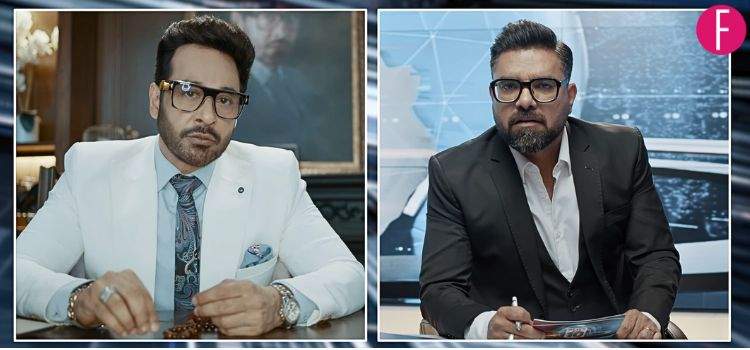
The drama is no longer just about Sehar and Kamran. It has quietly shifted into a conversation about us as a society. About how quickly our opinions change. About how fragile our support really is. And about how easily we are influenced by appearances, emotions, and carefully curated narratives.
When Sehar first spoke up, when she uploaded her video and appealed to the public for justice, the audience stood firmly by her side. There was outrage, anger, and genuine sympathy. A woman had finally gathered the courage to speak her truth, and people seemed ready to listen. For a brief moment, it felt as if the system, and society at large, might finally stand with a survivor instead of questioning her.
But that support did not last long.
The moment Kamran was handed a camera, a platform, and a sympathetic host, everything changed. His interview with Adeel Malik was not a search for truth. It was a performance. Adeel Malik (played by Yasir Hussain) did not question him, challenge him, or hold him accountable. Instead, he coached him. He guided him on how to sit, how to speak softly, how to appear religious, how to cry at the right moments, and how to emotionally manipulate the audience.
Kamran followed the script perfectly, tweaking his appearance to psychologically impact the masses – tasbeeh in his hand, measured words, controlled tears and an appeal to both men and women, beseeching his viewers to know and consider that all women are not like Seher. He presented himself as a wronged man, someone falsely accused, someone willing to forgive Sehar, Rohit, and Manisha for allegedly conspiring against him to take over his business. As if forgiveness was his to hand over. As if he was the wronged. He spoke of justice, patience, and faith, and just like that, the narrative began to shift.
And he did all this with zero evidence to back up his claims. Just pure emotion. And it worked.
What followed was disturbing, but painfully believable. People who had supported Seher began to doubt her. People who demanded justice for a victim began feeling sympathy for an accused rapist. Not because new evidence surfaced. Not because facts changed. But because Kamran looked convincing.
This is where Case No. 9 turns into sharp social commentary. It exposes how deeply we trust appearances, especially religious ones. Somewhere along the way, we learned to equate faith with honesty. Prayer beads becomes a character certificate. Religious language becomes proof of innocence. Tears become truth. Evidence no longer feels necessary when emotions are loud enough. A well delivered story, sprinkled with humility and remorse, is often enough to sway public opinion. We see this clearly when even Kiran’s mother ends up with tears in her eyes, moved not by facts, but by Kamran’s version of events. It becomes painfully clear how easily empathy can be redirected when emotion replaces accountability.
But what does this say about us?
It says that we often choose comfort over truth. It is easier to believe a calm, well spoken man than to sit with the discomfort of a woman’s pain. It is easier to trust what looks familiar and respectable than to question power. Kamran did not need facts. He only needed the right image.
Manisha’s dialogue, “jo dikhta hai, wohi bikta hai,” captures this reality perfectly. What is visible is what sells. Not what is true. Not what is just. In a media driven world, perception becomes reality. Whoever controls the narrative controls public opinion.
When Manisha urges Seher to give an interview, it is not because Sehar owes anyone an explanation. It is because silence does not survive in today’s media culture. If you do not tell your story, someone else will tell it for you, and they will tell it in a way that benefits them.
The narrative reflected the reality of the times we live in. That judicial cases will be fought not just in court, but on social media too.
Case No. 9 reminds us that media is not neutral. It has the power to heal, but it also has the power to harm. It can amplify voices, or it can silence them. It can expose the truth, or bury it under well rehearsed lies. And as viewers, we are not innocent either. Every time we choose to share a post without a fact check, choose emotion over evidence, appearance over accountability, we become part of the problem.

