

A devastating high-speed train crash occurred in southern Spain on Sunday evening, 18 January 2026, near the town of Adamuz in Córdoba province.
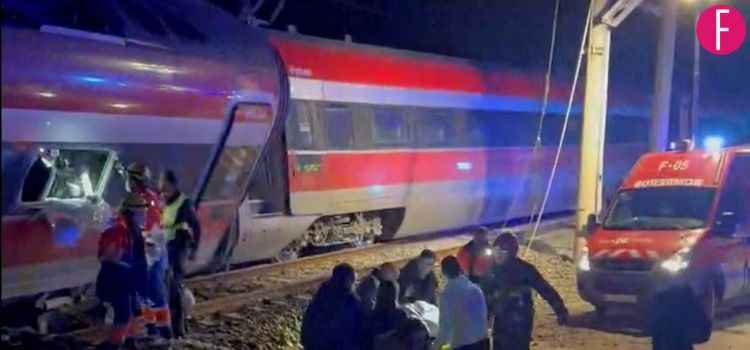
The accident involved two high-speed passenger trains and has resulted in a significant number of deaths and injuries as emergency teams continue rescue operations.
What Happened
At around 7:39 p.m. local time, a high-speed train operated by the private company Iryo, travelling from Málaga to Madrid, derailed on a section of track near Adamuz. After derailing, the train crossed onto the adjacent track and collided head-on with another high-speed train operated by state rail company Renfe, which was travelling from Madrid to Huelva. The impact caused both trains to derail.
Casualties and Injuries
Spanish authorities have confirmed that the crash has caused at least 39 deaths, with the toll expected to rise as recovery efforts continue. Additionally, around 245 people have been injured, many of whom are being treated in hospitals, with dozens reported in serious or critical condition. Among the deceased is the driver of the Renfe train.
Passengers and Damage
There were hundreds of passengers on board the two trains at the time of the accident – roughly 300 on the Iryo service and around 184 on the Renfe service, for a combined total of about 484 people. The force of the collision caused severe damage to several carriages, with some cars overturned or pushed down embankments, complicating rescue operations.
Emergency services, including firefighters, the Civil Guard, medical teams, and local volunteers, responded rapidly to the scene. Heavy machinery has been used to access wrecked carriages and extract survivors and victims. Hospitals in the region have set up reception centres to treat the injured, while mobile intensive care units and ambulances were deployed to the crash site.
Some passengers described chaotic scenes during and after the derailment. One witness recounted that the train felt like it was experiencing an “earthquake” before the crash, and passengers had to evacuate through smashed windows in the immediate aftermath.
Cause and Investigation
Spanish Transport Minister Óscar Puente said the cause of the derailment is still under investigation. He noted that the train derailed on a straight section of track that was recently upgraded, making the accident unusual and unexpected. Officials have not yet released definitive information on what triggered the derailment or collision.
Spain’s Prime Minister Pedro Sánchez described the disaster as a moment of deep national pain, offering condolences to victims’ families. Rail services between Madrid and Andalusia have been suspended indefinitely while authorities focus on rescue operations and investigations.
In the wake of the crash, the Spanish rail infrastructure operator ADIF announced the suspension of high-speed rail services along key routes connecting Madrid with cities in the Andalusian region, including Córdoba, Seville, Málaga and Huelva. Travelers have experienced widespread disruptions as the network undergoes safety reviews and recovery work.
This is a developing story.
Sources: The Guardian, DAWN News, and TRT World.

