

Spain has been shaken by two serious train accidents within days, raising alarm across the country about rail safety on both high-speed and regional lines.
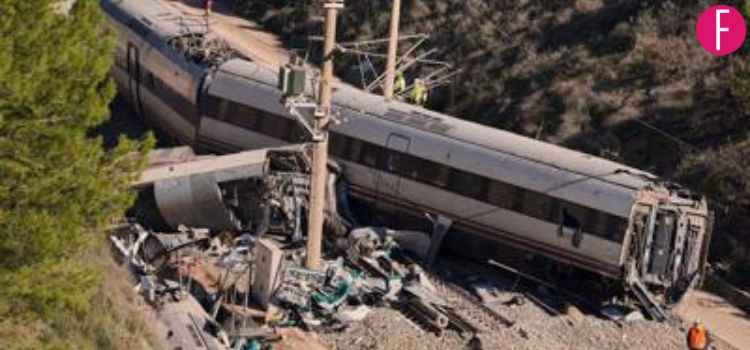
The first and far more devastating crash occurred late on Sunday, January 18, 2026, near the town of Adamuz in Córdoba province, in southern Spain. In what has rapidly become one of the country’s worst rail disasters in more than a decade, two high-speed trains collided after one derailed and crossed into the path of another. One of the trains was operated by the private company Iryo and the other by state rail operator Renfe. The collision happened on a straight, recently renovated stretch of track – a factor that has baffled investigators and prompted urgent safety reviews.
Initial casualty figures released by authorities have steadily risen as rescue workers continue recovery operations. The death toll has topped 40 people, with official statements indicating at least 41 dead and dozens more injured – some critically. Hundreds of passengers were aboard both trains at the time of the crash, and emergency teams, including military units and field hospitals, were deployed amid extremely challenging access conditions to reach survivors and recover victims from mangled carriages.
The impact of the first crash was horrendous: some carriages plunged down embankments, twisting metal and complicating rescue efforts. Among the most poignant stories to emerge is that of a young child who survived the wreck with minor injuries while her entire family was killed – a stark and tragic human face to the disaster.
The second accident occurred on the night of Tuesday, 20 January 2026, on a commuter rail line in Catalonia, near Gelida and Sant Sadurní d’Anoia, about 35–40 km west of Barcelona. A regional Rodalies commuter train travelling on the R4 line derailed after it collided with a large retaining wall that had collapsed onto the tracks, likely due to heavy rainfall and storm conditions affecting the region. The wall – part of a structure alongside the railway – suddenly fell onto the rails as the train was passing, causing catastrophic impact to the front carriages and forcing the train off the tracks.
The train driver (the maquinista) was tragically killed in the collision when the wall struck and severely damaged the cab. Authorities confirmed at least 37 passengers were injured in the crash, with five reported seriously hurt, several moderately injured, and others suffering minor wounds. Most of those injured were inside the first carriage, which bore the brunt of the impact. Passengers were swiftly evacuated by emergency services, and 20 ambulances along with numerous firefighters worked to transport the wounded to nearby hospitals.
Emergency responders confirmed that all passengers had been removed from the wreckage, although rescue workers did have to extricate at least one person who became trapped inside the carriage. Firefighters and medical teams mobilised dozens of units to the scene amid challenging storm-affected conditions.
The collapse of the retaining wall is believed by Spain’s rail infrastructure operator ADIF and Catalan authorities to be connected to recent heavy rains and severe weather, which had already caused alerts across the region and had forced inspections and service adjustments on multiple lines. As a result of the incident and related safety concerns, rail services on the R4 suburban network were suspended while track and infrastructure checks are carried out.
In addition to the Gelida crash, Spanish officials reported another, separate derailment on the same night on the R1 line between Maçanet-Massanes and Blanes. In that incident, a train’s wheel axle came off the track after hitting a rock that had fallen onto the rails, again likely due to storm conditions – but fortunately no injuries were reported. ADIF responded by temporarily halting operations across the Rodalies network to inspect tracks for weather-related damage.
Spanish Prime Minister Pedro Sánchez publicly expressed his condolences to the victims and their families and vowed continued support for emergency responders and the injured. Regional officials have emphasised that detailed investigations into both accidents are ongoing, with a particular emphasis on the effects of severe weather on railway infrastructure and safety measures for commuter services.
This is a developing story.
Sources: BBC, GEO News, and CNN.


Comments 1