

Ali Larijani, one of the most powerful figures within Iran’s political and security setup, was assassinated in Israeli airstrikes in yesterday. His death comes at a time when the country is already dealing with war, leadership loss, and internal pressure.
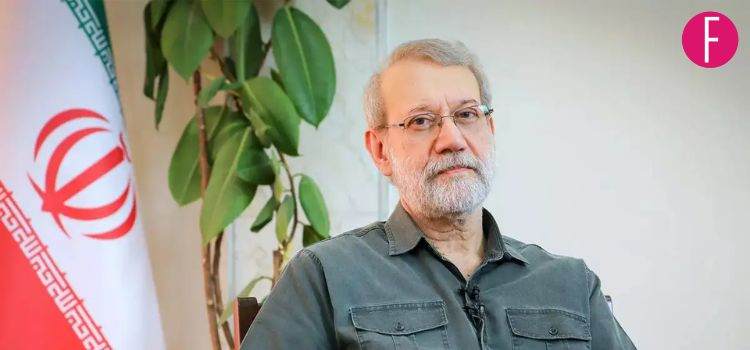
In the past few months, Larijani had become more than just a senior official. After the death of Supreme Leader Ayatollah Ali Khamenei, he stepped into a position of real influence, even if not formally declared. He wasn’t leading from the front in the traditional sense, but behind the scenes, many of the country’s key decisions — especially around security and strategy — had his imprint.
His background explains a lot of that influence. Born into a religious and politically strong family, Larijani grew up close to the system he would later help run. But he wasn’t limited to that privilege. Academically, he had a diverse path — starting in science and moving into philosophy — which gave him a different kind of edge. It showed in the way he handled both policy and negotiation, often blending ideology with calculated thinking.
Larijani’s early career in the Revolutionary Guard helped him build credibility within Iran’s military circles. Over time, he moved into government roles that expanded his reach — from cultural leadership to media control, and eventually into the core of national security. By the time he became a central figure in security decision-making, he already had strong ties across different parts of the state.
One of his most defining roles was in shaping Iran’s approach to the outside world, especially during nuclear negotiations. He wasn’t seen as extreme or overly rigid — instead, he had a reputation for understanding when to push back and when to engage. That balance made him valuable, particularly in moments when Iran needed both resistance and strategy.
His time as Speaker of Parliament further strengthened his position. It wasn’t just about holding office — it was about influence. He became someone who could navigate internal divisions, manage relationships, and stay relevant even when political dynamics shifted. Not many figures manage to hold onto that level of relevance for so long.
In recent years, especially during the ongoing conflict and protests within Iran, Larijani’s role became sharper and more visible. He was closely linked to decisions around internal security, particularly the state’s response to unrest. At the same time, he remained active in shaping Iran’s stance in the war, often taking a firm and unapologetic line.
One of the more unexpected sides of Ali Larijani was how seriously he took his academic grounding — and how much it showed in his politics. His engagement with Immanuel Kant played a clear role in how he viewed power, responsibility, and decision-making. In The Mathematical Method in Kant’s Philosophy (Ravesh-e Riazi), he explored the idea that knowledge isn’t just based on experience, but built into how the human mind understands the world. That same sense of structure and logic could be seen in his political style — measured, deliberate, and rarely impulsive, even when his stance was firm.
This intellectual layer carried into his wider body of work as well. Larijani wrote multiple studies on Kant, focusing on concepts like synthetic a priori knowledge and intuition — complex ideas, but ones that translate into anticipating outcomes and thinking ahead. At the same time, his writings also engaged with culture, religion, and governance, often trying to bridge Western philosophical thought with Iran’s ideological framework.
Ali Larijani’s assassination leaves a significant vacuum in Iran’s political and security landscape. His sudden loss in the Israeli strikes is a shock for allies and rivals alike, raising questions about who can now navigate the delicate mix of ideology, diplomacy, and strategy that Larijani once managed with such skill. In a nation already under immense pressure, his absence adds a new layer of uncertainty to Iran’s future.
Sources: Al-Jazeera, Dawn, NY Times, Tribune

