

There are some voices you grow up with without even realising it — they’re just there, woven into films, family playlists, car rides, weddings, heartbreaks. And then one day, the news arrives, and it feels strangely personal.
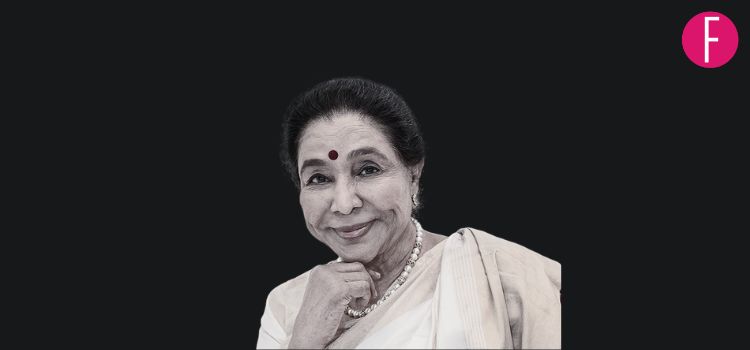
At 92, Asha Bhosle has passed away in Mumbai after being hospitalised with extreme exhaustion and a chest infection. In her final days, she was admitted to hospital as her health declined — a quiet, almost understated end for a woman whose voice had anything but a quiet presence.
And yet, even now, it doesn’t feel like an ending.
More Than a Career — A Constant Reinvention
Asha Bhosle wasn’t just a singer with longevity — she was a master of reinvention.Across more than seven decades, she recorded over 12,000 songs in multiple languages, but numbers don’t quite capture what she did. Because she didn’t just sing — she adapted. Effortlessly. Repeatedly.
From the early days of black-and-white cinema to the disco wave, from ghazals to pop crossovers, she moved through eras like she belonged in all of them. While many artists get defined by a sound, she refused to stay in one.
Take something like “Dum Maaro Dum” — rebellious, hypnotic, almost counterculture for its time. Then place it next to “Dil Cheez Kya Hai”, soft, classical, soaked in tehzeeb and restraint. And then somewhere in between, you have “Piya Tu Ab To Aaja”, playful, dramatic, layered with an energy that still feels unmatched. Three completely different moods. One voice. That was her range.
Living in the Shadow — And Then Creating Her Own Light
It’s impossible to talk about Asha Bhosle without mentioning Lata Mangeshkar. For years, comparisons followed her.Where Lata was seen as the voice of purity and classical perfection, Asha became the risk-taker. The one willing to experiment, to flirt with genres that others hesitated to touch.
But that identity wasn’t handed to her easily. Her early years were marked by struggle — professional and personal. After her father’s passing, she began working young. A difficult marriage, financial pressures, and years of being overlooked meant she took on whatever work came her way, often singing for smaller productions while waiting for something bigger. And when that “something” finally came in the late 1950s, she didn’t just step into it — she expanded it.
The Breakthrough That Changed Everything
Her breakthrough wasn’t a single moment, but a gradual shift — a growing recognition that this voice could do things others couldn’t. Collaborations with composers like O. P. Nayyar and later R. D. Burman changed the game, not just for her but for Bollywood music itself. With R.D. Burman especially, her voice found new textures — playful, bold, experimental. Their partnership blurred the lines between classical and contemporary, between Indian and Western influences. It wasn’t just music; it was evolution.
And through it all, she remained unmistakably herself.
A Voice Without Borders
Long before “global collaborations” became industry buzzwords, Asha Bhosle was already there.She worked with international artists, performed across continents, and even in her later years, continued to explore new sounds. Whether it was collaborations with global musicians or lending her voice to newer projects, she never stopped being curious.
Even recently, she featured on a project with Gorillaz — a reminder that her voice didn’t belong to just one generation, or even one geography.
Music, for her, had no borders.
Tributes have poured in since – from political leaders to industry names such as SRK- all echoing the same sentiment: that this isn’t just a loss for India, but for music as a whole. And that feels accurate. Because her songs weren’t limited to one country. They travelled. They stayed.
Sources: Britannica, Al-Jazeera, BBC, CNN, Khaleej Times

