

Kafeel has shown us the many ups and downs of an unhappy marriage – not just the obvious fights, but also the quiet emotional toll that builds over time. It really makes you think about what it takes to stay in a relationship that gives you nothing but pain, and at the same time, what it takes to finally gather the strength and walk away.
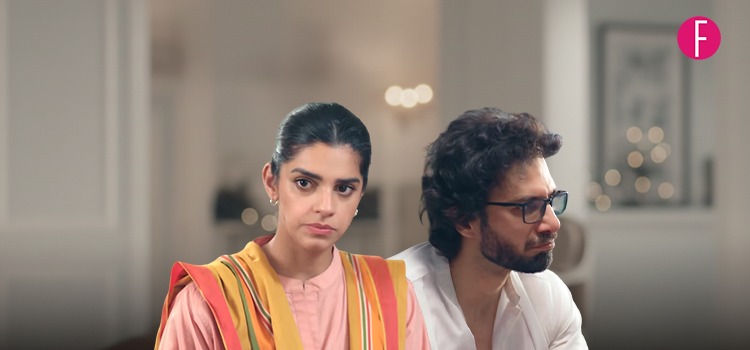
But when you really look closely, when you sit with the story and think it through, Zeba’s decision doesn’t feel as simple as it may seem at first glance. Yes, she finally stepped out of a toxic marriage and chose khula, but was it only because Jami wasn’t earning for his family – for his wife and his children? Was it really just about him not being a provider? Because if you trace their journey, that explanation alone starts to feel incomplete.
Zeba lived with Jami for 24 years – with the same man, in the same reality. She carried the entire financial burden on her own, while also managing the household without complaint. She knew things – like the truth about the money stolen from Tania’s wallet – and yet she stayed. She stayed even when her own children urged her to let go of a marriage that was clearly draining her. Even Sumaira, her friend, repeatedly insisted that she think about herself and make a decision for her own peace of mind – but Zeba still chose to stay. That kind of endurance doesn’t come from ignorance; it comes from years of conditioning, compromise, and slowly losing sight of herself in the process.
And then there’s the turning point – when he raised his hand on her. That moment shifts everything. It’s not just about a failing marriage anymore; it becomes about dignity, safety, and self-worth. Imagine four grown children witnessing all of this, each processing it in their own way, each forming their own understanding of what a marriage should or should not be. For them, and for Zeba, that moment likely became the line that could no longer be crossed.
So when someone reduces Zeba’s decision to simply “Jami not being the provider,” it clearly misses the depth of what she endured and what finally pushed her to step away.
Recently, a user on X questioned the narrative around Kafeel, asking whether such marriages – where a man doesn’t provide for over a decade – really exist. The tweet read: “Lot of hype around this drama Kafeel. How many men have you seen in your life who are in marriages and who don’t provide for their children and wife? I am not talking about unsuccessful marriages. I am talking about marriages of over 10 years.” But what followed was telling. People across Pakistan responded with hundreds of real stories – of women who quietly endure similar realities every day. Stories of mothers, neighbors, even the house helps working in our homes, who carry entire households on their shoulders while remaining in marriages that offer little support. It became clear that Zeba’s story isn’t rare or exaggerated – it’s just one of many that often go unseen, unheard, and unspoken.
Ultimately, the internet rallied together to show us that stories like Zeba resonate with audiences because they see themselves in them. When we speak for the Zebas around us, we speak for all those women who have stayed in a marriage for all the reasons society told them to. And hence, we are responsible in a way for letting it happen, or at least, for letting it drag on for, as the post suggested, over 10 years… that’s a lifetime lost fo rmany.
Dramas like Kafeel show the mirror to society, and perhaps, it is upto us now to take the gains from the story and spin it in ways that make a lasting difference for every woman who struggles through a tough marriage – don’t stay because of the children, leave because of them, and… for yourself. You too have a right to start anew, everyone deserves a second chance and believe, deep down inside yourself that you deserve more – that’s what society should be teaching her. And Zeba might just lead the way.
Do you have a story to share, or something to add to this perspective? Drop your thoughts in the comments.
Bas Tera Saath Ho – First Teaser, First Reaction
Follow us on Instagram
Drama Kafeel is penned by Umera Ahmed and directed by Meeesam Naqvi featuring Sanam Saeed, Emaad Irfani, Hasan Khan, Aashir Wajahat, Areeka Haq, Nooray Zeeshan and more.

