I want to live in a world where, when I ask for accessible infrastructure, people don’t look at me as if I’m asking for a favor. Because … Let me tell you, it’s NOT a favor. It’s my basic right. I want to live in a world where people experience differences, they support you and accept you the way you are. And lastly, but not the least, I want to be in a world, where the entire human race works together for Planet 50/50.”
Muniba Mazari is at it again – and this time she’s making her voice heard on an international forum. She was speaking at the 63rd. session of the Commission on the Status of Women – CSW63. Muniba from Pakistan and Mary from Sudan came together in an interactive dialogue to talk about their dream for an ideal world. They spoke of the challenges they face as women, and the simple ways they can be overcome, if we only, but lent them an ear.
Basic human rights, wheel chair ramps, peace, friendly health services – an ideal world for women does not require a trip to Mars, smart cars or even Nike shoes. Then why is it so hard for women to obtain their basic human rights in the year 2019?
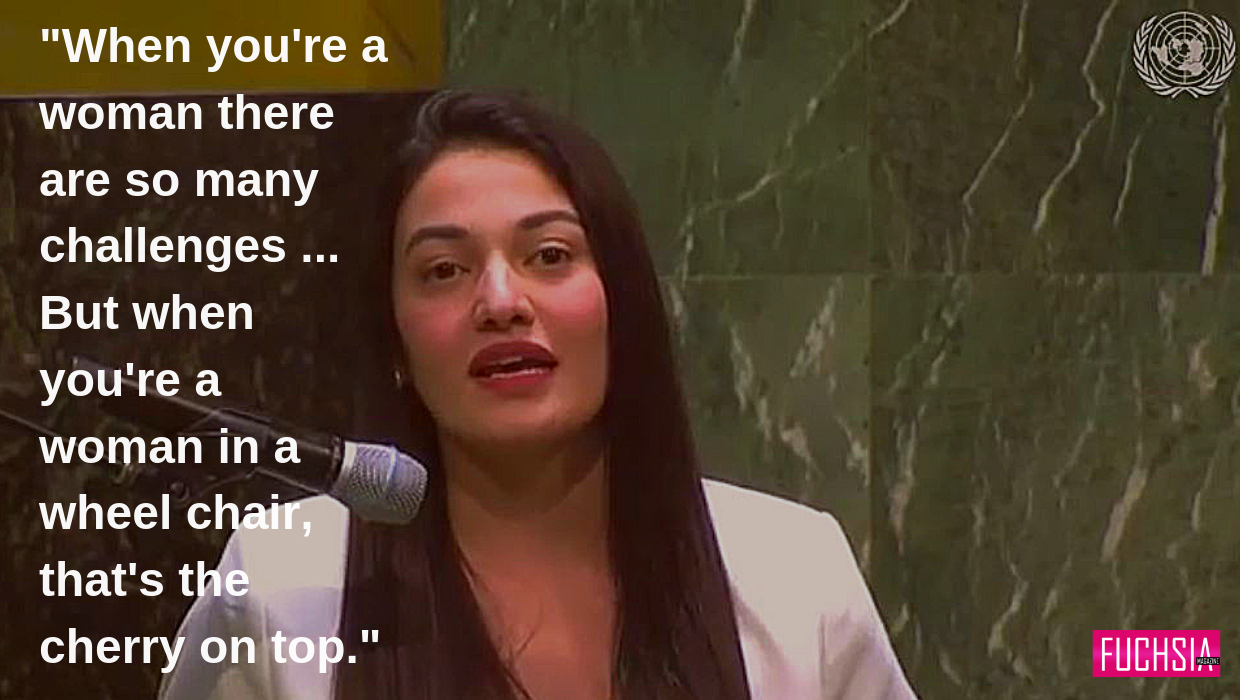
“What an incredible place to be heard”, exclaimed Muniba, at the UN Women’s session. “I’m a goodwill ambassador for the UN Women from Pakistan. I’m an Artist, I’m a Public Speaker, I’m a TV show host in Pakistan and I’m a humanitarian,”
11 years ago I was in a car accident that left me paralyzed … I ended up in a wheelchair for the rest of my life. I have a lot of titanium in my back so the people back home call me ‘The Iron Lady of Pakistan’ … every day I have to wake up and defy all odds.
Changing my perspective was easy but changing people’s perception towards those who were differently-abled wasn’t. They called me disabled, I called myself differently-abled. They think this wheelchair is my weakness, I think this is my strength. They see my disabilities, I see only abilities.
Muniba’s words were, as always, thought-provoking:
“I want people to realize that disability is not in a human’s body. It’s the environment which is disabled. So if you make that environment accessible, disability will vanish”.
“When you’re a woman there are so many challenges that you face in the world. But when you’re a woman in a wheelchair, that’s the cherry on top.” Says Muniba. She went on to address two issues which she faced and must be put on the world map for local governments to pay heed.
First is Acceptability: This common comment, Oh She’s too pretty to be in a wheelchair, hurts me a lot, said Muniba. So when I decided that I’m going to go up and speak publicly, when I decided that I will represent people who are differently-abled, I was told that it’s not going to be easy because you’re a woman in a wheelchair. And I said, “I might be the first one, but I certainly won’t be the last. I will take the first step in the wheelchair and the rest will follow”.
The second major barrier is the lack of Accessibility. If I go somewhere for dinner and there is no ramp where I’m invited, if I want to use public transport and there is no ramp, I feel unwanted, disrespected and unwelcome. No one deserves to feel that way. Making places accessible is the only way. Perhaps that’s why we are here to address this.
Muniba could have talked about multiple issues affecting women in our society, and each of these on its own, needs to be addressed. Single women, divorced women, single mothers, lack of affordable medical facilities … but she chose to shed light upon the plight of wheelchair users – a simple yet critical issue, and she chose a forum where hopefully, her voice can reach out to those who matter. Her demand was very simple; make wheelchair ramps where there are none. A country that is heading towards women emancipation, tackling civic issues and attempting to listen to the voices of the common citizens, needs to pay heed to Muniba’s words.
A quick internet search and we came across this regulation from the LDA (Lahore Development Authority):
Regulation 6.2.3 of the LDA Building and Zoning Regulations 2007 states:
Muniba went on to describe her ideal world:
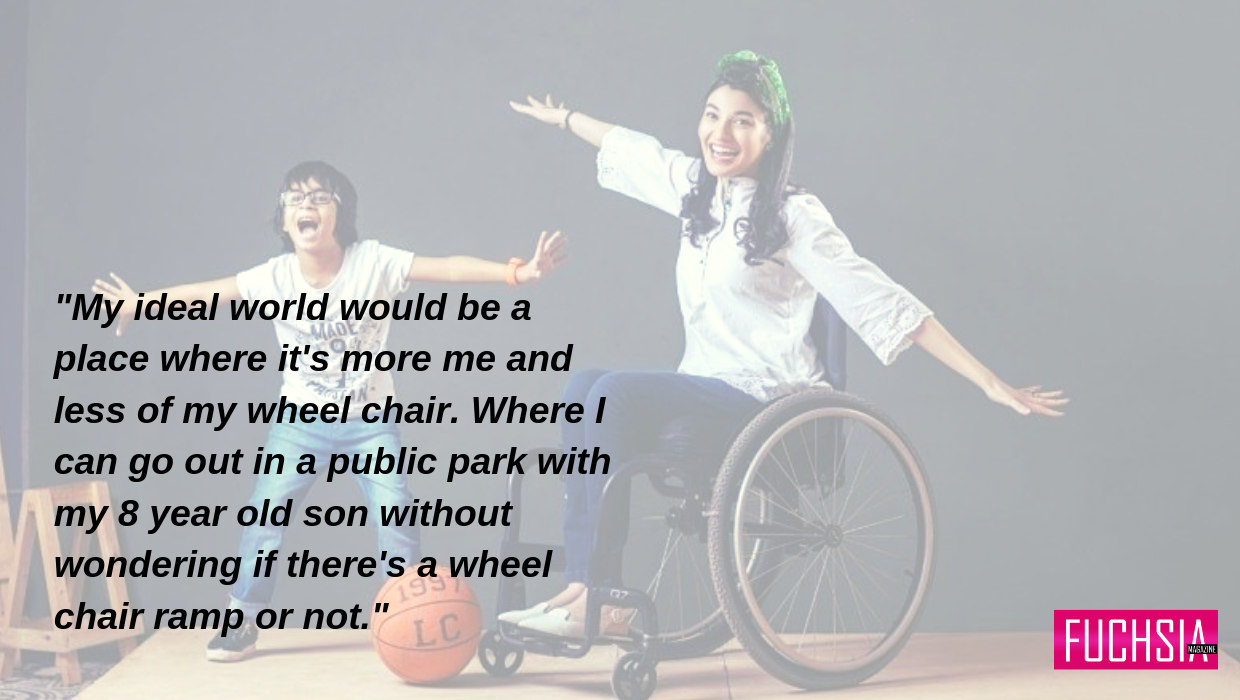
“My ideal world would be a place where it’s more me and less of my wheelchair. Where I can go out in a public park with my 8-year-old son without wondering if there’s a wheelchair ramp or not. I want to live in a world where, when I ask for accessible infrastructure, people don’t look at me as if I’m asking for a favor. Because … Let me tell you, it’s NOT a favor. It’s my basic right. I want to live in a world where people experience differences, they support you and accept you the way you are. And lastly, but not the least, I want to be in a world, where the entire human race works together for Planet 50/50.”
We hear you Muniba. In a country where the masses are calling out for tabdeeli, this is a small, yet crucial step to include a marginalized section of society that requires our attention. What made Muniba’s call for help so much more pertinent was, that she wasn’t speaking to only the women or the men. Wheelchair users of all sexes, all faiths, all ages, and all economic backgrounds stand to benefit from her call. She has spoken for the cause of many whose voices might not be heard as loudly as hers. A ramp might not solve all their problems, but it’s certainly a beginning towards a more acceptable and equitable society – the rest as they say, will follow.