

The London Marathon is one of the most prestigious long-distance races in the world — a 42.2 km test of endurance, precision, and pacing that only the very best truly master. This year, it delivered a moment that instantly shifted the conversation around performance running. Sabastian Sawe stormed through the course in a historic sub-two-hour finish, clocking 1:59:30 and doing what had long felt just out of reach in an official race setting. And almost immediately, attention turned to what was on his feet.
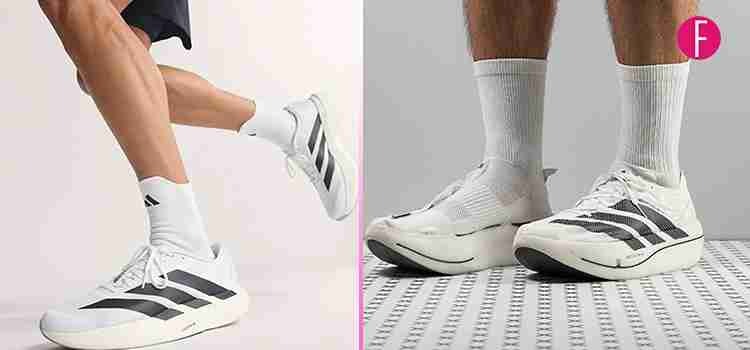
The spotlight is now firmly on Adidas’ latest “supershoe” — the Adizero Adios Pro Evo 3 — a model that is not just part of the story, but very much shaping it.
1. It’s the Third Generation — And a Complete Reset
This is not a minor update or a safe iteration. The Evo 3 is the third in Adidas’ Adizero Pro Evo line, but it feels more like a rethink than a continuation.
Where earlier versions focused on balancing speed with structure, this one strips everything back to a single idea: go as light as possible without losing performance. The result is a shoe that doesn’t just improve on its predecessors — it redefines what this category is aiming for.
2. The Weight Is Almost Unreal
At just under 100 grams, this is the lightest race-legal marathon shoe currently in production. That kind of number sounds abstract until you understand what it means over 42 kilometers.
Less weight translates to less energy spent with every step — and at elite levels, even marginal gains can decide outcomes. The fact that this shoe is nearly a third lighter than what came before it is not just a stat; it’s the entire philosophy behind its design.
3. The Foam Is Doing the Heavy Lifting
Ironically, the most important part of this ultra-light shoe is its cushioning. Adidas’ updated Lightstrike Pro Evo foam is designed to give maximum energy return while keeping weight down.
That balance is crucial. A marathon shoe cannot afford to feel minimal or harsh over long distances, and this one manages to stay protective while still feeling responsive. It is built to absorb impact and then give something back — which is exactly what you need when pace has to be sustained, not just started.
4. The Carbon System Has Been Reworked
Instead of relying on the more traditional plate setup seen in most supershoes, Adidas has introduced a new carbon-based structure known as the EnergyRim.
Rather than sitting flat underfoot, it wraps around the shoe in a way that adds stiffness and propulsion without unnecessary bulk. The idea is simple: support the foot where it matters, remove everything that doesn’t. It contributes to that forward-rolling sensation runners look for, especially in the later stages of a race.
5. It’s Built for Performance, Not Comfort
This is not an everyday running shoe, and it doesn’t try to be one.
The upper is extremely minimal, the fit runs narrow, and durability takes a backseat to speed. Even the outsole is designed with just enough grip to get the job done without adding extra weight. Every detail feels intentional, even when it comes with trade-offs.
This is a shoe made for race day — for athletes chasing seconds, not comfort.
The Adizero Adios Pro Evo 3 is not just gaining attention because it is new. It is being talked about because it showed up at one of the biggest races in the world and delivered, immediately, at the highest level.
Whether it is the start of a broader shift in running technology or simply a standout moment in an ongoing race between brands, one thing is clear: this shoe is no longer just a product — it is part of a performance that people will be talking about for a long time.
Sources, Adidas, Reuters, USA Daily, Runners World

