

Hina Tariq has quickly become one of those faces audiences are noticing across multiple dramas, especially for her roles in Rehmat and Aye Dil Aazma Nahin. The actress joined FUCHSIA for a candid conversation where she opened up about her characters, on-set experiences, relationships, and also her thoughts on marriage traditions.
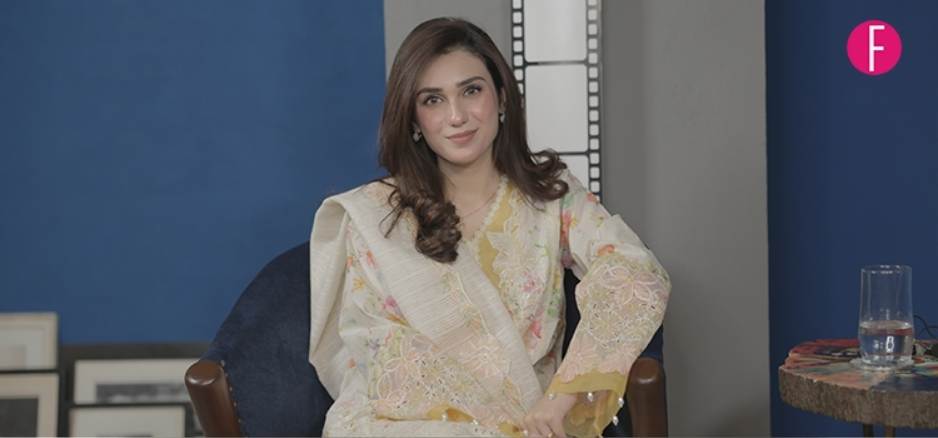
From intense emotional scenes to playful behind-the-scenes moments, Hina didn’t hold back as she reflected on the layers of her journey so far.
This article is an excerpt from the YouTube interview.
“Rehmat Was More Challenging” — On Two Very Different Dramas
Talking about her recent projects, Hina shared that she genuinely enjoyed both Rehmat and Aye Dil Aazma Nahin, but admitted that one was significantly more demanding. “I enjoyed both of them… but Rehmat was more difficult,” she shared honestly.
She explained that the length of the project and the emotional weight of the story made it more intense for her as a performer. At the same time, she was quick to appreciate the support she received from both teams.
“There were a lot of tragedies in Rehmat… but hats off to the team. They supported me a lot. It felt like a family.”
she said, adding that even her directors and co-actors on Aye Dil Aazma Nahin made the experience smooth and enjoyable.
“People Didn’t Understand Parisha At First” — On Her Difficult Character
One of Hina’s more talked-about roles has been Parisha, a character that sparked strong audience reactions for her attitude and behaviour towards authority figures. Hina admitted that the role was challenging because it required her to stay within a very controlled emotional tone.
“People still ask me how I can speak rudely to my boss in the drama,” she said, adding that many viewers often miss the context behind the character’s behaviour.
She explained that Parisha’s reactions weren’t random, but shaped by constant pressure, family struggles, and a sense of self-respect that defined her choices throughout the story. “She wasn’t just being rude. There was pressure behind her actions… she was trying to protect her self-respect,” Hina said.
“I Get Angry, That’s My Love Language”
When the conversation shifted to relationships and emotional expression, Hina gave a surprisingly honest take on what love looks like for her. “I don’t know my love language… but I think I buy things for people,” she said at first, before adding a more unexpected reflection: “I also get angry. That’s my love language.”
She explained that for her, anger isn’t always negative—it can come from care, concern, or emotional attachment. “If I love someone, I get angry because I want them to understand something important,” she shared, adding that even her mother understands that her tone of anger comes from affection.
For Hina, emotional intensity and care often overlap, even if they don’t always look soft on the surface.
“A Man Has To Be A Man” — On Relationships & Modern Expectations
Hina also spoke about what she values in relationships, especially when it comes to emotional balance between partners. She expressed that she prefers a more traditionally masculine energy in a partner, explaining that she likes it when a man takes initiative in small but meaningful ways.
“I want a macho guy… I want to feel feminine in a relationship,” she said, adding that gestures like choosing places or taking initiative matter more than grand statements.
At the same time, she made it clear that she is fully independent in her own life. “I order my own food, I pay my own bills… I can do everything myself,” she said, but added that emotional effort in a relationship is still something she values deeply.
“I Want Umrah or Hajj in My Haq Mehar” — On Nikahnama Wishes
When asked about reading her nikahnama and haq mehar preferences, Hina shared a personal wish that stood out. “I will definitely read my nikahnama,” she said, adding that she wants to be more aware and involved in such decisions. But what really caught our attention was her answer about haq mehar.
“I don’t really need money… I want Umrah or Hajj,” she revealed, explaining that spiritual fulfilment matters more to her than financial value in that context.
She also reflected on how mindsets around marriage and relationships has evolved, saying younger generations are more open and less bound by past labels.
For Hina, the focus is simple: peace, understanding, and moving forward without unnecessary baggage from the past. As she summed it up, her outlook remains grounded in clarity—whether it’s about work, relationships, or life decisions, she prefers honesty over performance.
Want to hear more from Hina Tariq? Head over to FUCHSIA’s YouTube channel.

