

On account of Labour Day, it is important to reflect on the lives, struggles, and resilience of workers who form the backbone of every society. In this context, dramas and movies serve as a powerful medium for storytelling and social awareness.
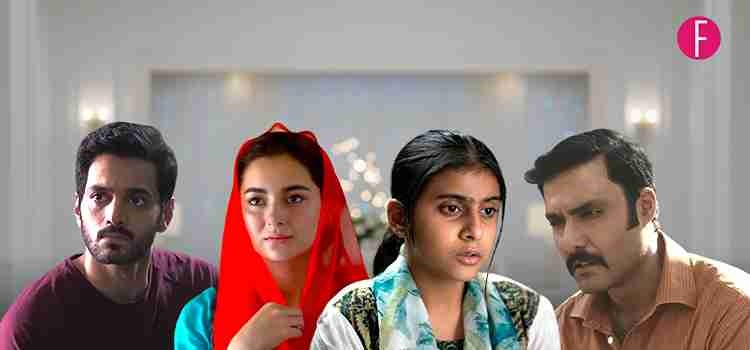
In Pakistan, labourers often face challenging conditions marked by low wages, long working hours, job insecurity, and limited access to basic rights and protections. Despite their vital role in sustaining households, industries, and the broader economy, their struggles are frequently overlooked in mainstream narratives. From construction sites and factories to domestic work and informal sectors, their labour forms the unseen foundation of daily life, yet their personal stories rarely receive sustained attention or recognition.
Pakistani television, however, has a strong tradition of engaging with social realities in ways that are both accessible and thought-provoking. Through well-developed characters and emotionally grounded storytelling, dramas have the ability to bring hidden or ignored issues into public view. They not only reflect society but also act as a mirror, allowing viewers to confront realities they may not directly experience, including the hardships faced by labourers and working-class communities.
More importantly, such portrayals can do more than raise awareness – they can actively challenge existing mindsets and encourage empathy. By highlighting themes of inequality, exploitation, and dignity of labour, dramas/movies can influence how audiences perceive work and class divisions in society. Over time, this can contribute to meaningful conversations about fairness, rights, and social responsibility, ultimately fostering a gradual shift towards greater awareness and sensitivity regarding social justice issues.
Here are 3 Pakistani stories that shed light on the struggles, dignity, and harsh realities faced by those whose contribution matters most in society, yet often receives minimal attention – the Pakistani Labourer
1. Dil Na Umeed To Nahi – Jamshaid’s Story
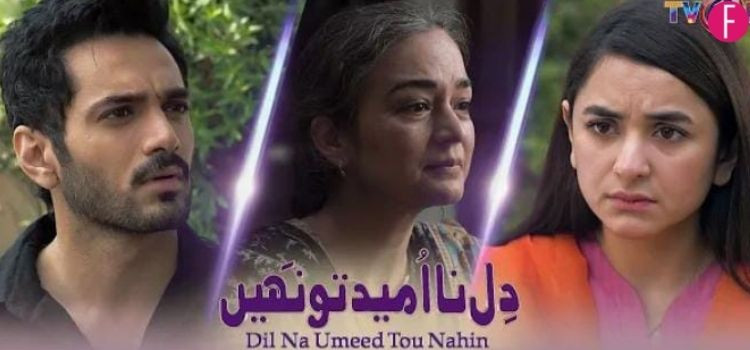
Kashf Foundation has consistently supported storytelling that highlights one or more pressing social issue in a sensitive and meaningful manner. One such impactful attempt is Dil Na Umeed To Nahi, which thoughtfully addresses issues like child trafficking, bonded labour, and exploitation, presenting them in a way that is both emotionally engaging and socially revealing. The drama brings together multiple hard-hitting realities such as child trafficking, bonded labour, sexual exploitation, and forced begging, presenting them in a deeply human and emotional narrative. It revolves around three central characters – Allah Rakhi (played by Yumna Zaidi), Jamshaid (Wahaj Ali), and Naseem Zehra (Fajar Khan) – whose lives are shaped and often shattered by these systemic injustices.
Through Allah Rakhi’s journey, the drama captures how a child can be pushed from innocence into forced exploitation, where even basic safety nets, identity, and dignity are gradually stripped away in environments built on control and abuse. Jamshaid’s story reflects how poverty, violence, and neglect make children easy targets for trafficking networks, where domestic help is exploited and minors are employed in homes such as ours with little or zero disregard for the emotional and physical wellbeing let alone their basic rights as a child, turning survival into a constant struggle shaped by fear and compromise rather than choice. Naseem Zehra’s arc unfolds in a different but equally suffocating space – where her dreams of becoming a cricketer are slowly constrained not just by direct threats, but by social pressure, gender bias, an online mafia, and the fear of defying norms.
What ties these narratives together is not just shared suffering, but the systems that enable it. The drama subtly shows how exploitation does not always appear in one form; instead, it works through overlapping forces of poverty, patriarchy, and institutional silence, making each character’s experience part of a larger, deeply rooted social reality.
Dil Na Umeed Toh Nahi is written by Amna Mufti and directed by Kashif Nisar. It was produced by Kashf Foundation in collaboration with TV One. The drama features a strong ensemble cast, including Yumna Zaidi, Wahaj Ali, Yasra Rizvi, Samiya Mumtaz, Noman Ijaz, and Omair Rana and more.
2. Mujhay Jeenay Do – Saira’s Story
Mujhay Jeenay Do addresses a wide range of deeply rooted social issues, with child labour forming a key part of its narrative. The drama shows how poverty, lack of education, and systemic inequality push children into labour at an early age, depriving them of schooling, safety, and a normal childhood. Through its storytelling, it reflects how these children are not seen as individuals with rights or dreams, but as economic contributors trapped within cycles of survival.
The issue of child labour is primarily reflected through the experiences of children like Saira (played by Hania Aamir) and others around her, whose lives are shaped by financial hardship and social neglect. Their journeys highlight how children are often forced into work – whether in homes, fields, or informal labour – while being denied any real opportunity for education or personal growth. Alongside this, Saira’s own storyline also connects child labour to broader systems of control, where poverty and tradition leave little space for escape or change.
Beyond child labour, the drama also explores child marriage and its long-term consequences, showing how young girls are pushed into adulthood before they are ready, cutting short their aspirations. It further highlights maternal mortality due to unsafe childbirth practices and lack of medical access, the absence of family planning awareness, domestic violence, marital rape, and ongoing family pressures within marriage. Issues like polygyny, patriarchy, and misogyny are also woven into the narrative, along with the stigma surrounding divorce or khula. The drama also reflects how lack of education reinforces ignorance and resistance to change, sometimes leading to extreme outcomes such as honour killings. Overall, it presents a layered portrayal of how interconnected social and economic systems continue to restrict the lives of women and children.
Mujhay Jeenay Do is written by Shahid Nizami and directed and produced by Angeline Malik under Angelic Films, in collaboration with Johns Hopkins University Center for Communication Programs. The cast features Hania Aamir, Gohar Rasheed, Mehreen Raheel, Nadia Jamil, Salman Shahid, and more.
3. Gunjal – Iqbal’s Story

Gunjal is a Pakistani film inspired by the real-life story of Iqbal Masih, the child rights activist who became a global symbol of resistance against bonded child labour. Set against the backdrop of Pakistan’s carpet industry, the film exposes how poverty, debt, and lack of education are used as tools to trap children in exploitative labour systems, where escape is extremely difficult and often dangerous. It presents bonded labour not as isolated incidents, but as part of a structured system that continues to function through silence, fear, and economic vulnerability.
The narrative follows a young boy who is sold into bonded labour and forced to work long hours under harsh and inhumane conditions. Through his journey, the film captures the gradual loss of childhood – where play, education, and safety are replaced by exhaustion, control, and punishment. It also reflects the psychological weight of being constantly indebted, where families are unable to break free from exploitative contracts that span generations.
At the same time, Gunjal highlights the emergence of awareness and resistance through Iqbal Masih’s story, showing how even a single voice can challenge deeply entrenched systems of exploitation. The film ultimately serves as a powerful commentary on child labour and bonded labour in Pakistan, exposing how structural inequality sustains such practices, while also emphasizing the importance of awareness, courage, and collective responsibility in confronting them.
The film is directed by Shoaib Sultan, produced by Nighat Akbar Shah and written by Nirmal Bano and Ali Kazmi. It features Ahmed Ali Akbar, Resham, Amna Ilyas and Ahmad Ali Butt in leading roles.
4. Zard Patton Ka Bunn – Rani’s Story
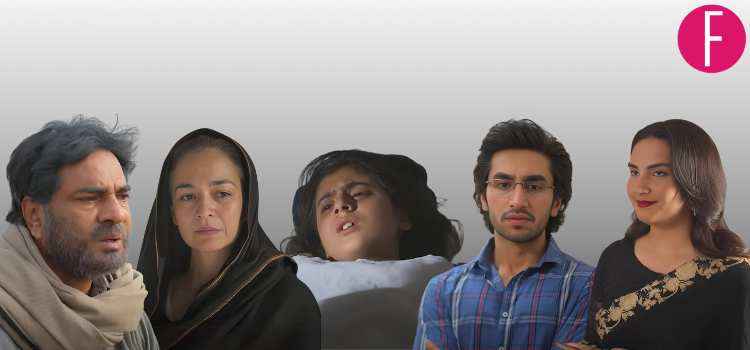
Zard Patton Ka Bunn, another Kashf Foundation narrative, highlighted the heartbreaking story of Rani as she suffered domestic abuse at the hands of her employers. Young girls like Rani are often sent to the city to work as domestic help in households where they are often tending to children their own age. These children suffer emotional and physical wounds and are often exploited by their families, mother or father, in the village, and a system (often a mafia), that enables it. They are deprived of a childhood, a right to education and exploited as an extra source of income for the family. Rani’s story nudged audiences into a harsh awakening – we are all part of this child labour mafia; every time we employ a minor in our homes, we are complicit in the crimes that lead to their maltreatment, lost childhoods and enabling a mafia that runs as a relentless and shameful thread in our society.
Labour and child labour in Pakistan remain deeply rooted in poverty, inequality, and lack of access to education and protection. For many families, economic survival comes at the cost of childhood, forcing children into work at an age when they should be in school, safe, and allowed to grow. These conditions are not the result of individual choice alone, but of systems that fail to provide basic rights and opportunities to the most vulnerable. The reality is that behind every statistic is a human life shaped by hardship – children who grow up too soon, carry responsibilities beyond their years, and are often deprived of dignity and hope. Labour, when exploited, is not just physical effort; it becomes a cycle that limits freedom and reinforces inequality across generations.
The Jamshaid’s, Rani’s, Saira’s and Iqbal’s we see on our screen are meant to shake us into changing the future, respecting our childdren, their chldhood and the people who contribute to society in the most meaningful ways demands a change from within – and it starts from us.
This issue calls for more than awareness – it demands empathy and responsibility. Recognising the struggles of labours and child workers is the first step towards change, but real progress lies in ensuring access to education, stronger protections, and a society that values every individual’s right to a safe and dignified life.

