

If you’re looking for stories that go beyond entertainment, these three Pakistani dramas are the perfect place to start.
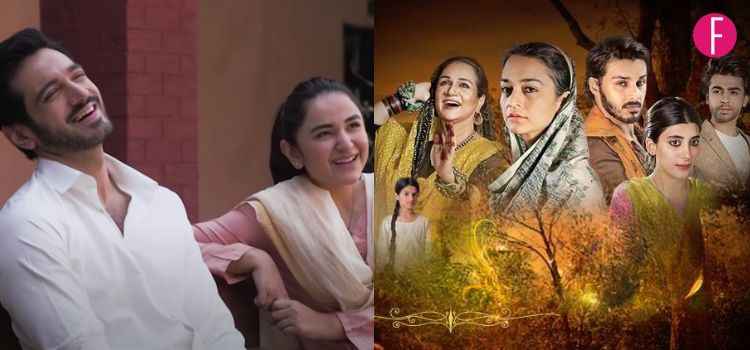
These dramas are not simply memorable because they were successful; they are memorable because they were thoughtfully written, beautifully acted, and told a story that we can remember years down the line. Pakistan’s dramas, at their best, have always been able to show life through a new perspective, start conversations, and inspire reflection long after the end of the drama. These three dramas are proof of just how much our storytellers can achieve when meaningful writing takes center stage.
No matter whether you have watched them before or are going to watch them for the first time this Thursday, remember that these are the dramas that established the standards of Pakistani drama. Sometimes, the only way to appreciate the impact of great writing is to look back at them.
Dil Na Umeed Toh Nahin – the drama that turned painful realities into a story of resilience
Dil Na Umeed Tou Nahi thoughtfully addresses issues like child trafficking, bonded labour, and exploitation, presenting them in a way that is both emotionally engaging and socially revealing. The drama brings together multiple hard-hitting realities such as child trafficking, bonded labour, sexual exploitation, and forced begging, presenting them in a deeply human and emotional narrative. It revolves around three central characters – Allah Rakhi (played by Yumna Zaidi), Jamshaid (Wahaj Ali), and Naseem Zehra (Fajar Khan) – whose lives are shaped and often shattered by these systemic injustices.
Through Allah Rakhi’s journey, the drama captures how a child can be pushed from innocence into forced exploitation, where even basic safety nets, identity, and dignity are gradually stripped away in environments built on control and abuse. Jamshaid’s story reflects how poverty, violence, and neglect make children easy targets for trafficking networks, where domestic help is exploited and minors are employed in homes such as ours with little or zero disregard for the emotional and physical wellbeing let alone their basic rights as a child, turning survival into a constant struggle shaped by fear and compromise rather than choice. Naseem Zehra’s arc unfolds in a different but equally suffocating space – where her dreams of becoming a cricketer are slowly constrained not just by direct threats, but by social pressure, gender bias, an online mafia, and the fear of defying norms.
What ties these narratives together is not just shared suffering, but the systems that enable it. The drama subtly shows how exploitation does not always appear in one form; instead, it works through overlapping forces of poverty, patriarchy, and institutional silence, making each character’s experience part of a larger, deeply rooted social reality.
Dil Na Umeed Toh Nahin is written by Amna Mufti and directed by Kashif Nisar. It was produced by Kashf Foundation in collaboration with TV One. The drama features a strong ensemble cast, including Yumna Zaidi, Wahaj Ali, Yasra Rizvi, Samiya Mumtaz, Noman Ijaz, and Omair Rana and more.
Udaari – the drama that gave a voice to the stories that had long been silenced
At the heart of the drama is Zebo, a young girl with big dreams whose life is shattered after she becomes a victim of child sexual abuse at the hands of someone she should have been able to trust. Through Zebo’s journey, Udaari sheds light on the devastating emotional impact of abuse, the silence that often surrounds it, and the courage it takes for survivors to speak up. Alongside her story, the drama follows Sheedan and Meeran, whose strength and support become an important part of Zebo’s path toward healing.
Udaari manages to tackle the topic so carefully since it uses empathy and sensitivity instead of being dramatic and sensational. Rather than portraying Zebo’s suffering and trauma as her defining characteristic, the show emphasizes her strength, implying that those who go through such experiences are entitled to be listened to and supported. Additionally, it shows the importance of families and communities in protecting their children from abuse.
This is why Udaari is considered to be one of the most influential dramas of Pakistan, because it managed to open up a conversation that people preferred to ignore for decades. By telling Zebo’s story with sensitivity, it raised awareness about child sexual abuse while reminding viewers that hope, justice, and healing are possible. It’s a powerful example of how Pakistani dramas can use storytelling not just to entertain, but to educate, inspire empathy, and create meaningful social change.
Udaari was written by Farhat Ishtiaq and directed by Muhammad Ehteshamuddin and produced by MD Productions in collaboration with Kashf Foundation. It starred Urwa Hocane, Farhan Saeed, Rehan Sheikh, Bushra Ansari, Ahsan Khan, Samiya Mumtaz, Haris Waheed, and more.
3. Aakhri Station – the drama that brought together stories of pain, survival, and hope
If you’re looking for a drama that goes beyond a single storyline, Aakhri Station is one of Pakistan’s most powerful ensemble dramas. Set in a women’s shelter, the story follows seven women from different walks of life who arrive carrying the weight of abuse, loss, and injustice. Each woman has a different past – one is escaping domestic violence, another is forced into child marriage, while others struggle with forced marriages, marital rape, and the legal and social barriers that keep women trapped in abusive situations.
What makes Aakhri Station so compelling is that it doesn’t focus only on the hardships these women face. Instead, it highlights their resilience and the strength they find in one another. Through shared experiences, friendship, and support, the drama shows that healing isn’t something anyone has to go through alone. Rather than portraying its characters as victims, it celebrates their courage to rebuild their lives despite everything they’ve endured.
The reason Aakhri Station continues to stand out is because it reminds us that some of the most meaningful stories are the ones that give a voice to people who are often unheard. By exploring multiple social issues through deeply human characters, the drama proves that Pakistani television can create stories that are not only emotionally moving but also inspire empathy, awareness, and hope. It’s a powerful example of storytelling that stays with you long after the final episode.
Aakhri Station is written by Amna Mufti and directed by Sarmad Khoosat. Presented by Kashf Foundation, it stars Sanam Saeed, Nimrah Bucha, Malika Zafar, Anam Goher, Eman Suleman, Ammara Butt and Farah Tufail.
So, which one are you going to watch?

