


The television industry has welcomed a promising new face in Zoha Tauqeer, who recently impressed audiences as Ayla in Zabt. While she may be relatively new to acting, her perspective on life carries a maturity shaped by personal experiences, from losing her father at the age of four to watching her mother navigate life as a single parent.
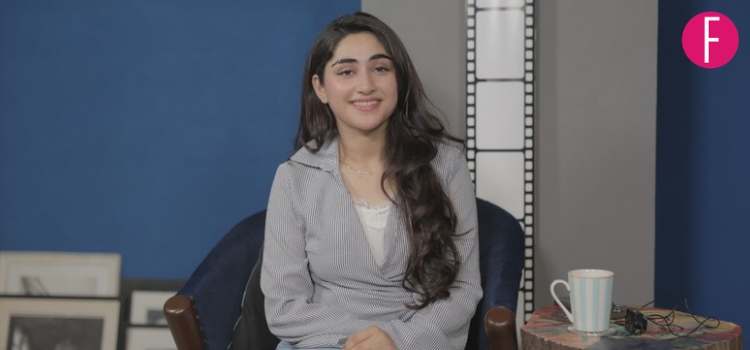
In a heart-to-heart conversation with FUCHSIA, Zoha spoke about resilience, her first day on set, the lessons her childhood taught her, and why meaningful storytelling matters more to her than chasing screen time.
Growing Up Without a Father and Watching Her Mother’s Strength
Zoha was only four years old when her father passed away from lung cancer, but she says she still remembers him vividly. She recalls being the child who never wanted to leave his lap despite the pain he endured during his illness, and the father who never let anyone deny his daughter anything. Those memories, she says, have remained with her throughout her life.
While she credits her mother for ensuring she never felt deprived growing up, Zoha believes losing a parent reveals itself in unexpected ways rather than dramatic moments. It is filling out a school form that asks for a father’s name, making Father’s Day cards with no one to give them to, or watching friends casually rely on their fathers for comfort and support. Those seemingly ordinary moments, she says, quietly remind you of what is missing.
She also rejects the assumption that children raised by single mothers are somehow emotionally damaged. In her view, hardship does not automatically break a person; often, it strengthens them. While everyone processes trauma differently, she believes facing life’s challenges early can build resilience rather than weakness. Looking back at her own upbringing and her mother’s difficult journey, Zoha says she never allowed someone else’s experiences to define what her own future would look like. Every individual, she believes, has a different story written for them.
Her optimism, she explains, comes from refusing to see herself as a victim. There will always be people carrying heavier burdens, and dwelling on one’s own pain only keeps a person stuck in the moment. The only way forward, according to Zoha, is to accept what has happened, learn from it, and keep moving.
The First Day on Set and Finding Confidence Through Her Co-Stars
Although she had grown up around the entertainment industry because of her mother, stepping onto a drama set as an actor was an entirely different experience. Her first scene required her to cry opposite veteran actor Salim Sheikh, despite having no formal understanding of camera angles, lighting or performance techniques.
Zoha laughs as she recalls not knowing where to stand, constantly missing the light, and simply freezing in front of the camera. Yet she says the generosity of her co-stars made all the difference. Actors patiently guided her through scenes instead of making her feel like an outsider.
She speaks especially fondly of Faiza Hassan, who not only encouraged her during emotionally demanding scenes but also offered her home when Zoha fell seriously ill with a high fever during filming. That kindness, she says, gave her confidence at a time when she needed it the most and convinced her that the industry could be an incredibly supportive place for newcomers.
Balancing university, gym sessions, assignments and twelve-hour shoots has not been easy, but Zoha says the demanding routine simply became something she had to adapt to. She intentionally keeps to herself on set, remains cordial with everyone and avoids unnecessary drama, preferring to focus entirely on her work.
Choosing Purpose Over Popularity
For Zoha, acting is less about screen presence and more about the stories she gets to tell. While she has no criticism of lighter, commercial dramas, she admits she is naturally drawn to layered, purpose-driven characters that leave audiences with something to think about.
Rather than borrowing emotions from her own life, she enjoys imagining how her character would think, react and make decisions in unfamiliar situations. That separation between herself and the role, she believes, is the essence of acting.
Having already portrayed distinct characters across her first few dramas, she consciously wants every performance to feel different from the last.
She is also unconcerned with the industry’s long-standing conversation around 7 pm, 8 pm or 9 pm drama slots. In her opinion, a strong performance remains a strong performance regardless of airtime, especially in an era where YouTube has transformed how audiences discover dramas. Her responsibility, she says, is simply to keep growing as an actor and never allow herself to become repetitive.
For someone only a few projects into her career, Zoha Tauqeer already seems clear about the path she wants to take—one driven not by visibility alone, but by meaningful characters that continue to challenge her as a performer.
Catch up on the conversation here: