

It is a bittersweet experience watching Dar-e-Nijaat (DEN). Some dramas make you question what went wrong — especially when characters like Zamil and Abu Bakar are so clearly defined and well-portrayed, yet Zaryab and her entire household leave you wondering where things fell apart.
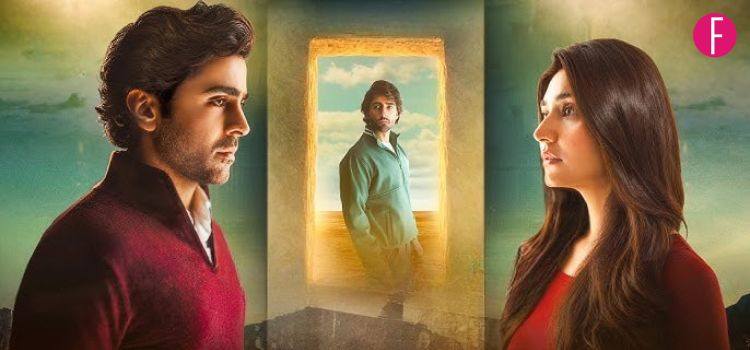
While we love the core concept of the drama and look forward to seeing Zaryab’s journey evolve from Zamil to Abu Bakar, the viewing experience is significantly compromised when the Zamil–Zaryab dynamic feels forced upon the audience.
From the very first episode, it was clear that the two like each other and that Zaryab is head over heels in love with him. However, when a drama tries too hard to push a narrative, it often hurts the storytelling — and that is precisely what is happening here.
Is it truly necessary to depict a girl from an educated, cultured household with such poor manners? In one scene, Zaryab walks into her dadi’s room and completely ignores the guest sitting there, failing to offer even a basic salam or hello. Yet, in the same drama, her mother boasts about how beautifully she has raised her daughters and how much they stand out in society. One cannot help but wonder which society she is referring to, or whether this supposed “grooming” completely lacks basic etiquette.
Compelling Characterizations
Then there is Abu Bakar — an immensely intriguing character. It is rare to see a persona that feels both calming and mysterious at the same time. He constantly leaves you wondering whether he is truly who he appears to be or if there are hidden depths to his story.
Zamil, on the other hand, is a compelling character — insecure, selfish, and spoiled. Given that his family seems blind to his red flags, one hopes the drama will eventually offer deeper insight into what made him this way.
Similarly, why is Zaryab so infatuated with him? Is she simply a young woman blinded by love, illustrating how easily people lose themselves in romance? Or is there a deeper psychological reason? Is this a classic case of childhood friendship (bachpan ki dosti) turning into habit (aadat), and ultimately spiraling into an obsession?
Who is the girl calling Abu Bakar’s mother? What has Khushbakht done in the past that weighs so heavily on her conscience? The multi-layered nature of this track makes it the most captivating part of the series.
Many viewers will likely recognize a figure like the dadi in their own families — a voice of caution and reflection who is often dismissed as a nuisance by the younger generation.
Furthermore, the parents appear to have a complex history tied to their religious beliefs, an aspect that will be fascinating to explore and one that feels grounded in reality.
What Could Have Been Better
Where the drama stumbles is in its directorial consistency. Episode one suggests that Zaryab and her dadi share a deep, affectionate bond that transcends their differing religious perspectives. However, episodes two and three portray Zaryab as excessively annoyed by her grandmother, creating a jarring inconsistency in character dynamic.
Additionally, while Zaryab and Zamil are supposedly university graduates, the narrative fails to establish this convincingly, leaving many viewers under the impression that they have only just completed high school.
Although the heavy emphasis on “Ivy League” schools reflects the reality of many parents who are obsessed with sending their children to prestigious universities abroad, it works against the creators’ intent. Mentioning that “all of Zamil’s friends are getting into Ivy League universities” strongly implies they are applying for undergraduate programs, which contradicts the narrative that Zamil and Zaryab are actually applying for a Master’s degree. This inconsistency is only made more glaring by the constant name-dropping of Harvard and the Ivy League—a distraction that could have easily been avoided.
Dar e Nijaat is written by Umera Ahmed, directed by Saqib Khan with a cast featuring Dur e Fishan Saleem, Sheheryar Munawar, Nameer Khan, Saba Hamid, Sania Saeed, Faran Tahir, Dania Enver and more.

