


What if the next time someone told you to recycle a plastic bottle, the final destination was not another bottle, a landfill or the ocean, but a cookie? It sounds like something straight out of a bizarre sci-fi movie, but researchers in the US have actually managed to turn waste plastic and agricultural leftovers into protein-rich cookies.
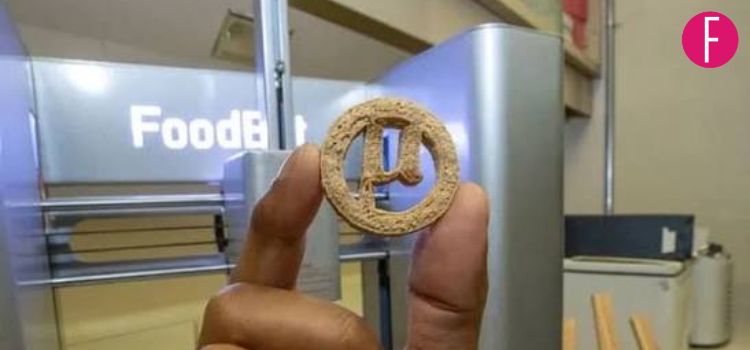
Called µBites (microbites), the experimental snacks are made using specially engineered microbes and 3D printing, and the idea behind them is far bigger than simply creating the world’s strangest biscuit. The researchers are looking at whether the same technology could help tackle two very different problems at once: the growing mountain of plastic waste and the increasingly serious challenge of food insecurity.
The project comes from Southern Illinois University Carbondale (SIU) and is being led by Associate Professor Lahiru Jayakody, with researcher Sandhya Jayasekara also working on the microbial side of the project. What started as an attempt to find a better way of upcycling plastic eventually turned into a much more ambitious question: if plastic contains carbon, and food also needs carbon, could microbes be used to transform one into the other? That idea became µBites, developed under NASA’s Deep Space Food Challenge, where the bigger goal is finding ways to produce food in places where traditional farming, storage and regular resupply simply are not practical.
So, How Does A Plastic Bottle Become A Cookie?
Before anyone starts imagining a water bottle being tossed into a blender and coming out as chocolate-chip dough, there is a lot happening in between. The researchers use PET (polyethylene terephthalate), the type of plastic commonly found in water and soft-drink bottles, along with agricultural waste such as corn stalks and leaves. The materials first go through a process called oxidative hydrothermal dissolution, which uses water, oxygen, heat and pressure to break them down into smaller carbon-based molecules. These are then made available to specially engineered yeast, which acts almost like a microscopic food factory, converting the waste-derived material into useful components such as proteins, fats, vitamins and other food-related compounds.
The resulting mixture is then shaped into cookies using a 3D food printer, creating the µBites prototype. The scientists have also been working on making the final product more appealing rather than producing something that technically qualifies as food but tastes like a punishment. Different yeast strains can be used to produce ingredients such as vanillin, which gives the cookies a vanilla flavour and aroma, while another strain can produce beta-carotene, a compound the body can convert into vitamin A. The system is also designed to be flexible, meaning the ingredients and nutritional profile could potentially be adjusted depending on what is needed.
Why Make Food From Plastic In The First Place?
The obvious question is: why cookies? The answer has less to do with satisfying a sweet tooth and more to do with solving problems in places where getting food is difficult. Plastic pollution is growing at an enormous scale, while food insecurity continues to affect millions of people, and traditional agriculture is not always an option in disaster zones, remote locations or environments where resources are limited. Instead of treating waste and food shortages as two completely separate problems, the µBites team is essentially asking whether waste carbon can become a resource.
That becomes particularly interesting when space enters the conversation. The research is connected to NASA’s efforts to develop food systems for long-duration space missions, where astronauts cannot simply order a grocery delivery when supplies run low. A compact system capable of turning available waste into new food ingredients could be useful on spacecraft or, eventually, on places such as the Moon or Mars. And the idea does not stop there: researchers have suggested possible applications in submarines, disaster-relief settings and extremely remote regions where transporting fresh food is difficult.
But Before Anyone Orders A Box Of Plastic Cookies…
There is still a very important catch: these are not ready to replace the biscuits sitting in your kitchen cupboard. The technology is still experimental, and questions around large-scale production, cost, regulation, safety and, perhaps most importantly, whether people would actually want to eat food made from plastic-derived materials remain. The researchers have been conducting safety and nutritional assessments, while formal taste testing and further development are part of the work still being carried out. Earlier work on the µBites concept did produce encouraging sensory results, but that does not mean plastic-derived cookies are about to appear on supermarket shelves.
There is also the uncomfortable reality that turning millions of tonnes of plastic waste into cookies is not going to magically make either the plastic crisis or world hunger disappear. The current process is complicated and expensive, and even the researchers see it more as a potential tool for specific situations than a replacement for conventional food production. Still, that may be exactly what makes the experiment interesting. The point is not necessarily that everyone should start eating plastic cookies; it is that scientists are finding increasingly creative ways to treat waste as a resource rather than simply something to throw away. And if a discarded water bottle can eventually become part of a protein-rich snack for an astronaut on Mars, 2026 has officially become a very strange year for food.
Sources: Forbes, Futurism, Science Alert, New Scientist, Daily Star