

Islamabad and Rawalpindi were hit by intense monsoon rainfall this week, triggering widespread urban flooding, disrupting traffic, inundating low-lying areas and putting authorities on high alert as water levels in Nullah Lai rose sharply.
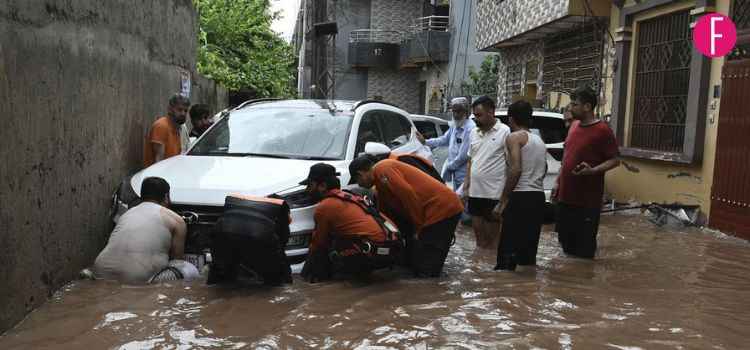
According to the latest information, there has been flooding in various regions of the Twin Cities due to heavy rain which started in the early hours of Tuesday. This has been affecting roads and streets as well as residential and commercial areas, for which emergency services have been sent to deal with the situation.
The episode has once again exposed the vulnerability of Islamabad and Rawalpindi to intense monsoon rainfall, particularly in areas where drainage capacity is unable to cope with large volumes of water arriving within a short period.
Nullah Lai reaches dangerous levels
One of the biggest concerns during the rainfall was the rapidly rising water level in Nullah Lai, the major watercourse running through Rawalpindi. According to the sources, the level of water at Katarian has risen to about 29 feet, whereas the level of water at Gawalmandi is estimated to be about 23.5 feet.
Then came the decrease in water level, which was reported to be at about 20.5 feet at Katarian and 22 feet at Gawalmandi. Despite the decline, authorities remained alert because further rainfall could quickly push water levels back up.
Nullah Lai is among the most hazardous in terms of flooding in the city of Rawalpindi. This is because Nullah Lai covers part of both Rawalpindi and Islamabad, and any rainfall in Islamabad can result in high flows in Rawalpindi.
Rainfall breaks long-standing records
The latest spell was particularly significant because officials described the rainfall in Rawalpindi as exceptionally heavy.
As reported by the chief water engineer of the Rawalpindi Cantonment Board, the rains that were received during this spell had surpassed a 16-year-old record, with the last similar rain occurring in 2010.
With such high-intensity rains, there was a rapid accumulation of water in various urban areas, which resulted in the overflow of the drainage system in some places.
The reports stated that the low-lying localities were flooded, while the water entered houses and basements in affected areas.
Islamabad also affected
Flooding was not restricted to the city of Rawalpindi only.
In Islamabad, rainwater collected in many sectors and low-lying areas as well as standing water on the roads resulted in traffic disruption.
Emergency crews having equipment like dewatering pumps were employed to get rid of rainwater from these places and were kept on alert in light of the ongoing rainfall.
The combination of intense rainfall and rapid surface runoff created difficult conditions in several parts of the capital, particularly where drainage channels and stormwater infrastructure were unable to immediately carry away the excess water.
Rawal Dam spillways opened
In addition to that, another important development occurred at the Rawal Dam, where the water level of the dam increased owing to the rainfall in Islamabad and its surroundings.
In this regard, the Islamabad district administration took a decision to release the water through the spillways of the Rawal Dam when the water level was about 1,751.90 feet. The water was released at around 2 p.m. on 1st September as a precautionary step due to the rise in the level of the reservoir.
This decision was crucial because if there was any additional rainfall, the water level in the reservoir would increase even further.
A recurring monsoon problem
Flooding is not an entirely new phenomenon in the Twin Cities.
The Lai Nullah basin has witnessed dangerous floods in the past with densely populated areas around the water course being highly vulnerable. This problem is further exacerbated by the fact that the basin cuts through the Islamabad-Rawalpindi urban area.
A study that came out earlier this year on the Lai Nullah mentioned that the flooding problem was a product of several reasons including governance issues, urban development and climate change.
This is not a one-day phenomenon.
Every monsoon brings with it the need to check whether the drains have been cleaned, whether there are any encroachments blocking waterways, whether the vulnerable communities have been warned well in advance and whether the existing infrastructure can handle the intense rainfalls.
Authorities remain on alert
The Pakistan Meteorological Department has continued to warn of rain and thunderstorms across Islamabad, the Potohar region, upper Khyber Pakhtunkhwa, Kashmir and adjoining areas, with isolated heavy falls possible.
That means the flooding threat cannot yet be considered completely over.
Even if water levels in Nullah Lai decline, another period of intense rainfall could quickly increase runoff and cause renewed flooding in vulnerable parts of Rawalpindi and Islamabad.
The National Disaster Management Authority has also continued issuing weather-related advisories during the monsoon season, while its monsoon situation reporting tracks flooding, flash floods, house collapses, drowning and other rain-related hazards across the country.
This is a developing story.
Sources: DAWN, and The Express Tribune.

