

For a conflict that has been going on for more than a decade, the Saudi-Houthi war has suddenly moved much closer to a place where the stakes could hardly be higher. Saudi Arabia says its air defences intercepted and destroyed a Houthi drone south of Makkah on Tuesday evening, before it entered the restricted airspace over the holy city. The drone was reportedly intercepted at around 6:50pm local time, with Saudi authorities describing the incident as an attempt to target Makkah and warning that the security of the holy city and the Two Holy Mosques is a “red line.” The Houthis, however, have denied targeting Makkah or any other Islamic holy site, saying they do not pose a threat to the sacred city.
That distinction matters because, at this point, what happened and what was intended are not the same thing. Saudi Arabia says the drone was headed towards Makkah, while the Houthis reject that claim. What is not disputed is that a drone was intercepted south of the city and that Saudi Arabia activated security alerts in Makkah, Jeddah and Taif as tensions continued to rise. The alert in Makkah was the first in nearly a decade, making the incident much more than another drone interception in an already escalating conflict.
Why Is Makkah Such A Big Deal?
Because this is not just another Saudi city.
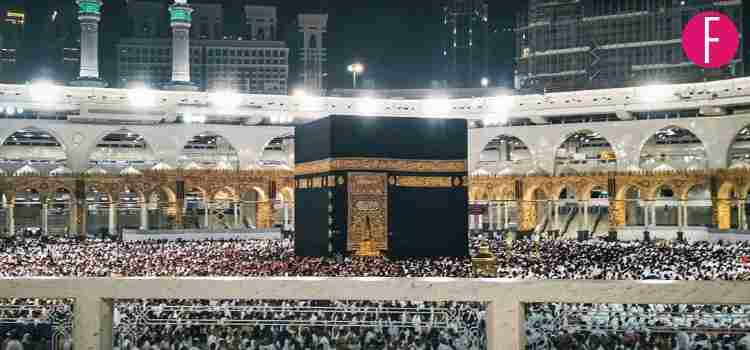
Makkah is Islam’s holiest city and home to the Kaaba at the Grand Mosque. It is where millions of Muslims travel every year for Hajj and Umrah, while the Kaaba is the direction Muslims around the world face during their daily prayers. Hajj is one of Islam’s five pillars, meaning an attack or even a credible security threat near the holy sites carries a completely different religious and emotional weight from an attack on ordinary infrastructure.
That is why Saudi Arabia has described the incident in such strong terms. For Riyadh, protecting Makkah is not simply about defending territory; it is about protecting the Two Holy Mosques and the millions of pilgrims who visit them. The Saudi-led coalition has also pointed to a previous incident in 2017, when it said a Houthi ballistic missile was launched towards Makkah and intercepted before reaching the city. Riyadh is now describing the latest incident as the second such attempt.
And then there were the sirens.
Security alerts were activated in Makkah and nearby areas as Saudi Arabia dealt with incoming threats. The alert in Makkah was quickly lifted, but the fact that residents and pilgrims were being warned of possible danger in the vicinity of Islam’s holiest city is enough to show how far the current escalation has travelled.
So Why Are The Houthis Attacking Saudi Arabia?
The answer is tied to the conflict that has never really gone away.
The Houthis seized Yemen’s capital, Sanaa, in 2014, pushing the internationally recognised government out of the city. In 2015, Saudi Arabia led a military coalition into Yemen in support of that government, turning the conflict into a much wider regional war. Years of fighting eventually gave way to a period of relative calm, and a UN-backed truce in 2022 largely stopped Houthi attacks on Saudi territory. But that calm has now broken down.
The latest escalation is connected to the Houthis’ renewed confrontation with Saudi Arabia, including their declaration of a maritime blockade against Saudi shipping and their attacks on Saudi military, energy and other targets. Houthi officials have presented their attacks as retaliation for Saudi airstrikes in Yemen, while Saudi Arabia has accused the group of attacking civilian and economic infrastructure. In other words, both sides are presenting their latest attacks as responses to the other side’s actions.
That is also why it is important not to simply write that “the Houthis attacked Makkah because…” as though their intention has been independently established. The Saudi coalition says the drone was heading towards the holy city; the Houthis deny that and say their operations are directed elsewhere. What we do know is that Houthi attacks on Saudi Arabia have increased sharply in recent weeks, while fighting in Yemen has also intensified.
Pakistan And Türkiye Condemn The Attack
The incident was quickly condemned by both Pakistan and Türkiye, especially significant given their new defence ties with Saudi Arabia. Prime Minister Shehbaz Sharif strongly condemned what he called an attempted attack on Makkah and backed Saudi Arabia’s efforts to protect the holy city. But alongside the condemnation, Sharif also called for restraint, urging all sides to step back from further escalation. He said the region had already suffered enough from conflict and that dialogue and diplomacy were still the way forward. He also reaffirmed Pakistan’s support for Saudi Arabia and the security of the two holy cities.
Türkiye also condemned the incident and reiterated its support for Saudi Arabia’s sovereignty and security. The response comes just weeks after Türkiye, Pakistan and Saudi Arabia signed their new defence agreement in Makkah, which makes the latest escalation particularly important for all three countries. For now, both Islamabad and Ankara have responded with condemnation and calls for restraint, rather than announcing any direct military involvement in the Yemen conflict.
Why This Could Become A Bigger Regional Problem
The biggest concern now is what happens next. The drone was intercepted before it entered Makkah’s restricted airspace and there was no reported damage to the holy sites, but the incident shows just how close the Saudi-Houthi conflict has come to one of the most sensitive places in the Muslim world. Saudi Arabia has already warned that the security of Makkah and the Two Holy Mosques is a red line, while the Houthis have continued to reject Riyadh’s accusations and carry out attacks on Saudi targets.
At the same time, attacks on Saudi cities, energy infrastructure and shipping routes are adding another layer to an already complicated regional crisis.
For now, the drone was stopped before it could reach Makkah. But with fighting intensifying again after years of relative calm, the real worry is whether incidents like this remain isolated or become the start of an even wider escalation. When the conflict reaches the skies around Makkah, it becomes much harder to treat it as simply another chapter in Yemen’s long-running war.
Sources: Anadolu Ajansi, BBC, The Guardian, Arab News, The Nation, TRT World, Saudi Gazette

