


Breast cancer is one of those health concerns we hear about every October, when pink ribbons, awareness campaigns and reminders to get screened fill our feeds. But beyond Pinktober, how much do we actually know about breast cancer, when we should start getting mammograms, or what changes in our bodies we should be paying attention to? For many women, these questions come with uncertainty, and conversations around breast health can still feel uncomfortable or easy to put off.
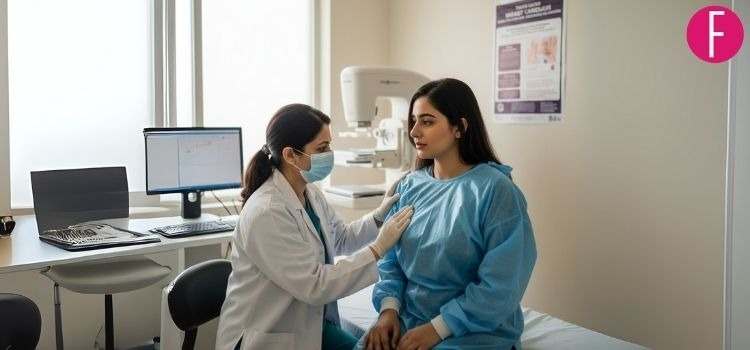
That is why, this Pinktober, we reached out to senior obstetrician and gynaecologist Dr Azra Ahsan, senior obstetrician and gynaecologist in Pakistan with a longstanding focus on maternal and reproductive health, to answer six important questions about breast cancer screening and early detection. From the effect of hormonal changes on mammograms to whether women without a family history are still at risk, Dr Azra explains what women should know, why a clear mammogram does not mean they can stop screening, and why becoming familiar with your own breasts matters. We also look at the warning signs to watch for, how breast self-awareness works, and the latest estimates of breast cancer in Pakistan. Dr. Azra serves as president of the Association for Mothers and Newborns (AMAN) and as vice president and technical consultant for the National Committee for Maternal and Neonatal Health (NCMNH).
Breast Cancer In Pakistan: What Do The Latest Statistics Tell Us?
Breast cancer remains a major public health concern in Pakistan, where it is the most commonly diagnosed cancer among women. The latest estimates from the International Agency for Research on Cancer (IARC), through its GLOBOCAN 2024 data, put the number of new breast cancer cases in Pakistan at approximately 43,721, with an estimated 20,039 deaths from the disease in the same year. These are estimates rather than a complete count of every case in the country, and figures can differ between sources depending on the data and methods used. (Source: IARC’s Global Cancer Observatory)
The scale of the problem makes awareness and timely medical care especially important. Breast cancer can be easier to treat when detected early, yet some women delay seeking medical advice because of fear, stigma, misconceptions or difficulty accessing healthcare. Knowing the warning signs and understanding when screening is appropriate can help women make informed decisions about their health. It is equally important to remember that breast cancer can develop even when there is no family history of the disease.
1. Can Hormonal Changes, Menopause Or Pregnancy Affect Mammogram Results?
Yes. Hormonal changes can affect breast tenderness and density, which may influence both how comfortable a mammogram feels and how clearly the images can be interpreted.
During the second half of the menstrual cycle, hormonal fluctuations can cause the breasts to feel swollen, tender or heavier because of fluid retention. A mammogram during this time may therefore be more uncomfortable. If periods are regular, scheduling the appointment around a week after the period begins may help make the experience more comfortable.
Pregnancy and breastfeeding also change breast tissue, increasing glandular tissue and breast density. This can make abnormalities harder to distinguish on a mammogram. However, if there is a medical reason to investigate a breast concern during pregnancy, imaging should not automatically be postponed; the healthcare team can determine which examination is appropriate and take the necessary precautions.
When possible, routine mammography may be easier to interpret after breastfeeding has ended and the breast tissue has had time to settle. After menopause, breast tissue generally becomes less dense and contains more fatty tissue, which can make abnormalities easier to see. However, women taking menopausal hormone therapy may continue to have denser breast tissue.
2. At What Age Should Women Start Getting Mammograms, And How Often Should They Be Screened?
Screening recommendations vary between countries and medical organisations, so there is no single schedule that is right for every woman. The decision should take into account a woman’s age, medical history, breast cancer risk and local screening guidance.
Dr Azra explains that major US organisations, including the US Preventive Services Task Force and the American Cancer Society, recommend beginning regular screening at age 40, although their specific recommendations differ. For women at average risk, screening may be recommended every one to two years between ages 40 and 74, depending on the guideline being followed.
Women at higher risk may need to begin screening earlier, sometimes around age 30, and may be advised to have additional imaging, such as breast MRI, alongside mammography. A strong family history of breast cancer, a BRCA1 or BRCA2 gene variant, previous breast cancer or radiation treatment to the chest at a young age can affect a woman’s screening plan.
The most important thing is not to follow an age or schedule blindly. Women should discuss their individual risk with a healthcare professional to determine when screening should begin and how frequently it is needed.
3. Are Mammograms Safe, And Should Women Be Worried About Radiation Exposure?
Mammograms use a low dose of X-ray radiation to produce images of breast tissue. They are generally considered safe, and for women who are eligible for screening, the benefits of detecting breast cancer early outweigh the small risks associated with radiation exposure.
The radiation dose from a mammogram is low, and modern machines are designed to use it efficiently while producing useful images. During the procedure, the breast is briefly compressed between two plates. This can feel uncomfortable or cause temporary tenderness, but the compression itself is not considered dangerous.
It is understandable to have questions about radiation, particularly when screening is repeated over several years. However, fear of radiation should not automatically prevent someone from having a recommended mammogram. Women who are pregnant, might be pregnant, or have particular medical concerns should tell their healthcare provider before the examination so the most appropriate approach can be chosen.
4. If My Mammograms Have Been Clear For Several Years, Do I Still Need To Continue Getting Them?
Yes. A clear mammogram is reassuring, but it only tells us that no cancer was detected at the time of that examination. It cannot guarantee that cancer will not develop later.
Breast cancer risk generally increases with age, and a new cancer can develop even after several normal mammograms. A woman who has always received clear results should therefore continue screening according to the recommendations for her age and level of risk.
For women at average risk, routine screening is generally recommended through age 74 under the US Preventive Services Task Force guidance. Beyond that age, the decision depends on overall health, life expectancy, personal preferences and whether the woman would want to pursue treatment if cancer were found. A previous normal result should be a reason for reassurance, not a reason to stop paying attention to breast health. If a new lump or another concerning change appears between scheduled mammograms, it should be evaluated rather than left until the next screening appointment.
5. If I Have No Family History Of Breast Cancer, Do I Still Need Regular Mammograms?
Absolutely. Having no known family history does not mean a woman is protected from breast cancer.
Family history can increase risk, particularly when close relatives have had breast cancer or when inherited genetic changes are involved. However, many women diagnosed with breast cancer have no known family history of the disease. Being female and getting older are important risk factors in their own right. This is why screening is not meant only for women whose mothers, sisters or other relatives have had breast cancer. Women at average risk also need to follow the screening recommendations appropriate to their age.
It is worth discussing family history with a healthcare professional, especially if several relatives have had breast or ovarian cancer, or if a close relative was diagnosed at a young age. But women should not wait for a family history to appear before taking breast health seriously.
6. Are Mammograms Equally Effective For Women Of All Ages, Or Does Their Accuracy Change With Age?
Mammogram accuracy can vary with age, largely because breast density changes over time. In younger women, particularly those in their 40s, breast tissue is more likely to be dense. Dense tissue appears white on a mammogram, as can many breast cancers, making some abnormalities harder to spot. This can also lead to more findings that require additional testing, even when cancer is not ultimately found. Mammograms remain an important screening tool for women in their 40s, but dense breast tissue can limit how clearly certain abnormalities appear.
As women get older, breast tissue often becomes fattier and less dense. Fatty tissue appears darker on a mammogram, allowing many cancers to stand out more clearly. This can improve the visibility of abnormalities, although accuracy is never identical for every woman and does not depend on age alone. If a mammogram shows very dense breasts, a healthcare professional may consider whether additional imaging, such as ultrasound or MRI, would be appropriate. The choice depends on the woman’s individual risk, the findings on her mammogram and the relevant clinical guidance.
One important reminder: A mammogram is a screening tool, not a guarantee that cancer is absent. Anyone who notices a new lump, skin dimpling, a change in the nipple, unusual nipple discharge or persistent breast pain should contact a healthcare professional promptly, even if a recent mammogram was clear.
Breast Self-Screening: What Should Women Look Out For?
Becoming familiar with how your breasts normally look and feel can help you notice changes that may need medical attention. Breast self-awareness is not a substitute for recommended mammograms or a clinical examination, but it can help women recognise when something is different.
There is no need to panic over every change: breasts can naturally feel different at different points in the menstrual cycle, and many lumps are not cancerous. What matters is noticing a new or persistent change and getting it checked instead of trying to diagnose it yourself. Here’s what we learnt from Bakhabar Naujawan :
- Look at your breasts in a mirror. With your arms relaxed and then raised, notice whether there are any changes in their size, shape, skin or overall appearance.
- Check for skin changes. Look out for dimpling, puckering, unusual redness, persistent irritation or skin that appears thickened or resembles the surface of an orange.
- Notice changes around the nipples. A newly inverted nipple, persistent nipple pain, crusting or discharge that is not breast milk — particularly if it is bloody — should be assessed by a healthcare professional.
- Feel for new lumps or thickening. Use the flat parts of your fingers to gently feel across the breasts and underarm areas, paying attention to any new lump, firm area or change from what is normal for you.
- Pay attention to persistent pain or swelling. Breast discomfort can have many causes, but pain that does not settle or is accompanied by another change deserves medical advice.
- Seek medical advice if something feels different. Do not wait for a scheduled mammogram if you discover a new lump or another concerning symptom. A clinician can assess the change and decide whether imaging or further tests are needed.
Some women prefer to check their breasts at a consistent point in their menstrual cycle, when tenderness and swelling are less pronounced. The aim is not to carry out a perfect examination or to replace professional screening; it is to know what is normal for your body and speak up when something changes. For women who want to learn more, Bakhabar Noujawan offers a free online reproductive health course that includes a module on breast cancer. The module provides information about breast health and explains how to perform a breast self-examination, helping women understand what changes to look for and when to seek medical advice. Women can enrol in the course for free to access these resources and learn more about taking care of their reproductive health.
What Is Bakhabar Noujawan?
Bakhabar Noujawan is a reproductive health education initiative developed by the National Committee for Maternal and Neonatal Health (NCMNH), in collaboration with the Association for Mothers and Newborns (AMAN).
The initiative followed Pakistan’s 2018 Supreme Court proceedings on population growth (Human Rights Case No. 17599) and subsequent discussions by the Council of Common Interests on reproductive health education. NCMNH developed the course to provide young adults, whether married or unmarried, with factual, science-based information to help them make informed decisions about their health and well-being.
Breast cancer awareness should not begin and end with a month on the calendar. Knowing your risk, following appropriate screening guidance and seeking advice when something changes are practical steps women can take throughout the year. And while conversations about breast health can sometimes feel difficult, asking questions and getting reliable information is always a good place to start.