


The wedding season is here and guess what Pakistani brides are bringing in their dowry? It’s not gold, or even the new Iphone, it’s the energy revolution that has entered over 25 % of homes in Pakistan, and it’s growing. We’re talking solar panels, the low cost, climate friendly electricity alternative that’s taking households by ‘storm.’
For years, solar panels were something you were more likely to associate with a large house, a commercial building or a business looking to cut costs. Now, look across Pakistan and they are hard to miss. From rooftops in busy cities to homes in smaller towns and farms in rural areas, solar panels have become part of the country’s everyday landscape. What makes this shift particularly interesting is that it was not driven by one major government campaign. It was ordinary Pakistanis who increasingly decided they had had enough of expensive electricity bills and an unreliable power supply.
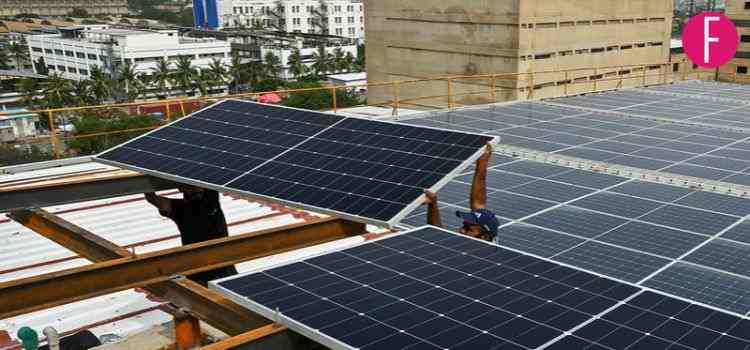
Pakistan’s solar growth has been so rapid that it has caught international attention, with the BBC recently looking at how the country has become one of the fastest-growing markets for solar energy. Estimates suggest that around 25 per cent of households now have solar panels, although figures vary depending on how installations are counted. The country has also added tens of gigawatts of consumer-installed solar capacity, much of it outside the traditional national grid. This is no longer a niche alternative for people looking to make their homes a little more sustainable. It has become a major part of how Pakistanis are powering their lives.
An energy crisis that pushed people towards solar
So, what brought about this sudden rush? A combination of rising electricity prices, power cuts and cheaper imported panels. The energy crisis following Russia’s invasion of Ukraine in 2022 pushed up global fuel prices, including the cost of liquefied natural gas used by Pakistan’s power sector. Electricity tariffs climbed sharply, with consumers facing increases of around 150 per cent over three years. For some households, monthly electricity bills became comparable to, or even higher than, their rent.
At the same time, Chinese solar panels became considerably cheaper, making the switch more realistic for people who had previously considered solar out of reach. As energy analyst Zeeshan Ashfaq from Renewables First explained in a BBC The Climate Question podcast, these developments came together at just the right time: conventional electricity was becoming more expensive while solar technology was becoming more affordable. The result was a rush of people looking for a way to generate their own electricity instead of depending entirely on the grid.
And it was not just households making the switch. Businesses, factories and farmers also began turning to solar to manage their energy costs. For Pakistan’s textile industry, where electricity prices can affect the ability to compete with regional exporters such as Bangladesh, Vietnam and India, solar offered some relief. Farmers found it increasingly attractive to replace expensive diesel-powered tube wells with solar pumps. Even communities with limited or unreliable grid connections have turned to standalone solar systems.
The shift has also been relatively widespread across income and consumer categories, although the size of installations naturally differs. Ashfaq pointed out that a significant portion of the country’s solar capacity is installed behind the meter or operates off-grid. This means the transition is not limited to people who want to reduce their electricity bills while remaining connected to the national system. For some communities that have long struggled with access to reliable electricity, solar has become a way of getting power where the grid has failed to reach them.
More than just panels on rooftops
The financial impact has been considerable. According to Ashfaq, Pakistan has mobilised more than $15 billion in investment through solar installations and avoided close to $10 billion in fossil fuel imports since 2017. He estimated that the country was also on track to avoid another $6 billion in imports by the end of 2026. In a country that spends heavily on imported fuel, reducing that dependence has wider economic implications beyond an individual household’s electricity bill.
And the transition is moving beyond panels. As solar installations have grown, so has interest in batteries, which allow consumers to store electricity for use after sunset. Ashfaq noted that lithium-ion battery imports had quadrupled compared with the previous year, reaching 7.3 gigawatt-hours. Electric vehicle sales are also picking up, with year-on-year growth of 170 per cent across the two-wheeler and four-wheeler segments. The solar boom is increasingly becoming part of a wider shift towards consumer-owned energy, where households and businesses are not just using electricity but generating and storing it themselves.
The change has also become part of Pakistan’s international climate messaging. Addressing a clean energy dialogue at COP31 in Türkiye, Prime Minister Shehbaz Sharif highlighted that the country had added nearly 22 gigawatts of rooftop solar capacity in just two years. He described it as a “quiet revolution by ordinary citizens” looking for affordable power and a more predictable future. He also pointed to Pakistan’s growing electric vehicle market and plans to increase the share of electric vehicles among new sales by 2030.
But the global context is changing too. Solar power has now overtaken nuclear energy in global electricity generation, with countries increasingly turning to it as panel prices fall. Pakistan’s experience is a particularly striking example of how quickly adoption can happen when the economics make sense. In this case, the push did not begin with a widespread change in consumer attitudes towards climate change. It began with people trying to find a way around electricity bills they could no longer comfortably afford.
The people still being left out
There is, however, another side to this story, and it is worth paying attention to. The solar boom may be widespread, but the ability to benefit from it is not equally distributed. Installing a system can cost hundreds of thousands of rupees, and adding batteries pushes the price even higher. Ashfaq pointed out that only around four per cent of solar installations were formally financed, meaning the overwhelming majority were paid for directly by consumers. That is a significant barrier for households that need cheaper electricity the most but cannot afford the initial investment.
At a recent energy conference in Karachi, the experience of garment factory worker Muneer Ahmed brought this gap into focus. Earning between Rs30,000 and Rs40,000 a month, he works at a factory that uses solar power, but installing a system at his own home remains out of reach. The problem is not necessarily a lack of interest. People in lower-income communities understand the appeal of solar, particularly when they are dealing with prolonged power cuts. A survey of low-income neighbourhoods in Karachi found that 86 per cent of respondents experienced scheduled outages lasting between 13 and 20 hours. Yet wanting solar and being able to pay for it are two very different things.
There is also the question of whether installations will continue working years after they are put up. At the same conference, Dr Omais Abdur Rehman of Renewables First highlighted that only 33 per cent of solar systems supplied through a World Bank-supported programme were still working after a decade. A shortage of trained technicians and maintenance support was identified as a major reason for the failures. It is a reminder that distributing panels or making them affordable is only one part of the process. People also need access to reliable equipment, repairs and the skills required to keep these systems running.
What happens to the national grid?
Pakistan’s growing dependence on privately installed solar also raises questions about the future of its electricity system. As more households and businesses generate their own power, the national grid must adjust to changing demand. Power companies still have to maintain infrastructure and meet the needs of consumers who cannot afford solar, even as some of their larger customers reduce their reliance on grid electricity. Meanwhile, the country continues to deal with underused power plants, capacity payments and the cost of maintaining an electricity system that was not designed for such a rapid shift towards decentralised generation.
That does not mean solar and the national grid have to compete. Better transmission infrastructure, battery storage and policies that make it easier to distribute surplus electricity could help the two work together. There is also a need for more accessible financing, technical training and support for lower-income households. Without these, the country risks building an energy transition that benefits those who can afford to invest while leaving everyone else dependent on the same expensive and unreliable system.
Pakistan’s solar story is often presented as a climate success, but its starting point was much more immediate: people trying to make electricity affordable and dependable. That may be the most interesting part of this shift. A change that was not originally built around a national climate plan has become one of the country’s most visible moves towards cleaner energy. The next challenge is making sure that this revolution does not remain limited to the people who could afford to get in early.
Sources: BBC, Borgen Project, The Cooldown, BBC Podcasts