


Such is the trauma surrounding our generation today that young women all over the world are seeking a partner who can keep calm – keep calm when the sky falls, keep calm when all hell breaks loose, keep calm when she herself, loses her calm – the doorbell rings, a glass breaks in the kitchen, her children (their children) pick a fight, a real one, right in the middle of the living room, her mother calls, or his, and someone misplaces the car keys – who’s she gonna call? You get one guess, only one. And if you’re a Pakistani drama fan, no brownie points for that one, it’s a given – Abu Bakar we’re calling your name!
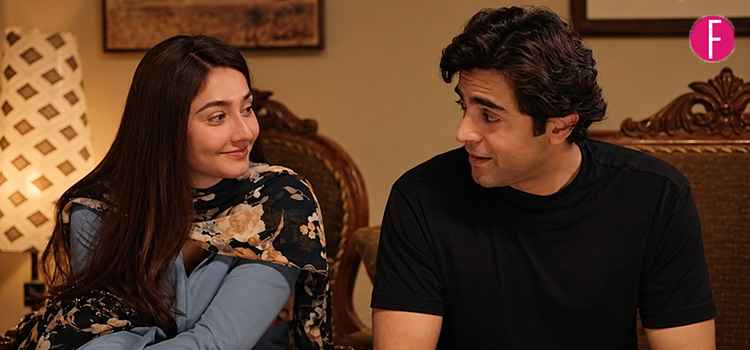
It is a sad reality that the women of today (and through the ages), have experienced so much domestic trauma in the face of angry husbands, fathers, brothers and yes, even sons, that they now turn to a halo-topped version of the Pakistani drama character who can keep it together in practically all situations – Abu Bakar and his calm is the culmination of all those fears that not only unmarried women, but their mothers also carry within them, my dear daughter, please don’t marry a man who doesn’t know how to keep his cool.
You see, women are so traumatized with a man in their life crashing 24/7 that Abu Bakar’s calm speaks loud. Sad but true.
And this is precisely why Dar e Nijaat’s calm, composed character has sparked such a massive debate. Can we meet real life Abu Bakar’s, do we know them, or are they simply a figment of the writer’s imagination. And if they are in fact, real, how do we recognize them?
The litmus test for a future spouse? Pick a fight with him and see how he reacts – is he an Abu Bakar? If he keeps calm, you just landed yourself a prize. I kid you not, I heard this in passing. And for a moment, I got it.
This is what generational trauma looks like from a woman’s point of view, when a man unleashes his emotions, because his father (or mother did) when he was growing up, or because that’s what he learns when he has to express himself – it’s not communication, calm, tempered and assuring – it’s anger, often bordering on, or exhibiting rage. And it is how he has learnt to communicate. Not by walking away for the moment, not by announcing, ‘It’s late Zaryab, I need to wake up early, let’s continue this tomorrow” not with a “Why don’t you write down everything you want to say, and we’ll talk tomorrow” and not even by quietly listening to the storm and responding, not reacting, in a manner that diffuses the situation, not ignite it further.
But there are no Abu Bakar’s in real life, respond the nay sayers. He is downright robotic, unreal and a dangerous dream to sell our battered souls, who need real tools to deal with the real men in our lives – none of them ever as calm as Abu Bakar – a fairytale prince.
But then there are others who say, characters like Abu Bakar show the way, they inspire, remind us how a partner can be, an exemplary show of respect, restraint and calm – it’s cool to be Abu Bakar and even if you’re not, he’s a character one can try to learn from, like a larger than life role model, fallen from the skies, here to teach us why it matters to stay calm.
Dar e Nijaat, the drama has had its fair share of love and criticism. Zaryab, with her blundering moments, a heartbreak that many related to, Zamil with his chillingly relatable fanatacism, and then Abu Bakar – a man who is called out for being too good to be true, but yet, loved for showing women what a man can be, possibly the best version of him, if one wants to put theory into practice. No one is complaining about the beauty of the character, just the relatability of him – and the sad part? Many are waiting for him to fall, make a mistake, turn more grey than white and perhaps, more real.
Because in Abu Bakar we possibly see all the men we cannot meet, or will never meet. We see how the men we live with, or have grown up with, devoid of the qualities he embodies – calm, being right on top of the list. Hence when many wait for him to falter, they do so because they want to be reminded that they don’t have it so bad after all – see, it’s exactly how our mothers told us, and their mothers told them – all men are alike, there are no Abu Bakar’s in real life, and so, in fact, we don’t have such a bad deal after all.
Dar e Nijaat is just a fairytale. It’s not real. Zaryab’s pain is real, Zamil’s hypocrisy is real, but Abu Bakar, he’s just a feel-good character – one to aspire to but never really become. Because one can’t. And that reassures a lot of the women in difficult marriages, and a lot of the men who breathe a sigh of relief – he’s not for real, no pressure there. Carry on bro, we can continue to be ourselves – our shade of grey, or even black.
Because Pakistani dramas can show grey and black characters, but if they’re all white, then there’s a problem, they’re not real. And because many women are secretly waiting for him to prove he’s human, a version of a man they’ve seen or live with. In which case, I really hope there’s a skeleton in Abu Bakar’s cupboard – so that all women who struggle to make peace with angry partners take comfort in the knowledge that they don’t have it tough, they didn’t lose out on a perfect version of man, that calm men like Abu Bakar also have their weak moments. And so that all men know that even if they falter, like Abu Bakar might, at least give their life partners half the deal – the one that stays calm in the face of a storm, so that when their wife smashes a glass on the floor – she is allowed to rage, but he can still stay calm.
That’s the magic of men like Abu Bakar. And that’s why our trauma seeks a man to stay calm, so that we are finally allowed to lose ours!