

Ever heard of eczema? If not, then worry not as we’re going to tell you what it is, its types and causes!
What Is Eczema?
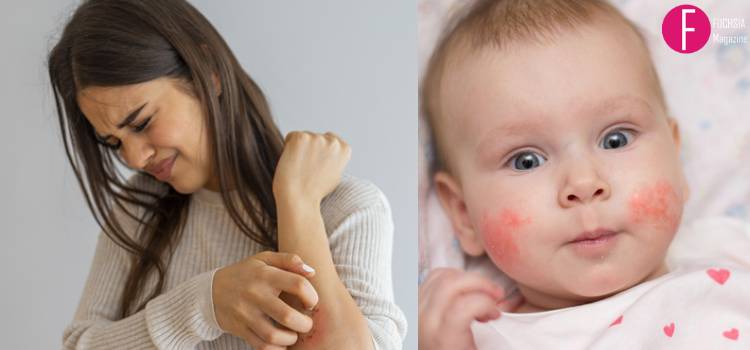
Eczema or Atopic Dermatitis is a skin condition which makes the skin red, itchy, dry and rough. It is usually common in children, especially newborns and infants but can happen to anyone at any stage in life. As eczema damages the skin layer, it can lead to sensitivity and irritation. As the area is sensitive and itchy, scratching it can worsen eczema or lead to skin infections. Hence, it’s advised to let eczema be and avoid scratching it. Kinda hard to bear it, but it is what it is!
Types
You read that right, eczema has types too which are as follow:
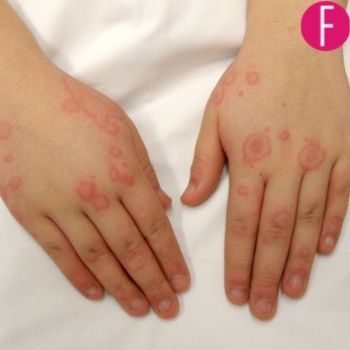
1. Contact dermatitis
This happens due to contact with a substance or can be an allergic reaction to something, such as food, a certain type of fabric, makeup and much more.
2. Dyshidrotic dermatitis
This one causes blisters across the fingers, palms of the hands and even at the sole of your feet.
3. Nummular dermatitis
This type of eczema causes blisters on the skin, which have fluid inside and in the long term, dry up. This happens in more chronic and severe cases.
The Root Causes
Scientifically, the causes of eczema haven’t been fully confirmed. However, it is said, it happens when the skin is fully exposed to an irritant or can be an allergic reaction too. These are environmental factors.
At times, it maybe genetic, i.e., the condition is in the family’s history.
Let’s have a look at a few of the environmental factors.
1. Irritants/Allergens

These include, reactions to makeup, soaps/shampoos/detergents, food such as peanuts, fruits and vegetables.
A few allergens include dust, pollen and at times pets too (unfortunate but true!).
2. Food

Food such as peanuts, fruits and vegetables can trigger an allergic reaction which can lead to eczema too. A few dairy products can be the trigger too.
3. Hormones

Women may experience eczema during hormonal changes, especially during pregnancy and during or post their menstrual cycle. It can also happen to teens during puberty stages.
Treatments
What to know about eczema

Medically reviewed by Reema Patel, MPA, PA-C — Written by James McIntosh — Updated on July 21, 2021
Eczema is a condition in which patches of skin become inflamed, itchy, cracked, and rough. Some types can also cause blisters.
Different types and stages of eczema affect 31.6 million people in the United States, which equals more than 10% of the population.
Many people use the word eczema when referring to atopic dermatitis, which is the most common type. The term atopic refers to a collection of conditions that involve the immune system, including atopic dermatitis, asthma, and hay fever. The word dermatitis refers to inflammation of the skin.
Certain foods, such as nuts and dairy, can trigger symptoms of eczema. Environmental triggers can include smoke, pollen, soaps, and fragrances. Eczema is not contagious.
About a quarter of children in the U.S. have the condition, as well as 10% of African Americans, 13% of Asian Americans and Pacific Islanders, 13% of Native Americans, and 11% of people who are white.
Some people outgrow the condition, while others will continue to have it throughout adulthood. This article will explain what eczema is and discuss its symptoms, treatments, causes, and types.

Symptoms
The symptoms of atopic dermatitis can vary depending on a person’s age and the condition’s severity and can vary by individual.
People with the condition will often experience periods of time when their symptoms worsen, followed by periods of time when their symptoms will improve or clear up.
The following sections will outline some of the potential differences in symptoms in more detail.
General eczema symptoms
In most cases eczema symptoms are mild. The most common symptoms of atopic dermatitis include:
- dry, scaly skin
- skin flushing
- itching
- open, crusted, or weeping sores
People with severe eczema may need more intensive treatment to relieve their symptoms. Continuous rubbing and scratching can also lead to skin infections.
Learn how to identify infected eczema here.
Eczema symptoms in People of Color
In People of Color, an eczema rash may appear gray or brown. This can make outbreaks harder to see.
However, People of Color who get eczema may also get dark or light skin patches even after eczema symptoms go away. These can last a long time. Doctors call these patches hyperpigmentation and depigmentation or hypopigmentation.
A dermatologist can evaluate these patches, which may respond to treatments like steroid creams.
Learn more about eczema in People of Color here.
Infant eczema symptoms
The following atopic dermatitis symptoms are common in babies under the age of 2:
- rashes on the scalp and cheeks
- rashes that bubble up before leaking fluid
- rashes that can cause extreme itchiness, which may interfere with sleeping
Childhood eczema symptoms
The following atopic dermatitis symptoms are common in children age 2 and above:
- rashes that appear behind the creases of elbows or knees
- rashes that appear on the neck, wrists, ankles, and the crease between the buttocks and legs
- bumpy rashes
- rashes that can become lighter or darker
- skin thickening, also known as lichenification, which can then develop into a permanent itch
Most people with the condition develop it before the age of 5 years. An estimated 60% of children will no longer show symptoms by adolescence.
African American and Hispanic children may have more severe eczema than children who are white.
Symptoms in adults
The following atopic dermatitis symptoms are common in adults:
- rashes that are more scaly than those occurring in children
- rashes that commonly appear in the creases of the elbows or knees or the nape of the neck
- rashes that cover much of the body
- very dry skin on the affected areas
- rashes that are permanently itchy
- skin infections
Adults who developed atopic dermatitis as children but no longer experience the condition may still have dry or easily irritated skin, hand eczema, and eczema on the eyelids.
The appearance of skin affected by atopic dermatitis will depend on how much a person scratches and whether the skin is infected. Scratching and rubbing can further irritate the skin, increase inflammation, and make the itching worse.
Treatments
There is currently no cure for eczema. Treatment for the condition aims to heal the affected skin and prevent flares of symptoms.
Doctors will suggest a treatment plan based on an individual’s age, symptoms, and current state of health.
For some people, eczema goes away over time. For others, however, it is a lifelong condition.
The sections below will list some treatment options.
Home care
There is no treatment for eczema. It is a lifelong condition. Bur there are several things people with eczema can do to alleviate symptoms & manage the condition.
They can try to:
- take lukewarm baths
- apply moisturizer within 3 minutes of bathing to “lock in” moisture
- moisturize every day
- wear cotton & soft fabrics
- avoid rough, scratchy fibers and tight fitting clothing
- usse a humidifier in dry or cold weather
- use a mild soap or a non-soap cleanser when washing
- take extra precautions to prevent eczema flares in winter
- air dry or gently pat the skin dry with a towel, rather than rubbing it dry after bathing or taking a shower
- where possible, avoid rapid changes of temperature and activities that cause sweating
- learn to avoid individual eczema triggers
- keep fingernails short to prevent scratching from breaking the skin
Consult your dermatologist for medications to treat the condition.
Some home remedies are suggested with apple cider vinegar and aloe vera gel to keep symptoms at bay.
So, now that you know what eczema is, and if you have it, find the root cause and take the necessary steps to avoid it in the future. The best course of action is to see your dermatologist for the best advice.
Sources: Healthline, Medical News Today, NHS

