

Wasim Akram, former captain of the Pakistan cricket team, has shed light on the dark secrets of his past life in his upcoming memoir titled Sultan. He revealed that he was addicted to cocaine post his cricket career when he craved an alternative adrenaline rush similar to that of a competition. He quit following the death of his first wife in 2009.
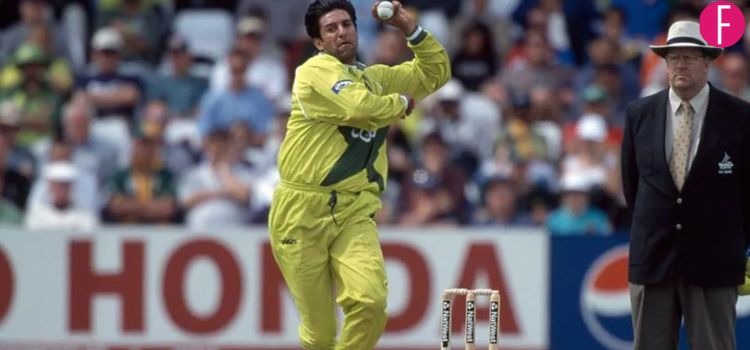
“I liked to indulge myself; I liked to party. The culture of fame in south Asia is all-consuming, seductive and corrupting. You can go to ten parties a night, and some do. And it took its toll on me. My devices turned into vices,” he wrote in his book as quoted by the ESPNcricinfo.
“Worst of all, I developed a dependence on cocaine. It started innocuously enough when I was offered a line at a party in England; my use grew steadily more serious, to the point that I felt I needed it to function.”
“It made me volatile. It made me deceptive. Huma, I know, was often lonely in this time . . . she would talk of her desire to move to Karachi, to be nearer her parents and siblings. I was reluctant. Why? Partly because I liked going to Karachi on my own, pretending it was work when it was actually about partying, often for days at a time.”
“Huma eventually found me out, discovering a packet of cocaine in my wallet . . . ‘You need help.’ I agreed. It was getting out of hand. I couldn’t control it. One line would become two, two would become four; four would become a gram, a gram would become two. I could not sleep. I could not eat. I grew inattentive to my diabetes, which caused me headaches and mood swings. Like a lot of addicts, part of me welcomed discovery: the secrecy had been exhausting.”
He sought help after his late wife discovered his drug use, but said he had a bad experience in a rehab facility in Lahore and fell back into the habit during the 2009 Champions Trophy, where he worked as a pundit.
“Try as I might, part of me was still smoldering inside about the indignity of what I’d been put through. My pride was hurt, and the lure of my lifestyle remained. I briefly contemplated divorce. I settled for heading to the 2009 ICC Champions Trophy where, out from under Huma’s daily scrutiny, I started using again.”
However he quit after his wife, Huma died of rare fungal infection mucormycosis.
“Huma’s last selfless, unconscious act was curing me of my drug problem. That way of life was over, and I have never looked back.”
Wasim Akram also addressed allegations of match-fixing during his career, again denying any involvement in corruption.
In 2000, Pakistan players Saleem Malik and Ata-ur-Rehman were banned from match fixing.
A report into the scandal by Justice Malik Qayyum found Wasim not guilty of match-fixing but did recommend that he be fined and not allowed to captain Pakistan because he refused to cooperate and “cannot be said to be above suspicion”.
The report said “there has been some evidence to cast doubt on his integrity” but Wasim said he did not read it until he wrote his book.
“I knew I was innocent,” he added.
“Everything was he said, she said, I heard from someone else, Wasim sent a message through someone else. I mean it doesn’t even sound right.
“It’s embarrassing because my kids have grown up and they ask questions.”
Admitting your flaws while being a well-known personality takes a lot of courage. A first in Pakistan and an inspiration to all those who are fighting the same battle. Do you appreciate influencers & celebrities such as Wasim Akram right here who’s talking about his struggle with addiction?

