

I belong to the Gen Z generation, and my relationship with Pakistani dramas has always been intense. I grew up watching stories where emotions were loud, conflicts were stretched, and drama often relied on background music to tell us exactly how to feel. Everything was heightened, almost urgent. So when I watched Tanhaiyaan, I was not prepared for how quietly it would undo all of that.
I started it on a day when I was feeling low. Not the kind of low that needs motivation or dramatic healing arcs. Just a soft, heavy kind of low. The kind where you do not want intensity. You want gentleness. You want something kind. Something honest. Something that does not try too hard to fix you.
I did not choose Tanhaiyaan because it is a classic. Not because people keep recommending it. I chose it because I was curious. Curious to see if older storytelling carried a kind of softness we seem to have lost today. What I did not expect was how deeply it would speak to me, not as nostalgia, but as something very present and very relevant.
Watching Tanhaiyaan felt less like consuming content and more like being in a conversation. The drama does not rush you. It does not shout. It gently invites you in. And slowly, you realise you are listening more than watching.
Here are fifteen things that I absolutely loved.
1. The first thing that truly moved me was seeing a father of two daughters, openly proud of being exactly that. No regret. No disappointment. No unspoken longing for a son. He calls them mere betay with affection, and complete confidence. And I kept reminding myself that this was 1985. There is no justification offered, no explanation given, no attempt to make his pride acceptable. It simply exists. And in that quiet normalcy, it feels almost revolutionary.
2. I loved how grief was portrayed. When the parents die, the sisters do not collapse dramatically. They grieve the way people actually do. In silence. In shock. In survival mode. It felt respectful.
3. There is no exaggerated antagonist. The challenge comes from life itself – financial hardship, grief, ego, and personal ambition. That felt refreshing in a world where almost every drama now seems to have an enemy to fight.
4. Haseena Moin’s writing shines in how naturally progressive it is. Feminism, independence, and emotional intelligence exist, without ever being announced. Every dialogue carries substance, even when it is funny. The humour is gentle but sharp, the emotions feel real, and the characters have the liberty to speak, act, and make mistakes without judgement. Nothing is preachy, yet everything leaves an impact.
5. I noticed the absence of background music. No dramatic score pushing emotions down my throat. If a moment felt heavy, it was because the writing made it heavy, not because violins told me to cry. That respect for the viewer is rare.
6. Zara became another reason I couldn’t stop watching. She is not written to be perfect or to inspire us through speeches. She is ambitious, confident, stubborn, and at times emotionally guarded. Watching her felt like witnessing a woman being allowed to exist fully, without punishment or apology. And let me remind you again – this was 1985, not 2025, a time when even today many dramas still show women having to beg for the right to work or to pursue their careers. Zara’s independence, her choices, and her dignity are treated as natural, not exceptional. That, to me, is women empowerment in its purest, most honest form.
7. I loved how men were written in this drama. They are emotionally available, flawed, respectful, and human. Not saviours, not villains.
8. Humour did not feel out of place. Characters like Qutbuddin (Qabacha), played by Behroz Sabzwari, bring laughter not through slapstick, but through timing and personality. It felt like a breath of fresh air every time the drama shifted tone.
9. The simplicity of the clothes and sets keeps the focus on the characters and the writing. Nothing distracts from the story. Everything feels realistic and believable, thanks to Shahzad Khalil’s direction. That was a time when art was given the space to perform, not designer dresses. The actors, the dialogues, and the emotions take the spotlight, and it makes the drama feel alive even decades later.
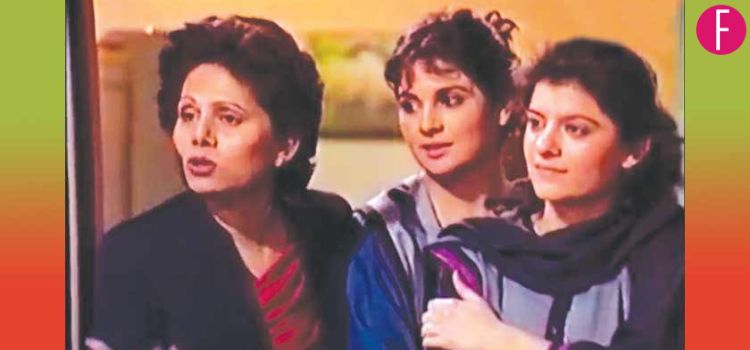
10. The love between Zara (played by Shahnaz Sheikh) and Zain (played by Asif Raza Mir) is patient and respectful. It grows slowly, and it feels grounded in friendship and mutual respect. There’s no toxic obsession, no melodrama – just a pure connection.
11. I loved how silence was allowed. Scenes did not rush to fill every second with dialogue or music. Sometimes, people just sat with their thoughts, like we saw Zara doing on those quiet nights. And in those moments, I found myself sitting with my own thoughts too, feeling the space to breathe, reflect, and simply exist.
12. Watching Shahnaz Sheikh, Asif Raza Mir, and Marina Khan in their prime was something I never imagined would be on my 2025 list. And yet, here I was, completely falling in love with their performances. It wasn’t planned, I just pressed play, and I didn’t pause until I finished it. Every glance, every pause, every word felt lived in, and it reminded me what acting at its purest, most heartfelt form can do.
13. What amazed me even more was that every single character, from Aani played by Badar Khalil to Bibi played by Durdana Butt, had something to offer the audience. None of them were just supporting roles; each had personality, humour, wisdom, or heart, and every interaction felt meaningful.
14. I wasn’t even born when Tanhaiyaan first aired, yet its world feels nostalgic without feeling cheesy. There’s a real warmth in the way its spaces, conversations, and routines are shown.
15. No one changes overnight. Characters learn, stumble, and adapt at a believable pace, which makes their journeys feel authentic and relatable.
Finishing Tanhaiyaan left me with a sense of calm that I did not expect. It is rare to watch a story that lingers gently in your mind, that makes you smile, think, and feel without demanding emotional drama. It reminded me that storytelling can be powerful even when it is understated, when it trusts the audience, and when it gives space for reflection.
It also made me appreciate the way classics like Tanhaiyaan were made – a time when writers, directors, and actors had the freedom to let characters breathe, make mistakes, and exist fully without being overshadowed by flashy sets, designer outfits, or forced drama. Today, so much of what we watch feels rushed, loud, and designed to grab attention in ten seconds, rather than letting a story unfold naturally.
And now, I am hopping onto Dhoop Kinare next, curious to see if it can evoke the same quiet magic. If Tanhaiyaan has taught me anything, it is that the best stories do not need to be loud to matter. They wait for the right viewer, and when you find them, they stay with you long after the screen goes dark. Honestly, I might not enjoy today’s dramas as much as I did back then, because I just witnessed a gem that got everything right – left, right, and center. It set a standard so effortlessly perfect that it makes modern storytelling feel rushed, forced, or impatient in comparison.


Comments 1