

I watched Neelofar over the weekend. After months of painfully slow cinema releases, this film felt like the sign I needed to step out and feel the cinema again — the whole ritual of it. I had only seen one teaser, so I went in basically blind (no pun intended), with only one major certainty: Fawad Khan is in it.
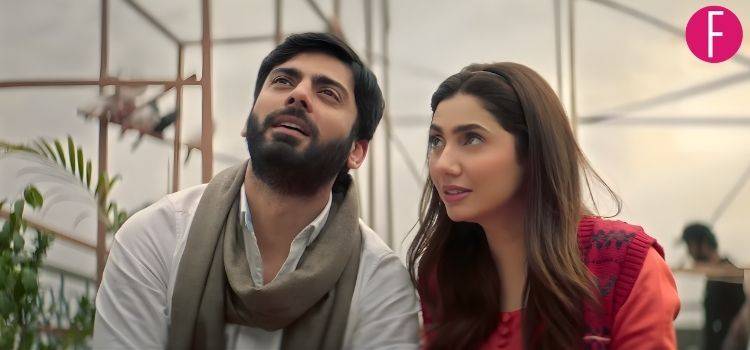
As I watched the Mahira–Fawad starrer, I started off invested and non-biased… and then the thoughts started forming. One after the other. So here are 15 thoughts I had while watching Neelofar, expanded, clearer, and with the same energy. (Alert: Spoilers ahead. Read at your own risk)
- I could literally see the women in the cinema hold their breath the second Fawad appears onscreen — that collective inhale is hilarious and relatable. His presence has that old-school charm you don’t see often anymore. For a moment, I felt like I’m watching him walk straight out of the Khoobsurat set and into Neelofar, same effortless charisma, same quiet pull.
- The story initially feels genuinely fresh. A blind protagonist, an Urdu writer, and a narrative built on gentleness rather than loud drama — it instantly feels different from our usual big-screen formula. You can tell they’re trying to craft something more poetic and character-driven, not just a typical love story.
- For the Urdu literature fans, this film is basically a warm hug. The vocabulary isn’t unnecessarily complicated, yet it carries weight. The poetry, the metaphors, the dialogues — you can see an actual effort to revive a language that often gets sidelined in mainstream cinema. Even the way Mansoor narrates things feels like reading a page out of old Urdu prose. Especially the scene where he’s reciting Faiz Ahmed Faiz’s ‘Mujhse Pehli Si Muhabbat’ – heart eyes!
- Lahore looks absolutely gorgeous. Those establishing shots of Badshahi Masjid, the smaller lanes, the chai stalls, the evening lights — everything has a homely, lived-in vibe instead of feeling like a tourist brochure. And trust me, for me as an Islamabadi to admit Lahore looks this good in a movie… that’s character development.
- Okay now please don’t come at me, but Mahira’s portrayal of blindness isn’t consistently convincing. She’s an accomplished actress and clearly puts effort into capturing Neelofar’s innocence and internal world. But when you play a visually disabled character, the biggest challenge is the eyes — and some scenes nail it while others slip. There are moments where her eye-line wanders or she seems to “look” at things she shouldn’t be able to see, which breaks the immersion just a bit.
- The Humsafar nostalgia is there, but the chemistry isn’t giving Humsafar-level intensity. Mahira and Fawad have undeniable history, but as Neelofar and Mansoor Ali Khan, something feels slightly off. My mother whispered they look awkward; I think it’s more like the chemistry isn’t flowing naturally in some scenes. It’s not bad, just… not the electricity we all hope for.
- Sarwat Gilani, despite having very limited screen time, absolutely owns her moments. The calm confidence, the grounded presence — she brings a fresh layer to the story. For a split second, I genuinely wonder what the movie would feel like if she were Neelofar. Her vibe has that quiet strength the role needs.
- Atiqa Odho is pure elegance. Her expressions, her dialogue delivery, her overall aura — she fits her character effortlessly. There’s a certain grace veteran actresses carry that younger actors can’t replicate, and she uses that beautifully.
- Madiha Imam’s track has standout potential, but the writing doesn’t let it breathe. Her storyline starts strong, hints at emotional complexity, and then suddenly rushes into a confession that comes out of nowhere. It feels like someone presses fast forward on her arc while the rest of the film is on slow motion.
- Don’t come at me for this one — but the Humsafar callbacks are unnecessary. The black dress moment, the overall attempt to recreate the Asher-Khirad magic… it isn’t needed. Nostalgia only works when it feels organic, not when it’s sprinkled in like, “Hey guys, remember this? Please remember this.”
- Credit where due: the donor twist is one of the strongest suspense beats. When Mansoor finds out Neelofar needs a donor, you can feel the collective “oh no” in the cinema. The will-he-won’t-he tension is one of the few parts that genuinely pulls me in. For a moment, everyone is sitting forward, trying to guess the outcome.
- One thing the film does succeed at is reminding you to appreciate the little moments. Neelofar’s worldview — her joy, her simplicity, her courage — quietly nudges you to pause and breathe. To live a little in a world where we’re constantly running. That theme lands well.
- But the pacing needs serious tightening. Some scenes stretch so long that my mind wanders off into five different directions. By the time certain emotional beats arrive, the buildup has already lost momentum because we spend too many minutes lingering on the same note.
- Some of the dialogues feel like someone’s 3am Notes app poetry — heartfelt but unpolished. A few moments need cleaner writing, not because the ideas are bad, but because they need a sharper emotional punch. At times, it feels like the film wants to sound profound instead of being profound.
- And yes, the ending is going to divide the audience. Some will call it poetic, others will think it’s abrupt or unearned. Personally, I sit there in the cinema like, “Okay… so that’s how we’re ending it?” It doesn’t land with the emotional impact the buildup promises.
When the credits rolled, I couldn’t decide if I loved the film or just loved parts of it. Was I satisfied as a viewer or not? But maybe that’s the point. Neelofar isn’t trying to be neat, it’s trying to be felt. And whether you walk out smiling, confused, or mildly annoyed, you definitely walk out with an opinion. Which, let’s be honest, is more than most releases can claim these days.


just to add something here. I have three siblings are who are visually impaired. Even in the close family interactions, they are not looking directly from where the voice of the other person is coming, not exactly there, and also it becomes a habit over the years. however, upon touch or understanding the person or child close to them, they tend to improve though not as we the sighted imagine, how a blind person should be using their eyes. It is a very sad thing that people are actually talking about how Mahira should portray as a blind person and how her eyes are not in the right spot. First of all, after discussing with my siblings, I got to know that, to them it does not even matter how exactly pointed their eyes are. Do people even know that after loss of eyesight, over the years, the sense of hearing is also effected and the judgements involved with that? What my siblings and other visually impaired I have met in all these years, told me is that the last thing is that they want to be portrayed by society as helpless subjects whose lives are miserable. They use smartphones, laptops, enjoy audio-described movies, novels, work in offices, some travel abroad alone. even my brother comes to visit me from Islamabad and guides his wife who is driving while he is glued to the map to reach a certain location through his iPhone which is directly him by sound. Firstly, we as a society have yet to actually speak with the visually impaired or others with disabilities, their point of view.