

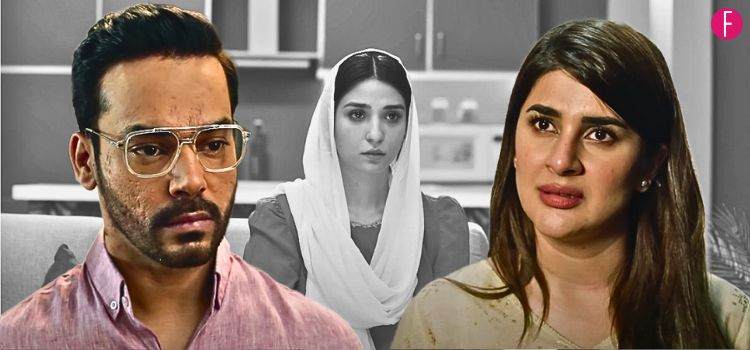
Jannat Se Aagay – Will Tabassum redeem herself by telling the truth about Jannat and not lying about her on Ayla’s show? Umera Ahmed, in signature style, tells a story about material needs, selfish desires and most importantly, how we are losing our inner peace and contentment despite owning so many things.
The Backstory We Needed
It was a heart warming and much needed backstory of Jannat and Noman that we got to see. The timing of this backstory was also very accurate. While we were already feeling that people around Jannat are not being fair to her, not honest with her, and our hearts were melting for her, seeing her as that young, bubbly and ‘so in love with her husband Jannat’ made us feel her loss even more.
Another important point the backstory established was that Jannat always wanted more in life. She wanted more and better from life, a better lifestyle, etc etc. Hence her path chasing after more and better materialistic desires just fell into place. In the course of this journey, she lost her connection with Noman, misplaced her priorities, and is now paying a price for that.
Therapy Insights
Jannat’s conversation with the therapist also made many of us realize that despite having a great lifestyle which many around us might envy, it cannot guarantee that we have “sukoon”. Sukoon at the end of the day comes with family and having a deeper connection with people around us.
Farooq’s Dilemma
The drama mirrored the frustration of Farooq. He is the kind of guy who doesn’t have the courage to stand up and make Tabassum do what he really wants her to do, but he also cannot leave her alone. So, he is in pain and has no idea how to overcome this challenging moment in their lives. Although he does try to stop Tabassum from lying about Jannat in the show.
Tabassum’s Responsibility vs Destiny
The line by Tabassum, “Hum Jannat jee kay against ja ker show mein kuch bhi keh dein, hoga wohi jo hona hoga”. This line is highly questionable. Yes, at the end of the day whatever Allah wills, happens, but that doesn’t mean that one starts thinking: “I can do any wrong, but it doesn’t matter, because what is destined to happen, will happen anyway” The dialogue seems to be taking the responsibility away from the action.
If the idea was to show Tabassum’s belief in Allah not punishing her for what she didn’t do, then her first dialogue was enough when she tells Farooq: “Allah will not punish me for what I have not done.”
Remorseless Noman
Noman seems to have no shame and no conscience. Even after being caught, he was not remorseful or felt he had made a mistake.
The Bitterest Pill To Swallow
Despite Jannat’s ambitious streak and her disregarding people’s emotions in her drive to get ahead in life, we ended up feeling bad for her at not having a single person around her who was genuine to her. Everyone was just using her. She seemed to miss Tabassum and her dedication at this point though. Jannat was ambitious and in her race for wealth and luxury, she forgot about human feelings, but can this justify her being used? Or is it simply one of life’s bitter truths: if you use people, you end up being used too?

