

Will Columbia University Students Achieve What The United Nations Has Been Trying To Do In Over 7 Months?
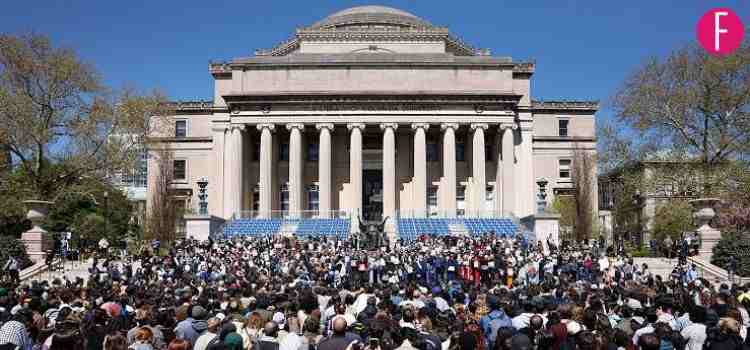
The protests regarding Israel vs Palestine debate moved from online to street activism. Much as world leaders, especially USA, who recently vetoed a move to recognize Palestine as an independent state by the United Nations, wished the war didn’t have to come home, but the events of October 7th 2023 are not going anywhere, anytime soon.
When does terrorism become resistance? When do we change media terminology to match public perception? When does a defence of your homeland become genocide? Is pro Palestine and anti-Semitism one and the same thing?
These are the questions plaguing the world today and American university campuses, ranging from Columbia University in New York city, to NYU and even the affluent corridors of Yale and Harvard have been reverberating with student protests over the Palestine-Israel conflict.
A History Of Activism
But this is not the first time university students in the USA have made their voices heard. From protesting about Black lives matter to pro-Nazi sentiments on the one hand, to support of anti-Israeli lobbies on campus in early 2000, student voices have often spoken on a diverse range of flashpoints, often without vested interests except the urge to see justice or equality meted out to the aggrieved parties (what they are presumably taught in school). And this is what has often formed the backdrop to change in power corridors.
Columbia University student activism over the years has helped drive change from ensuring that black students are not deprived access to a new gymnasium, to forcing divesting of investment in Pentagon weapons programs as well as divestment of financial bonds in 1978 in the pro South Africa regime (supporting the then Apartheid government), to protesting about the Iranian president Ahmedinejad in 2007 delivering a speech on campus – the university is not new to student activism.
But what’s different this time?
Jewish students themselves are part of the protest, flagging the university’s president Dr Nemat Talaat Shafik’s call to the NYPD (New York Police Department) to remove student protester on campus. Moreso, students have called to halt pro-Israeli funding by the university and many have been arrested or suspended from attending classes.
What are student demands?
The students are protesting over the suppression of free speech, where the university administration and a general sentiment in the US conflates pro Palestinian voices with anti-Semitism. Furthermore, there is a call to divest from investments in organizations that profit from Israel.
Of late, Columbia University has called for classes to be held virtually as opposed to in-class and students have complained that they were accused of trespassing the campus lawn meant to host such protests even before they had been suspended. How do you trespass an area when you are meant to be enrolled in the university and entitled to being on campus, they ask? Unless you are suspended even before the protest began?
Here’s how student activism is playing out so far and why world leaders and the general public, have an eye on the activities gaining worldwide coverage (though some argue, not without bias) on social media.
Hoping to mobilize solidarity through college sit-ins and protests:
Gaza photographer Motaz makes an appearance at the Columbia university campus:
Professors join in on campus to stand by student demands:
Calling out unethical profiteering and action for change:
Gaza solidarity on campus:
Jewish students joining in to raise a voice:
The deadline has passed, what now:
While many argue that the protests might just die down, just like online rage and repeated calls for an end to the Palestine-Israel conflict by influencers, public persona, world leaders (some) and the United Nations, perhaps the protests at a student level might flag the waves of change in the US, the biggest ally to Israel and also, perhaps, the only administration that can help forge a peaceful negotiation process, if, it’s not too late already.
As for Columbia University and related colleges, the response of the college administration might be watched by many donor organizations as a sign to pull their financial support in coming years as well as shift student enrolments to other colleges. This has happened in the past and whose to say where the wind blows in 2024?
But the question remains: Will Columbia University Students Achieve What The United Nations Has Been Trying To Do In Over 7 Months? Force the US to take action and put a tentative end or initiate a sincere peace process in the Middle East?
Do the real changemakers among us, lie in the power of ordinary citizens – you and me, to mobilize change? Have we been looking in the wrong direction all along? The fault, dear Brutus, lies not in our stars but in our (leaders) that we are underlings? Or … in ourselves, and our capacity to not act sooner?
Time to find out soon!

