

Shahid Afridi has come under fire after a photo surfaced showing him with individuals from the Friends of Israeli organization.

Twitter has been in turmoil since last night following a post by the Friends Of Israel account. The post included a photo purportedly showing Pakistani cricketer Shahid Afridi at a vigil advocating for the release of Israeli hostages.
Twitter’s Take On The Incident

Shahid Afridi has denied the claim, stating that the photo is misleading. He explained that he was approached by individuals who he believed were fans, and he agreed to take a picture with them, unaware of their actual intentions.
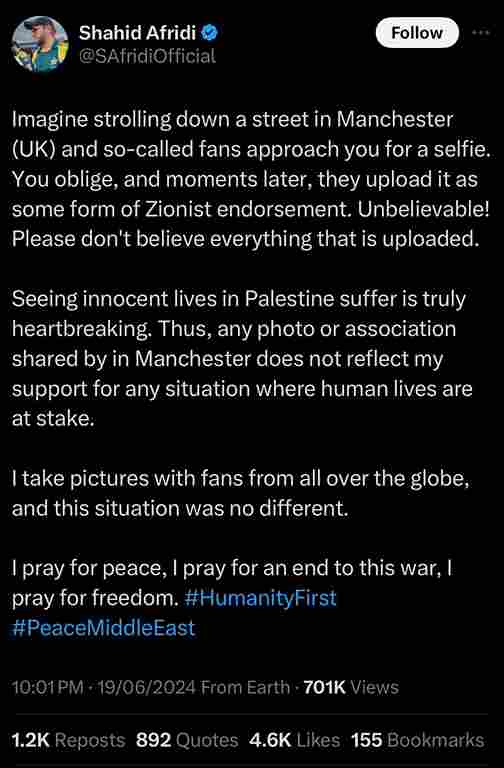
On the other hand, the Friends of Israel Twitter account has asserted that Shahid Afridi approached them and was fully aware of the situation. They claim that they were clearly holding placards advocating for the release of Israeli hostages, and Afridi knew exactly what he was doing when he posed for the photo.

We’re not sure what just happened in Manchester, but it seems that public figures need to be more aware of how their image is publicized. Fans are questioning Shahid Afridi’s photograph surfacing on a Friends of Israel platform—damage control or low IQ? While some supporters have defended him, others are left perplexed.
Public Calls Out Shahid Afridi For Not Referring The Genocide

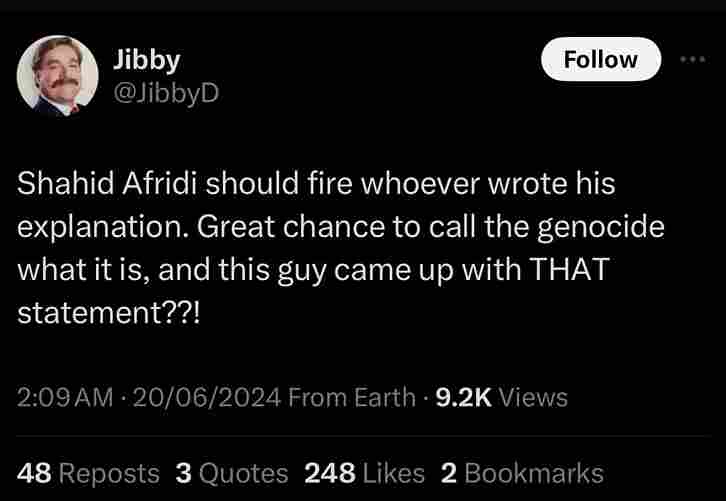

Was Afridi genuinely unaware, or is he attempting damage control? Should celebrities be held accountable for every interaction, even if taken out of context? This incident forces us to confront the blurred lines between personal actions and public perceptions. In an age where a single photo can spark outrage, how can public figures navigate their public personas without falling into controversy? And perhaps more provocatively, are we, as a society, too quick to judge and condemn based on incomplete narratives?
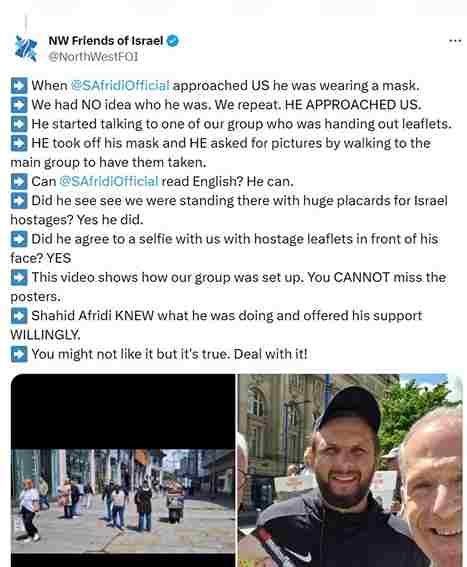
The Friends Of Israel Twitter account has come back with a retort. Shahid Afridi has not responded to further posts.
Fans have taken to either defending Afridi or blaming him for being unaware, ignorant or criticizing him for maybe, party to the demonstration. This is a developing story.

