

Ahmad Nawaz, a resilient survivor of the tragic Army Public School (APS) attack in Peshawar, has recently been honored with the British Empire Medal (BEM) by King Charles III. This prestigious award recognizes Nawaz’s remarkable contributions to youth welfare and his unwavering dedication to combating extremism. Nawaz’s journey from a victim of terror to a global advocate for peace and education is a testament to his strength and commitment.
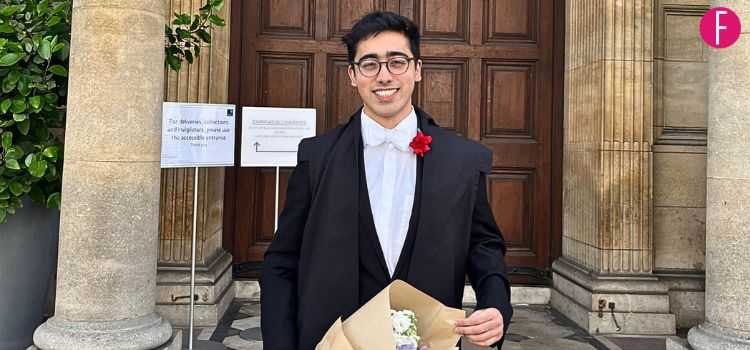
Ahmad Nawaz was a 14-year-old student at the Army Public School on December 16, 2014, when it fell victim to a horrific attack by Tehreek-e-Taliban Pakistan (TTP) militants. The attack resulted in the tragic loss of 132 students and nine staff members, leaving the nation deeply scarred. Nawaz, who suffered severe injuries and lost his brother Haris in the massacre, displayed extraordinary bravery by pretending to be dead to survive the ordeal.
After the attack, the medical team flew Nawaz to the UK for treatment at the Queen Elizabeth Hospital in Birmingham. His harrowing experience and recovery did not deter him from pursuing his education; instead, they fueled his determination to make a positive impact. Thus, Nawaz’s educational journey continued despite the trauma, and he has used his platform to advocate for youth welfare and counter-extremism.
The British Empire Medal Honor
The British Empire Medal, awarded by King Charles III, is one of the UK’s highest civilian honors, recognizing individuals for their exceptional service to their communities and beyond. Nawaz received this accolade in acknowledgment of his dedicated efforts to promote youth welfare and combat extremism. Moreover, his personal story of survival and resilience has been a powerful tool in raising awareness about the dangers of radicalization and the importance of education.
In a heartfelt message on social media, Nawaz expressed his gratitude, stating, “I am immensely honored to share the incredible news that HM King Charles III has awarded me the prestigious Hon. British Empire Medal (BEM). The BEM is one of the highest honors awarded in the UK.” He highlighted that this recognition symbolizes the triumph over terrorism and represents a victory for everyone affected by the APS tragedy.
As part of my campaign, I provided scholarships to many young people in the northwest region of Pakistan, the Khyber Pakhtunkhwa region. I’ve also built a school in Lebanon for three hundred refugee children. I began an initiative called Dialogues for Change. It’s an online forum on which I invite speakers of different backgrounds specializing in human rights and youth empowerment with the purpose to connect them with my audience. The aim is for young people to get advice from experts on how they could be part of the change making process and be involved in that despite the pandemic. An issue is that children in Peshawar and similar regions are illiterate – “they can easily get indoctrinated into becoming terrorists”. To that end, Ahmad set up his ‘Empowerment Project’. Syrian refugees had fled into Lebanon, and camps provided food and shelter but no education. Fundraising in the UK Ahmad managed to build a school near the Syrian border to give these children the learning they needed. He set up further provisions for the north-western regions of Pakistan, too: “it’s self-sustaining at this point. Three hundred kids and counting!”.
Back in the UK Ahmad got enlisted by the government to speak to schools and encourage counter-terrorism and antiradicalisation efforts, leading the ‘Action Counters Terrorism’ campaign. In 2015, less than a year after the attack, he was invited to the House of Lords to speak about his efforts.
Ahmad Nawaz has also made history by becoming the second Pakistani to serve as the president of the Oxford Union, following in the footsteps of former Prime Minister Benazir Bhutto.
Global Recognition and Impact
In the wake of Ahmed’s recognition, one of the most immediate impacts we can anticipate is a renewed focus on educational reform in Pakistan. Let’s not forget that Pakistan has one of the highest numbers of out-of-school children in the world, with over 22.8 million children between the ages of 5 and 16 not attending school. This isn’t just about numbers; it’s about missed opportunities for young people to break out of cycles of poverty, violence, and inequality. Ahmed’s story is a testament to how education can be a lifeline, pulling individuals out of despair and setting them on a path toward global influence.
Nawaz’s commitment to making a difference extends beyond this recent honor. In July, they awarded him the prestigious Princess Diana Award for his humanitarian efforts. His tireless advocacy includes touring schools across the UK, sharing his personal experiences to inspire and educate students about the perils of extremism. His achievements are not just personal milestones but also serve as a beacon of hope for survivors of terrorism and their families. Moreover, Nawaz’s journey from a survivor to an international figure of resilience underscores the importance of investing in youth and combating the ideologies that fuel violence and extremism.
Ahmad Nawaz’s story is a powerful reminder of the enduring strength of the human spirit. His awards not only honor his personal achievements but also highlight the broader fight against extremism and the importance of empowering youth. Thus, through his continued advocacy and personal example, Nawaz remains a symbol of hope and resilience in the ongoing battle for peace and education.
Sources: Geo News, Tribune, The News

