

Arundhati Roy, acclaimed author and activist, recently used her PEN Pinter Prize 2024 acceptance speech to condemn the ongoing genocide in Gaza.
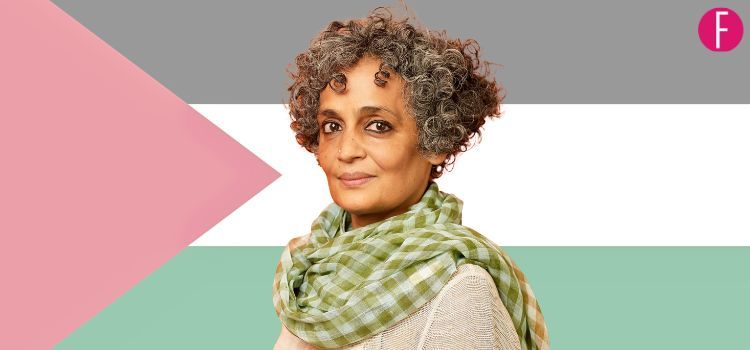
Arundhati Roy, the acclaimed Indian author and activist, has long been a formidable force in the literary world. Best known for her Booker Prize-winning novel, “The God of Small Things,” Roy has captivated readers with her evocative storytelling and profound insights into the human condition. Her books, including “The Ministry of Utmost Happiness” and a collection of essays like “My Seditious Heart,” have consistently topped bestseller lists and garnered international acclaim. However, Roy’s influence extends far beyond her literary prowess. Her fearless activism and unwavering commitment to social justice have made her a vocal critic of systemic oppression worldwide.
“I stand here today in solidarity with the people of Gaza, with the Palestinian people, and with all those who resist occupation and oppression. This prize is not just mine; it belongs to all those who fight for justice and dignity.”
Arundhati Roy
English PEN recently awarded Roy the PEN Pinter Prize 2024, an honor in memory of playwright Harold Pinter. This prestigious award recognizes writers who exhibit outstanding literary merit and an unflinching commitment to truth. In a poignant and powerful move, Roy announced her decision to donate her share of the prize money to the Palestinian Children’s Relief Fund, a gesture that underscores her solidarity with the Palestinian people amid the ongoing genocide in Gaza.
A Call for Awareness & Solidarity
During her acceptance speech delivered at the British Library in London on October 10, 2024, Roy not only expressed gratitude to English PEN and the jury but also emphasized the critical need for awareness about the humanitarian crisis in Palestine. Here are key points from her speech regarding the situation in Gaza:
1. Ongoing Genocide
Roy characterized the current Israeli offensive in Gaza as a “televised genocide,” denouncing the continuous violence as part of a colonial occupation and apartheid state. She pointed out that the death toll has reached 42,000, primarily affecting women and children. She highlighted the horrific impact on civilians, stating, “We are witnessing the destruction of a people and their land, their history, and their future.” Roy urged the audience to recognize the scale of suffering and the urgency of the situation, imploring, “What is happening in Gaza is not just numbers; it’s lives being extinguished every day.”
2. Historical Context of Oppression
Roy stressed that the violence in Gaza did not begin on October 7, 2023, when Hamas attacked Israel. Instead, she argued that it is rooted in decades of Israeli occupation and subjugation of the Palestinian people. She recounted significant events in Palestinian history that have led to the current crisis, stating, “This is the culmination of a long history of settler colonialism, where the land and lives of Palestinians have been systematically erased.” Emphasizing the continuity of oppression, Roy remarked, “For over 75 years, Palestinians have endured displacement, violence, and erasure; what we see today is merely an escalation of a long-standing injustice.”
3. Dehumanization of Palestinians
Roy highlighted the systematic dehumanization of Palestinians by Israeli leaders, referencing derogatory terms used by prominent figures like Menachem Begin and Golda Meir. She noted how such language reflects a broader ideology that justifies violence against an entire people. She stated, “When a people are dehumanized, their suffering becomes invisible. This is the first step towards genocide.” Roy stressed that this dehumanization not only facilitates violence but also desensitizes the international community to the plight of the Palestinians. She urged, “We must confront this language and the policies that arise from it, recognizing that the very framing of the conflict strips away the humanity of those suffering.”
4. Resistance and Agency
In her speech, Roy emphasized that oppressed peoples have the right to resist their oppression. She firmly rejected the idea of imposing moral equivalence between the actions of Hamas and the extensive violence inflicted by Israel and the United States. Roy articulated, “The Palestinian struggle is not just a response to violence; it is a fight for survival against a state that seeks to eliminate them.” She highlighted the importance of recognizing the agency of Palestinians in their struggle for justice and self-determination, stating, “They have the right to fight back against oppression, and we must support their struggle for liberation.”
5. Global Responsibility
Roy called attention to the complicity of the United States and Europe in facilitating this ongoing violence. She argued that by supporting Israel unconditionally, these nations share responsibility for the atrocities committed against Palestinians. As she put it, “If you are not actively resisting this genocide, you are complicit in it.” She urged individuals, particularly those in positions of power, to take a stand against the injustices in Gaza. She emphasized the moral imperative to speak out, saying, “We must not remain silent. Silence is complicity, and complicity is a betrayal of our shared humanity.”
A Broader Context of Injustice
Throughout her speech, Roy also mentioned her comrades in prison in India, drawing attention to the broader theme of oppression faced by those who speak out against injustice. By linking her activism for Palestinian rights with her solidarity for political prisoners in India, Roy underscored the interconnectedness of struggles for justice worldwide. She stated, “Injustice knows no borders. The fight for freedom and dignity must be a global endeavor.”
Arundhati Roy’s acceptance of the PEN Pinter Prize is not only a recognition of her literary contributions but also a rallying cry for action against the genocide in Gaza. Moreover, her donation to the Palestinian Children’s Relief Fund signifies a commitment to humanitarian efforts while calling upon the literary and artistic communities to engage in activism. As she eloquently articulated, the fight for justice is not merely a matter of words; it requires unwavering resolve and action.
Roy’s voice, powerful and unyielding, serves as a reminder that the struggle against oppression, whether in Gaza or elsewhere, demands our collective attention and response. The time to act is now, and the call for solidarity with the Palestinian people is more urgent than ever.
Sources: Kashmir Life, Canadian Dimensions, Muslim Mirror

