

In the early hours of Sunday, Syria witnessed the fall of a dynasty as opposition forces declared the nation liberated from President Bashar al-Assad’s rule. The swift and dramatic end to over 50 years of Assad family dominance has been hailed as a historic moment. Streets in Damascus erupted in celebration, but beneath the jubilant scenes lies an air of profound uncertainty about the future of a fractured nation.
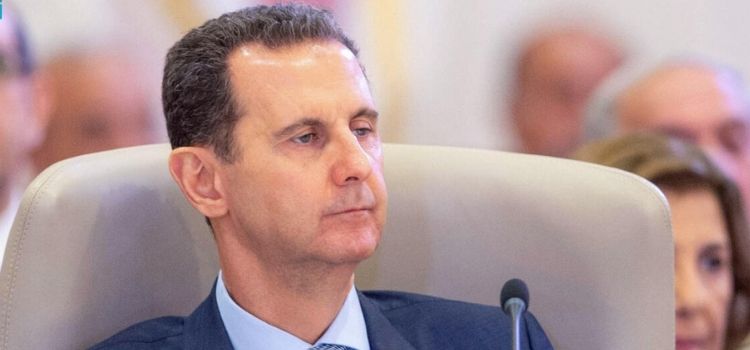
A lightning offensive, spearheaded by the Islamist group Hayat Tahrir al-Sham (HTS), toppled the government in record time, with key cities like Aleppo, Hama, and Homs falling within weeks. Syrian government forces, battered by years of conflict, crumbled under the rapid advance. Assad himself fled the country, leaving a void that has sent shockwaves through the region.
As foreign powers and regional actors scramble to react, Syria now faces a difficult transition. Amidst this chaotic shift, critical questions emerge about the country’s future and the broader geopolitical consequences for the Middle East.
1. What Kind of Government Will Replace Assad’s Rule?
Let’s start with the most immediate concern: who’s in charge now? Hayat Tahrir al-Sham (HTS) has emerged as the dominant force, but its track record and Islamist roots make this transition anything but straightforward. While HTS leader Abu Mohammad al-Jolani has emphasized a more inclusive and pragmatic approach, skepticism remains high.
The most likely outcome is a conservative government rooted in Islamic principles, but not an outright theocracy akin to the Taliban. HTS’s rhetoric suggests some level of tolerance for minorities, but this could easily become lip service if political realities demand otherwise. Ethnic Kurds and religious minorities like Christians and Alawites will demand genuine representation, but whether HTS has the political will—or capacity—to deliver remains to be seen.
In the best-case scenario, Syria might see a governance model resembling a hybrid Islamic democracy. Still, in the worst case, we could witness internal factionalism spiraling into another civil conflict.
2. Will Russia Provide Assad a Safe Haven?
Assad’s escape to Moscow feels like a chapter ripped straight out of history—reminiscent of the Shah of Iran or Afghanistan’s Mohammad Najibullah. Russia’s relationship with Assad has always been pragmatic; they needed him as a symbol of their influence in the region, but now he’s become a liability.
The decision to host Assad comes with significant risks, especially when balancing Russia’s relations with more moderate or reformist factions in the Middle East. Many countries in the region, particularly the Gulf states, have long been eager to see Assad gone, and some may view Russia’s support for him as a barrier to long-term stability. For Russia, the cost of hosting Assad will be weighed against the broader strategic interests of maintaining influence in the region, securing economic and military partnerships, and using the asylum offer to further its diplomatic aims on the global stage.
3. How Will the Fall of Assad Impact Shia Communities in Syria and Beyond?
This question cuts to the heart of sectarian geopolitics. Assad’s regime was a linchpin for Iran’s “Shia Crescent” strategy, connecting Tehran to Hezbollah in Lebanon via Iraq and Syria. With Assad gone, the Shia communities he once protected are left vulnerable.
The immediate fallout will likely be felt by Syria’s Alawite population, a Shia offshoot, and Assad’s traditional power base. Their future looks bleak, as they may face retaliation from Sunni-majority opposition forces. On a broader level, Iran’s influence in Syria is bound to diminish, forcing Tehran to recalibrate its regional strategy.
This shift could embolden Sunni states like Saudi Arabia to assert dominance in Syria, potentially reigniting old rivalries. For Iran, the challenge will be maintaining support for Hezbollah without Syria as a reliable corridor.
4. What Are the Implications for Israel and the “Greater Israel” Agenda?
Israel has already capitalized on the power vacuum created by Assad’s fall, targeting Syria’s chemical weapons stockpiles and celebrating the weakening of Iran and Hezbollah’s influence in the region. As Syria fragments, Israel may see an opportunity to assert itself further, particularly regarding its territorial ambitions tied to the “Greater Israel” agenda—a term often linked to Israel’s long-term strategic goals.
Will the fall of Assad embolden Israel to push its “Greater Israel” agenda, including further annexation in the Golan Heights and beyond? It is likely. The Golan Heights, already under Israeli control and internationally disputed, may see an accelerated push for annexation. The absence of a cohesive Syrian state and the diminished threat from Iranian-backed forces could encourage Israel to consolidate its territorial gains.
Beyond the Golan, Israel may adopt a more assertive regional posture, expanding settlements in contested areas and lobbying for international recognition of these moves. While the global focus on Syria’s reconstruction may limit immediate pushback, such actions risk reigniting regional tensions, particularly with Arab states wary of unchecked Israeli expansionism.
5. Can the Region Avoid Another Extremist Resurgence?
A power vacuum is every extremist group’s dream scenario, and Syria is ripe for exploitation. HTS’s ability to consolidate power and prevent chaos will be a litmus test for the region’s stability.
The situation is precarious. If HTS manages to establish a functioning government, it could stem the tide of extremism. However, if internal divisions erupt or if minority groups are sidelined, ISIS or similar groups could stage a comeback.
International players like the U.S. and Turkey will likely intervene to prevent such an outcome, but their priorities may clash. For instance, Turkey’s focus on containing Kurdish autonomy could undermine broader efforts to stabilize Syria.
This is a rapidly unfolding situation, with key developments expected to shape the region’s future in the coming days. The world watches closely as Syria’s power vacuum ignites both hope and apprehension across the Middle East.
Sources: Al Jazeera, Foreign Policy

