

Fatima Hassouna, a 25-year-old photojournalist from Gaza, was killed in an Israeli airstrike just one day after learning that a documentary she helped create had been selected for screening at the Cannes Film Festival.
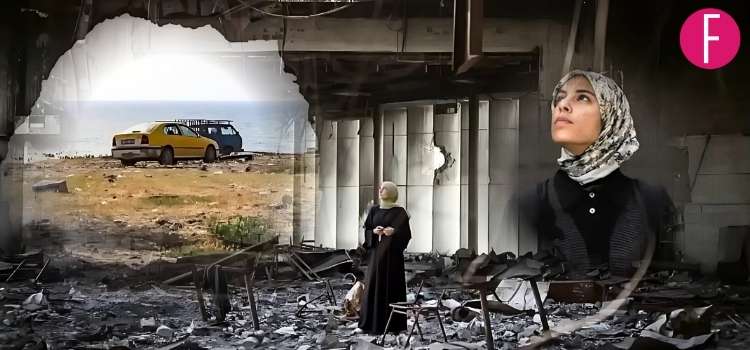
In Put Your Soul on Your Hand and Walk, a documentary by Iranian filmmaker Sepideh Farsi, the story of Gaza unfolds through the lens of a young Palestinian woman named Fatima. Told entirely through recorded video conversations between the two women, the film captures the raw reality of life under siege—its heartbreak, its resilience, and its human cost. For Farsi, who lives in exile in France, 25-year-old Fatima became more than just a subject; she became her eyes in Gaza. “Fiery and full of life,” Farsi recalls, “I filmed her laughs, her tears, her hopes, and her depression.”
Its Cannes premiere left the audience stunned at the festival on Thursday. As the cinema lights came back on, director Sepideh Farsi held up an image of the young Palestinian woman, killed along with her younger siblings on April 16, and urged the crowd to stand and applaud in her honour. “To kill a child, to kill a photographer is unacceptable,” Farsi declared. “There are still children to save. It must be done fast.” With foreign media barred from entering Gaza, Farsi had relied on video calls with Hassouna, shaping over 200 days of conversations into the documentary Put Your Soul on Your Hand and Walk. Here are five things to know about Fatima.
1. A Voice Through the Lens
In Gaza, colleagues fondly referred to Fatima Hassouna as “the Eye of Gaza”, a name that spoke to her sharp gaze and the stories she captured through her lens. For Fatima, every photograph held meaning: it was a way to amplify voices, preserve memories, and document truth. She studied multimedia at the University College of Applied Sciences in Gaza and quickly built a reputation for her powerful visual storytelling. Her work found homes on local and international platforms, including Untold Palestine, the Tamer Institute for Community Education, and the US-based Mondoweiss. Her photographs were published in The Guardian and featured in international exhibitions such as Gaza, My Beloved and SAFE.
2. A Celebration She Never Got to See
Fatima Hassouna was looking forward to a new beginning—she was engaged and planning to get married in August, shared Lama Abu Asi, a fellow journalist from Gaza. Even amidst the ongoing war, Fatima held tightly to her dreams. She would often speak with excitement about her wish to have a wedding outdoors, on a green stretch of land where children and families could gather. It wasn’t just about her big day, it was her way of imagining joy that could be shared by all, a quiet act of resistance against the relentless siege.
3. A Loud Death Heard Around the World
“If I die, I want a loud death,” Fatima Hassouna had once posted on social media. “I don’t want to be just breaking news, or a number in a group. I want a death the world will hear—an impact that lasts through time, a timeless image that can’t be buried.” It turned out to be her final message, and the world did hear. At the Cannes Film Festival’s opening ceremony, French actress and jury president Juliette Binoche paid an emotional tribute to the young photojournalist, saying through tears that Fatima “should have been with us tonight.” Her death has sparked a wave of solidarity in the film world. Over 380 leading filmmakers and actors signed an open letter denouncing the ongoing violence in Gaza, declaring they could no longer remain silent in the face of what they called genocide. Published in Libération and Variety, the letter includes signatures from Schindler’s List actor Ralph Fiennes, Cannes-winning directors, and stars like Richard Gere and Susan Sarandon. Many expressed deep shame over the film industry’s silence, and honored Fatima’s courage and legacy.
4.She Was Also a Poet
Fatima Hassouna was not only a fearless photojournalist, she was also a poet. Her words, much like her photographs, captured the unbearable weight and strange beauty of life under siege.
I don’t have a CV to recognise two eyes.
Mysterious — and I believe.
I do not have a story fit for a stranger to believe it,
and he believes.
I have no physical characteristics complete,
to fly outside of this gravity —
and I believe.
Maybe I’m ushering in my death now,
before the person standing in front of me
lifts his sharp sniper rifle —
and it ends.
And I’m done.
Silence.
Are you a fish?
I did not answer when the season asked me.
I didn’t know where these crows came from —
and pounced on my flesh.
Would it have seemed logical if I said yes?
Let these crows pounce,
at the end,
on a fish.
She crossed,
and I did not cross.
My death crossed me —
and a sharp sniper bullet.
I became an angel
for a city —
huge,
bigger than my dreams,
bigger than my city.
I became a poet.
In Gaza, carrying a camera has become as dangerous as carrying a weapon, perhaps even more so. Fatima Hassouna knew this better than anyone. “Like a sniper lifts his gun and shoots, I lift my camera and I shoot a photo,” she once said. Hassouna understood that bearing witness through the lens was an act of defiance in a place where the truth is under constant threat. Gaza is now the deadliest place in the world for journalists, with dozens killed simply for documenting a war the world struggles to confront. Hassouna’s camera was a protest, a lifeline, a last hope that someone, somewhere, might care enough to look.
Click Here to see some of Fatima’s powerful photography.
Sources: Arab Now, Middle East Eye

