

Israel’s airstrikes on Damascus mark a sharp escalation amid rising tensions with Syria over clashes involving the Druze community.
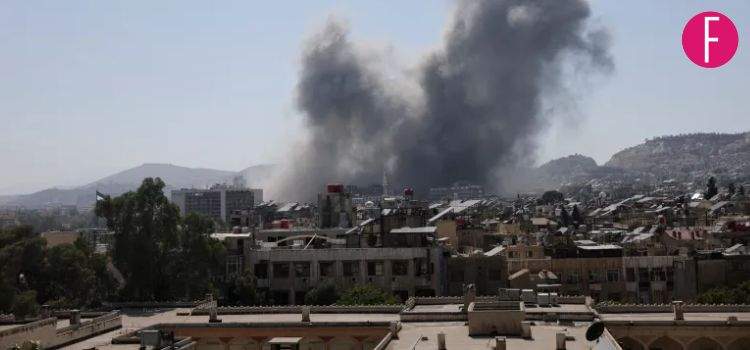
In a major escalation of regional tensions, Israel launched a series of powerful airstrikes on Syria’s capital, Damascus, early Wednesday, targeting the Ministry of Defense and areas near the presidential palace. The strikes reportedly killed at least three people and injured 34 others, according to Syria’s health ministry.
The attacks come amid ongoing clashes in the southern province of Suwayda between Syrian government forces and Druze militias. What began as a local confrontation with armed groups quickly expanded into a wider security crisis, drawing in regional players and prompting strong international reactions.
Who Are the Druze and Why Is Israel Involved?
The Druze are a small, secretive religious community that originally branched out from Ismaili Shia Islam centuries ago, but over time, they’ve formed their own distinct identity – one that doesn’t quite fit into either Sunni or Shia categories. Their beliefs blend Islamic teachings with influences from Greek philosophy, Gnosticism, and even Hinduism. Reincarnation is a key part of their faith, and religious knowledge is restricted to a small group within the community. They don’t accept converts, don’t fast during Ramadan, don’t perform Hajj, and generally don’t follow the traditional Islamic pillars, which is why they’re often mistrusted by both Sunni and Shia Muslims. While they respect religious figures like Ali and Jethro, their practices are kept internal, with much of their theology never shared publicly.
Most Druze live in Syria (especially in Suwayda), Lebanon (mainly in Mount Lebanon), and Israel – particularly in the Galilee and Golan Heights. In Syria, they’ve mostly stayed quiet under Assad’s rule, focusing on self-preservation, but that’s been changing. The economic collapse and rising frustration have pushed many, especially in Suwayda, to protest and push back. In Lebanon, they’re officially recognized and politically active – parties like the Progressive Socialist Party, historically led by the Jumblatt family, represent them.
In Israel, the dynamic is very different. The Druze are one of the only non-Jewish communities that serve in the military (IDF), and many see their service as a point of pride. They’re part of the army, police, and political scene – especially in Druze-majority towns like Daliyat al-Karmel and Isfiya. But in the occupied Golan Heights, things are more complicated. Many Druze there still see themselves as Syrian – some have refused Israeli citizenship, and their loyalty often lies with Damascus. This dual identity becomes especially tense when Israel targets Syria in military operations that harm Druze communities, forcing Golan Druze to reconcile their citizenship with their roots.
Israeli Prime Minister Benjamin Netanyahu urged Israeli Druze not to cross into Syria, despite videos circulating online showing some individuals doing so to support their kin. Israel’s Defense Minister Israel Katz declared that “the painful blows have begun,” confirming that strikes targeted key government and military facilities in Damascus.
A Fractured Ceasefire and a Divided Druze Leadership
The Syrian government announced a ceasefire agreement on Wednesday, pledging a halt to operations and cooperation with Druze leaders to stabilize Suwayda. However, divisions within the Druze community quickly became apparent. While one faction agreed to the truce, another—led by prominent spiritual leader Hikmat al-Hijri—publicly rejected it and called on followers to continue resisting.
With the fragile ceasefire on the verge of collapse, the situation on the ground remains tense. Civilian life in Suwayda has been severely disrupted, with electricity, water, and communication networks either cut off or functioning intermittently.
International Reactions Pour In
The global response to Israel’s strikes has been swift and critical. The United Nations strongly condemned the attacks, with Secretary-General António Guterres calling for a halt to all violations of Syria’s sovereignty and warning against actions that could inflame sectarian tensions further.
The United States, despite historically supporting Israel, expressed concern over the escalation. Secretary of State Marco Rubio stated that the U.S. had engaged all involved parties and was working to de-escalate the conflict. He also characterized the events as a “misunderstanding,” indicating efforts to mediate behind the scenes.
Regional powers also reacted sharply. Turkey condemned the strikes, describing them as deliberate sabotage against Syria’s attempts at rebuilding stability. The United Arab Emirates and the broader Gulf Cooperation Council issued statements denouncing the attacks as violations of Syrian sovereignty and international law.
The Bigger Picture
Israel’s increasing military footprint in Syria is raising alarm across the region. While the Israeli government insists its actions are aimed at preventing extremist threats near its border, many see the strikes as an attempt to assert dominance over a fragmented and transitioning Syria, particularly after the fall of Bashar al-Assad’s regime last December.
With the situation in Suwayda still unresolved and regional tensions mounting, the conflict threatens to evolve into a broader confrontation. As the Druze community finds itself caught between state forces, foreign interventions, and internal divisions, the hope for a peaceful resolution remains distant.
Please note: As this is a developing story, the article will be updated accordingly.
Sources: Al Jazeera, BBC, Reuters

