

There’s something powerful about the way Dr. Fajar and Hamna move through the world of Sher & Naqsh. They lead with purpose, heart, and a quiet defiance that makes you want to root for them, and maybe even become a bit more like them.
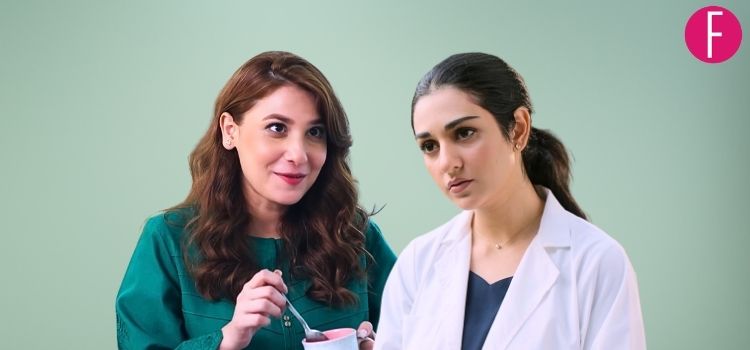
We’ve already flipped the script. From the damsel in distress to the fierce, independent girl who doesn’t just survive but fights back. We’ve seen heroines who carry the weight of everyone around them, who bear the burden, take the hits, and still stand tall. Some even go further, taking revenge, setting things right, rewriting the rules. But there is still so much room to grow. What about the girls who get caught in impossible situations and become their own way out? The ones who do not just resist but lead, who do not wait to be saved because they are too busy saving others. There is space for heroines who are quiet but unshakable, soft but unstoppable. Heroines who surprise us not because they are perfect, but because they rise when it matters. There’s power in that possibility, and we’re just beginning to tap into it.
And when we say there’s still room to grow, we’re seeing signs of it already. Some dramas are giving us heroines who are not just emotional but calculative, not just present but carrying the narrative on their shoulders.
Dr. Fajar and Hamna’s characters from Sher & Naqsh, essayed with dynamism by Sarah Khan and Hina Altaf respectively are certainly changing the way we see our heroines.
1. Dr. Fajar (Played by Sarah Khan) In Sher
Dr. Fajar, played by Sarah Khan, is not your usual drama heroine. Where many would panic, plead, or fall apart, she stays composed, almost unsettlingly so. She doesn’t raise her voice, doesn’t cry for help, and doesn’t rush to expose the villain. Instead, she observes, plans, and moves with intention. When she suspects something is off with Sher’s medication, she doesn’t jump to accusations. She sends his blood tests to an external lab for further testing, knowing her clinic’s results aren’t adding up. Even when reprimanded or undermined by senior doctors, she keeps her cool. What makes Fajar different is not just that she’s brave, it’s that she’s strategic. She knows the stakes, and she has her eyes on the final win, silently gathering proof and setting up safeguards before taking action.
One scene in particular, makes that crystal clear. When confronted by Dr. Rangoonwala, the very man behind the suspicious treatment of Sher, Fajar plays along with remarkable ease. She fakes surprise, offers a polite apology, and lets him believe he’s still in control. But we, as viewers, know better. It’s not a moment of submission, it’s a move in a larger game she’s quietly orchestrating. For once, the heroine isn’t being tricked, she’s pretending to be, just long enough to outsmart everyone else in the room.
What makes her even more refreshing is how emotionally intelligent she is. Fajar knows exactly who’s going to hear her out and who won’t, so she doesn’t waste time proving herself to the wrong people. Instead, she works around them, calmly building a plan that protects Sher without raising suspicion. She manages every small detail – removing harmful medication, controlling what Sher consumes, even preparing him for withdrawal symptoms before they hit. None of it is loud or dramatic, but every move is intentional. Fajar isn’t just “strong” in the way we often label female leads, she’s smart, calculating, and self-assured. Her strength lies not in how loud she fights, but in how cleverly she plays her part. And that, in itself, is a strong step forward in how we write women on screen.
Sher is written by Zanjabeel Asim Shah and directed by Aehsun Talish. The drama stars Danish Taimoor, Sarah Khan, Arjumand Rahim, Sunita Marshall, Nadia Afgan, Yousuf Bashir Qureshi, Faizan Shaikh, Atiqa Odho, and more.
2. Hamna (Played by Hina Altaf) In Naqsh
Hamna, played by Hina Altaf, in Naqsh, is the kind of heroine who doesn’t need to raise her voice to make an impact. She brings calm conviction to every space she enters, whether it’s guiding Rahim toward self-belief or handling difficult family dynamics. She encourages him not just emotionally, but practically, offering to support his ideas and constantly reminding him of his worth and potential. What’s striking is the balance Hamna maintains in their relationship. She listens, lets him speak, gives him space when needed, but still knows when to step in with the right words. Their connection doesn’t feel one-sided or idealised, it’s grounded, supportive, and refreshingly normal. But Hamna isn’t only Rahim’s partner, she’s a force of her own. In a household full of silent power plays and unspoken tensions, she doesn’t go around knocking on doors or shouting truths no one’s ready to hear. Even when she sees through Humayun, when she suspects what’s happening behind closed doors, she doesn’t call him out publicly. Instead, she starts planting questions, slowly shifting perspectives, especially with those closest to him.
Rahim sees Humayun as a role model, a figure who’s always seemed in control. It’s not just love or respect, it’s blind faith built over years of following without questioning. For Rahim, doubting Humayun would mean shaking the only structure he’s trusted all his life. It’s easier to believe in that version of him than to confront the possibility that he could be flawed, or worse, manipulative. And that’s exactly what makes Hamna’s quiet questioning so powerful, because she’s challenging a belief Rahim doesn’t even realize he’s holding onto. Why has Rahim never questioned Humayun’s decisions? Why is his wife the only one going through endless treatments, has anyone ever asked Humayun to get tested? With a calm tone and a sharp mind, Hamna starts pulling threads others are too afraid to touch. Everything she does is intentional, and driven by a quiet refusal to accept things as they are.
Hamna doesn’t use confrontation as a tool. She uses awareness, timing, and emotional sharpness. She knows who to speak to, when to push, and when to pause. Even while her own struggles at work quietly build in the background, she stays focused, present, and entirely in control of her own narrative. She is not waiting for a breakthrough moment, she is already shaping it, one choice at a time.
Naqsh is written by Soofia Khurram and directed by Aabis Raza. It is produced by Tehreem Chaudhary under the banner of Multiverse Entertainment. The cast features Sami Khan, Hina Altaf, Zarrar Khan, and more.
And while we’re celebrating these characters, it would be incomplete not to appreciate the actors bringing them to life. Both Sarah Khan as Dr. Fajar and Hina Altaf as Hamna are doing a remarkable job. It’s refreshing to see actors choosing roles that carry weight, say something meaningful, and reflect a shift in how women are being portrayed on screen.
These characters come with purpose, and it’s heartening to see performers supporting stories that aim to shift female lead perspectives. We hope to see more such fleshed-out female characters, and more performances that continue to move the needle forward.

