

At the UN, Pakistan denounced Israel’s Doha strike, calling it yet another breach of international law. Here’s all you need to know.
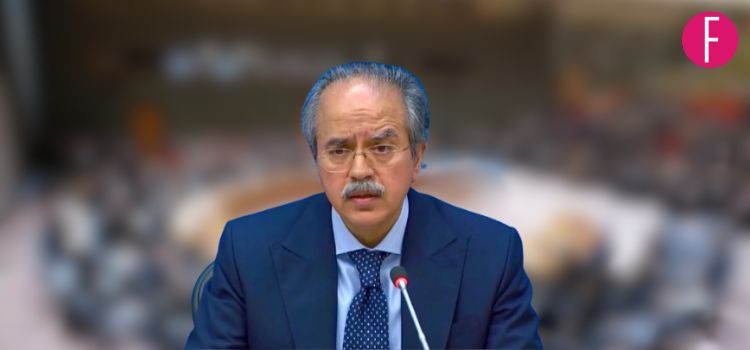
At the emergency session of the United Nations Security Council this week, Pakistan’s ambassador Asim Iftikhar Ahmad delivered one of the strongest rebukes yet to Israel’s actions, questioning whether peace was ever a serious priority for the Netanyahu government.
“It is evident that Israel, the occupying power, is bent on doing everything to undermine and blow up every possibility of peace,”
Ambassador Asim Iftikhar Ahmad declared in New York.
His remarks cut through an already tense meeting, where members were still reeling from Israel’s unprecedented airstrikes on a residential compound in Doha, Qatar – strikes that killed several Hamas figures along with civilians, and sent shockwaves through the Gulf.
Ahmad’s intervention was pointed: if Israel’s leadership is truly committed to securing the release of hostages and ending the Gaza war, he argued, then targeting mediation channels and neutral soil is both reckless and self-defeating. In his words, Israel’s behavior shows “hostages are not a priority” and that “peace is being deliberately sabotaged.”
Israel’s Record of Defying International Law
The Pakistani envoy’s words resonated because they touched on a deeper frustration shared by many states: Israel’s continuous defiance of international norms. From decades of illegal settlement expansion in occupied Palestinian territories to repeated violations of UN resolutions demanding withdrawal and restraint, Israel has built a track record of ignoring global consensus.
At the UNSC, Ahmad underlined the irony of an “aggressor, an occupier, and a serial violator of the UN Charter and international law” using the chamber as a platform to justify fresh violations. His blunt remark reflected the fatigue many nations feel when resolutions are passed, condemnations issued, yet Israel proceeds undeterred – shielded too often by its powerful allies.
This latest strike in Doha is not an isolated incident. It fits into a broader pattern: extrajudicial killings, disproportionate use of force, and military operations conducted in defiance of international humanitarian law. Even Israel’s closest friends, such as the United States, have now found themselves uncomfortable with Netanyahu’s escalating choices.
A Rare Security Council Consensus
The ambassador’s comments landed in a chamber that, unusually, managed to issue a unanimous statement. For the first time in years, the U.S. joined Britain, France, China, Russia, and others in condemning the strikes – though the statement avoided naming Israel directly. Drafted by London and Paris, the text expressed solidarity with Qatar, stressed the need for de-escalation, and reaffirmed the importance of sovereignty and territorial integrity.
That consensus was striking. Washington has historically shielded Israel at the UN, often blocking resolutions critical of its ally. But this time, even the U.S. broke ranks – reflecting President Donald Trump’s own displeasure (though many question the nature his stance). He criticized Netanyahu’s move as a “unilateral strike” that “does not advance Israel or America’s goals,” while still affirming the elimination of Hamas as a “worthy objective.”
Qatar: Mediation Undermined
Qatar, which has hosted Hamas’ political leadership for over a decade and played a central role in indirect negotiations, accused Israel of deliberately derailing peace efforts. Prime Minister Sheikh Mohammed bin Abdulrahman al-Thani, who flew to New York to address the council in person, said:
“Attacking our territories while we were busy with negotiations has uncovered the intention of Israel. It is trying to undermine any prospect of peace. It also shows that extremists that rule Israel today do not care about the hostages.”
The assault killed at least five Hamas members, including the son of chief negotiator Khalil al-Hayya, alongside a Qatari security officer. Doha officials say this was not just an attack on militants, but an attack on Qatar’s role as a mediator – a move that could destabilize the entire architecture of ongoing talks.
Israel’s Defiance and Diplomatic Fallout
Israel’s UN representative Danny Danon defended the operation, declaring there can be “no sanctuary for terrorists, not in Gaza, not in Tehran, not in Doha.” From Israel’s standpoint, the strike sent a message: Hamas leaders are not safe, regardless of geography.
But for diplomats, that defense only confirmed the broader problem: Israel believes it can act above international law, without consequences. Algeria’s ambassador Amar Bendjama voiced the frustration openly, saying the Council was “unable even to name the aggressor or qualify aggression as a violation of international law.”
It is precisely this cycle, violations, muted international response, and further escalation, that countries like Pakistan warn will perpetuate instability.
Sources: Dawn, BBC, Reuters, Al Jazeera, Al Arabiya English, Tribune


Comments 2