

When Paresh Rawal takes on a film about the Taj Mahal, expectations are high, but The Taj Story (released on October 31, 2025) has left audiences divided.
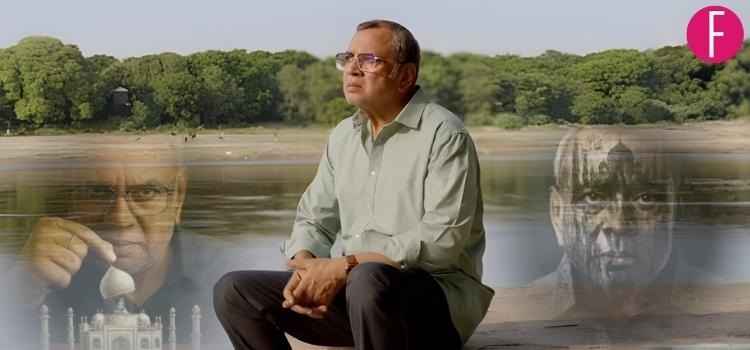
Here’s a detailed breakdown of what this film attempts, what it delivers (and fails to deliver), and why it has generated both controversy and criticism.
What The Film Is About
Directed by Tushar Amrish Goel, the movie attempts to tell a controversial story: that the Taj Mahal was not originally built by Shah Jahan as a mausoleum for Mumtaz Mahal, but rather over a pre-existing Hindu temple. While ambitious in scope, critics and viewers have widely described the film as messy and confusing, struggling to balance history, drama, and ideology.
Paresh Rawal plays Vishnu Das, a tour guide who becomes a petitioner in court challenging the conventional narrative of the Taj Mahal. The movie unfolds as a courtroom drama, with Vishnu Das cross-examining historians, archaeologists, and academics, questioning textbooks and mainstream accounts. The story leans heavily on a controversial theory, often called “Tejo Mahalaya,” claiming that the Taj Mahal was originally a Hindu temple. Mainstream historians and the Archaeological Survey of India have consistently debunked this theory, but the film treats it as a central premise.
The Controversial Elements & Claims
Online reviewers have been quick to point out that the tone and portrayal of characters in The Taj Story are among its most problematic elements. Many have observed that the film paints the Mughals, as well as historians, secularists, and educationists, in an almost villainous light – setting up a stark “us versus them” narrative. According to several critics, this one-dimensional framing turns what could have been a thoughtful historical debate into a loud ideological face-off. At one point, the protagonist even accuses leftist historians of “intellectual terrorism,” and online reviewers have pointed out that the film seems to line up every imaginable punching bag – from Mughals to modern academics to minority groups.
Adding to the storm, online discussions exploded when the teaser poster showed Paresh Rawal lifting the Taj Mahal’s dome to reveal a Shiva idol inside. Many viewers saw it as disrespectful and needlessly provocative. The controversy escalated further when a Public Interest Litigation (PIL) was filed in the Delhi High Court, with petitioners arguing that the movie could stir communal tension and distort India’s cultural heritage.
What Critics And Audiences Are Saying
When it comes to reactions, The Taj Story has left critics and audiences scratching their heads. Many appreciate that the film is bold enough to question a monument as iconic as the Taj Mahal, but almost everyone seems to agree on one thing: while the movie asks big, intriguing questions, it rarely gives satisfying answers. Viewers are left wondering – did Shah Jahan really build the Taj for Mumtaz Mahal? Was there a temple beneath it? And if so, why is there so little evidence? The film teases these ideas but never delivers concrete conclusions, which frustrates audiences who came in hoping for clarity.
A major point of complaint is how the story is told. The plot promises a suspenseful mystery about the Taj Mahal, but it quickly devolves into long, monologue-heavy sequences. Critics and online viewers alike question why the movie spends so much time lecturing and debating instead of actually solving the puzzle it sets up. Many feel the director confused history with ideology, leaving Paresh Rawal’s character making “clever” arguments that rarely land. Some have even described parts of the film as “sleep-inducing,” wondering whether the questions it raises could have been presented in a way that actually keeps the audience engaged.
Tone is another sticking point for viewers. Viewers are asking why the film portrays certain historical figures and scholars as almost cartoonishly villainous. Critics have pointed out that the “us versus them” framing – pitting the hero against Mughals, historians, and secularists – feels forced and polarizing. Audiences are asking why the defenders of mainstream history have to be turned into villains, and whether this oversimplification actually undermines the complexity of the story. On top of that, the way the film frames these debates can feel disrespectful and even triggering for some viewers, especially when it mixes history with ideology. Some say it turns what could have been an interesting debate into an ideological lecture, leaving many to wonder whether the film is really about history at all, or just pushing a particular agenda.
The movie does provoke discussion, forcing audiences to rethink what they thought they knew about the Taj Mahal. But even among these viewers, there’s an unspoken frustration: the film raises fascinating questions but leaves them hanging in the air. In the end, The Taj Story feels like a conversation starter that never really starts the conversation – it asks, it teases, it provokes, but it rarely delivers answers, leaving audiences to fill in the gaps themselves. For many, that’s the real disappointment of The Taj Story.
Where Did This “Hindu Temple” Theory Come From?
The idea that the Taj Mahal was originally a Hindu temple – often called the “Tejo Mahalaya” theory – actually traces back to a 1989 book by P. N. Oak titled Taj Mahal: The True Story. Oak argued that the word “Taj Mahal” is a corruption of “Tejomahalaya,” claiming the structure was built centuries before the Mughals by a Hindu king named Paramardi Dev and dedicated to Lord Shiva. From there, the theory spread via legal petitions, political statements and fringe‑historical writings, despite lacking credible archaeological backing.
The theory gained traction further because it connects to broader debates over heritage and identity. Some political figures have used it to question who “owns” monuments in India or to suggest that Muslim‑era buildings were in fact repurposed Hindu sites. At the same time, official archeology bodies like the Archaeological Survey of India (ASI) have repeatedly stated there is no evidence the Taj was ever a temple and affirmed it was built by Shah Jahan for Mumtaz Mahal.
The Historical Side
To really understand the controversy around The Taj Story, it helps to take a step back and look at what mainstream history actually says. The Taj Mahal is widely accepted to have been built by Shah Jahan between 1632 and 1653 as a mausoleum for his wife, Mumtaz Mahal. That’s the version most historians agree on, backed by extensive records and archaeological evidence.
The claims in the film – that the Taj was built on or is the site of an earlier Shiva temple or Hindu structure – have been repeatedly debunked by historians and experts. Even the so-called “22 sealed rooms,” which the movie uses as a mysterious plot device hinting at hidden secrets beneath the monument, are generally understood by experts to be maintenance or structural spaces, not evidence of any temple.
Online discussions have been vocal, with some commenters calling it “blatant propaganda” and questioning the historical accuracy of the claims. On the other hand, the filmmakers, including Paresh Rawal, have stated that the movie is not meant to create any Hindu-Muslim conflict.
For viewers, that means it’s hard to separate fact from fiction, and the questions the movie raises about history often feel provocative but inconclusive.
Did you watch the movie? Do you think it actually delivers any answers, or does it just leave you with more questions? Comment down to let us know!


Comments 2