

A powerful earthquake struck northern Afghanistan late Monday, causing widespread devastation and loss of life across several provinces.
The tremor, which measured 6.3 on the Richter scale, hit at around 12:59 a.m. local time (00:59 AFT / 20:29 UTC), with its epicentre near the Khulm district, between Balkh and Samangan provinces. The U.S. Geological Survey (USGS) reported the quake’s depth at approximately 28 kilometers, indicating a shallow but destructive event.
Initial reports confirmed at least 20 fatalities and more than 640 injuries, though officials warned that the numbers are likely to rise as rescue efforts continue in remote areas. The quake’s force was felt as far away as Kunduz and Baghlan, where residents fled their homes in panic. The Afghanistan National Disaster Management Authority (ANDMA) said rescue teams are working through the night to reach isolated villages cut off by landslides and debris.
The historic Blue Mosque in Mazar-e-Sharif, one of Afghanistan’s most revered landmarks, suffered structural damage, with fallen masonry and cracked tiles reported. Power outages swept across northern provinces, and key highways were blocked by rockslides, hampering relief convoys. Local hospitals are struggling to cope with the influx of injured people, many suffering from fractures and crush injuries.
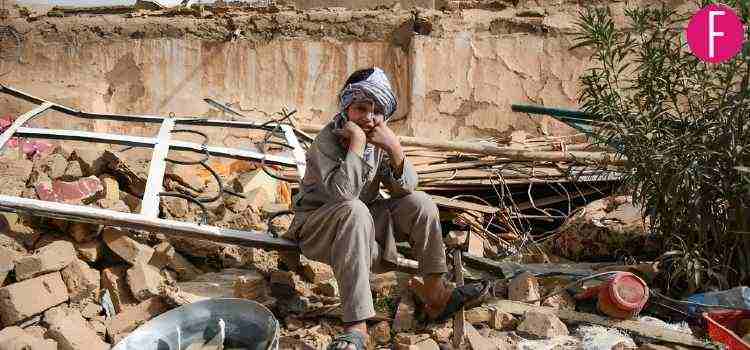
Homes built from mud and unreinforced brick – common in the region – were among the worst affected. In Samangan Province, entire clusters of houses collapsed, leaving families trapped beneath rubble. Emergency shelters are being set up, though freezing nighttime temperatures pose a serious threat to survivors. With winter approaching, officials have warned of an impending humanitarian crisis if immediate aid does not reach the region.
International assistance has begun to arrive. The Iranian Red Crescent Society has expressed solidarity and offered rescue teams and relief supplies. Humanitarian agencies are coordinating efforts to provide emergency medical care, tents, food, and warm clothing.
Seismologists note that Afghanistan sits atop multiple active fault lines, making it highly vulnerable to earthquakes. Monday’s quake is the latest in a series of destructive tremors that have hit the country in recent years, including one in August 2025 that killed more than 2,200 people in the east. Experts caution that aftershocks may continue for several days, posing further risks to unstable buildings.
Authorities are now focused on search and rescue, emergency shelter, and medical assistance, while assessing the full scale of damage. The international community has pledged support, but the immediate priority remains saving lives and preventing further tragedy in one of the world’s most disaster-prone and fragile nations.
This is a developing story.
Sources: Reuters, Al Jazeera, and BBC.

