

Aik Aur Pakeezah is a powerful reflection of the many obstacles women face in Pakistan when they attempt to claim what is legally theirs. At its core, the drama exposes a system where justice is often delayed—or denied—by societal pressure, institutional loopholes, and deeply rooted cultural norms. It also brings a very contemporary issue to the forefront: digital harassment and cybercrime. From doctored videos to online character assassination, the story shows how virtual abuse can spill into real life, destroying reputations and intensifying already difficult battles. Inspired by real-life cases, Aik Aur Pakeezah sheds light on how women are routinely silenced, doubted, and judged—not only by legal systems, but by their own families and society at large. What makes the narrative especially compelling is its genre-blending approach. Rather than being a heavy, one-note social drama, it weaves together elements of crime, emotional drama, and romance, making its message more relatable and deeply human.
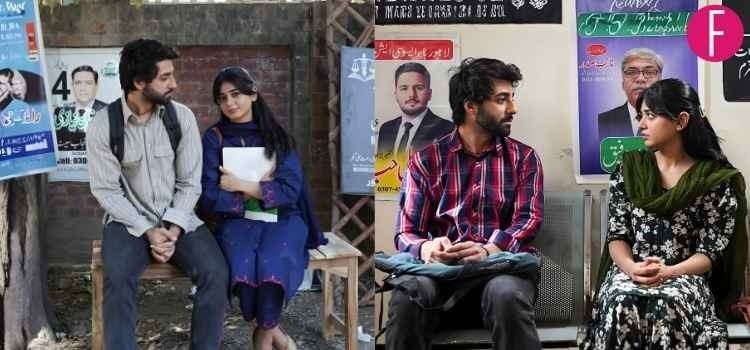
The involvement of Kashf Foundation adds further weight to the project. Known for championing socially conscious storytelling, Kashf has long supported narratives that push conversations around women’s rights, justice, and empowerment. Their dramas go beyond entertainment, often sparking dialogue and challenging entrenched beliefs. Aik Aur Pakeezah appears to continue this legacy, placing dignity, legal awareness, and the high cost of speaking out at the heart of its story. To better understand the vision behind Aik Aur Pakeezah and the issues it seeks to address, we sat down with Roshaneh Zafar—the driving force behind Kashf Foundation—for an in-depth conversation about the drama, its inspiration, and its larger purpose.
Aik Aur Pakeezah shifts the focus from the crime itself to what follows — stigma, silence, and social isolation. Why was it important for you to centre the aftermath rather than the act?
Because for most survivors, the trauma doesn’t end with the incident — it begins there. The real battle is fought in homes, neighbourhoods, and court corridors, where shame, silence, and suspicion surround them. The dominant narratives on television often sensationalize the crime, but rarely address the months and years that follow, when a survivor is negotiating identity, dignity, and belonging. As a society, we are often prone to extreme reactions that are based on blaming the victim, where the focus is on passing judgment on the survivor rather than pinpointing and denouncing the crime and the perpetrator.
Such attitudes have been further amplified by social media, where we play judge, jury, and executioner without context, compassion, or accountability. In this landscape, silence becomes easier than seeking justice. Survivors are pushed into isolation not because of what happened to them, but because of how we choose to react. Aik Aur Pakeezah challenges that reflex by asking us to confront the real question: are we protecting honour, or are we protecting injustice? For Kashf, it was important to centre that aftermath because it reflects reality: women continually encounter secondary harm from the reactions of others. This is where the agency either gets crushed or reclaimed. By showing that journey, rather than the act itself, we wanted to provoke reflection, empathy, and a more honest conversation about justice and healing.
The drama shows how justice is often delayed not just by institutions, but by families and communities. Do you think societal reactions can be more damaging than the crime itself?
Unfortunately, yes — in many cases the societal response becomes the bigger battleground for survivors. Institutions may delay justice, but families and communities often decide whether a survivor is allowed to re-enter life with dignity or condemned to isolation. When the burden of “honour” replaces compassion and protection, women are punished twice: once by the perpetrator and then by those who should have stood with them.
In Kashf’s dramas, we are not presenting a social issue simply because it makes for compelling television, but because we want to explore its complexities, its roots, and its broader consequences. Our aim is to deepen understanding — to unpack how these issues emerge, why they persist, and what it takes to resolve them. By doing so, we hope to move audiences from awareness to reflection, and ultimately toward empathy and solutions. What Aik Aur Pakeezah tries to highlight is that justice is not only a legal process — it is also social and emotional. And until we transform how we speak about survivors, how we protect them, and how we allow them to rebuild their futures, no institutional reform alone can be sufficient.
Forced marriage is portrayed as a “solution” imposed on the survivor. Was the intention to show how honour culture often disguises punishment as protection?
In Aik Aur Pakeezah, the forced marriage is presented as a “what if” scenario — a way to show how a cybercrime can destroy lives in ways that are not visible at first glance. In the eyes of society, both individuals become “damaged goods” for no fault of their own, and the so-called compromise becomes a marriage that neither party independently chose. It’s framed as a resolution, but it is really a consequence of stigma. Without giving too much away, we wanted to interrogate a very prevalent cultural belief: that shaadi kay baad sab theek ho jaey ga.
This attitude is deeply embedded in our honour culture, where marriage is often seen as the balm that can erase harm, restore dignity, or make a scandal disappear. But what Aik Aur Pakeezah shows is that these choices are less about protection and more about optics — preserving family honour at the expense of agency, dignity, and justice. In this way, forced marriage becomes another form of punishment disguised as a solution. It ties back to the broader point that the real battleground for survivors is not only institutional, but also social and emotional. When honour replaces compassion, and when compromises replace justice, survivors are asked to pay for crimes they did not commit. That is exactly the complexity we aim to expose in Kashf’s dramas: issues are not presented for dramatic value alone, but to explore their roots, their consequences, and what it truly means to seek resolution in a society that prioritizes silence over accountability.
By including a male harassment storyline, the drama widens the conversation without diluting women’s experiences. Why was it important to show how gender shapes the way victims are believed — or dismissed?
Including a male harassment storyline widens the conversation without diluting women’s experiences. It was important for us to show how gender shapes not only who is believed or dismissed, but also how society assigns shame and forgiveness. A male survivor often has greater social acceptability — the episode is seen as unfortunate, even embarrassing, but ultimately forgivable. With time, he can move on because society allows him to. In contrast, a female survivor faces a much harsher burden.
The scrutiny turns inward — she must have done something wrong, she must have invited the act, she must now carry the stain. The degrees of shame differ: for women, it is linked to morality and modesty; for men, it is tied to masculinity and the fear of being seen as weakened or less authoritative. By placing these experiences side by side, Aik Aur Pakeezah highlights that the stigma does not operate uniformly. Power, credibility, and honour attach differently to men and women. And importantly, even when men face shame, the path back to normalcy is far more attainable for them than for women. This parallel reinforces a central point in Kashf’s work: that social narratives can be as consequential as the crime itself, determining whether a survivor is allowed reintegration, dignity, and healing, or pushed into silence and isolation.
The show asks viewers to empathise rather than consume trauma as entertainment. How do you balance storytelling with responsibility when dealing with such sensitive subject matter?
That’s always a balancing act. When dealing with sensitive subject matter, there’s a very fine line between sensationalizing trauma for entertainment and presenting it with depth, dignity, and nuance. We were very conscious of that line. The aim was not to shock the audience, but to make them feel — to empathise rather than consume. BeeGul, as the writer, understood this deeply and worked from that premise.
Real life is rarely black and white; it is full of greys, contradictions, and uncomfortable truths. The responsibility lies in honouring that complexity — showing consequences, causality, and context — rather than exploiting suffering for dramatic effect. For Kashf, this responsibility is central. Our storytelling must provoke reflection and empathy, without stripping survivors of agency or reducing them to plot devices. If the audience walks away questioning assumptions, feeling discomfort, or recognising their own role as bystanders, then we have told the story responsibly.
Many viewers may recognise their own homes, reactions, or silences in this story. Are you prepared for the discomfort this drama might create?
Well, truth doesn’t always make you feel comfortable — and we were aware of that. But discomfort can be productive. When viewers recognise their own homes, reactions, or silences on screen, it creates an opening for dialogue, reflection, and sometimes even accountability. Seeing an issue from a relatable perspective forces us to confront what we normally avoid. We’ve experienced this before.
When we produced Udaari, which dealt with child sexual abuse, it made people look at that issue differently. It helped victims stop blaming themselves and it encouraged families to talk about a subject they had kept hidden. The same principle applies here. If a drama only reinforces what people already believe, then it entertains but it doesn’t transform. If it causes discomfort, it can spark conversation — and conversation is often the first step toward change.
Why the name Aik Aur Pakeezah? Who thought of it? Or the philosophy behind it.
That’s a great question. We started with Pakeezah — the word itself means “pure,” and it is also the name of the protagonist. The title plays with that irony: her honour is questioned and her purity is tarnished in the eyes of society, even though she has done nothing wrong. It also reflects how society often struggles to accept a young woman who is confident, smart, and outgoing; there is an unspoken assumption that she must be “taught a lesson.”
Later, Bee Gul suggested that this is not the story of one girl — it’s a cycle, almost a doom loop. For every Pakeezah who faces stigma, blame, and coerced “solutions,” there is always another. That’s where Aik Aur Pakeezah came from. The title acknowledges that this is not an isolated incident but a recurring reality for many young women whose lives are disrupted or destroyed by shame culture, misuse of technology, and honour-based norms.
What conversations do you hope begin inside Pakistani households after watching this drama together?
I hope the drama encourages families to talk about things we usually avoid — blame, honour, silence, and the pressures that shape our reactions to victims. Too often, our instinct is to hush problems rather than address them, especially when they involve young women and technology. If Aik Aur Pakeezah can make parents think twice before shaming their daughters, or make siblings recognise how isolation deepens trauma, then that’s a meaningful start. I also hope it opens conversations about accountability — not just legal accountability, but social accountability.
Today, so much harm happens through digital spaces: forwarding a picture, sharing a clip, or making something viral without thinking. Social media gives ordinary people extraordinary power, and with that comes responsibility. We need to ask what role we play as individuals — are we amplifying harm or challenging it? And importantly, the responsibility does not fall on girls and women alone. We need to educate boys and men about the ethical and respectful use of technology, about consent, privacy, and the consequences of weaponising digital spaces. If families can begin to see digital behaviour as part of moral behaviour, then we are already shifting norms. Above all, I hope viewers start recognising that empathy is not weakness. It is the first step toward justice, healing, and change. If a drama can make people reflect rather than judge, question rather than dismiss, and support rather than silence — both offline and online — then it has done its job.
Will we hear another ghazal from Faiz Ahmed Faiz, or a few quotes as Kashf often weaves poetry into the project?
Yes, absolutely. Kashf has always woven poetry into its projects because saying something through music and verse carries its own emotional resonance. It allows an audience to feel a truth rather than just hear it. And who can articulate those truths better than Faiz Ahmed Faiz? His poetry gives language to pain, dignity, resistance, and hope — all themes that sit at the heart of Aik Aur Pakeezah. For us, poetry isn’t decorative; it’s another layer of storytelling. It connects the personal to the political, the immediate to the universal. So yes, viewers can expect to encounter Faiz again.
Penned by Bee Gul and directed by Kashif Nisar, the drama features Sehar Khan in the titular role, with Nameer Khan, Amna Ilyas, Gohar Rasheed, Hina Bayat, Nadia Afgan, and Noor Ul Hassan in key roles.


Comments 1