

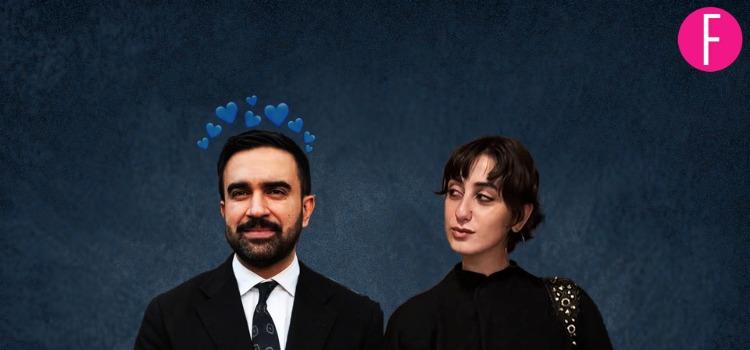
Ever since Zohran Mamdani’s historic 2025 victory as New York City’s mayor, the spotlight has naturally shifted to the woman standing beside him — artist Rama Duwaji. But instead of fitting neatly into the traditional “politician’s wife” box, Duwaji has sparked something far bigger. Fans, fashion critics and media outlets alike have begun calling her the “Gen Z Princess Diana” — and the comparison isn’t as random as it sounds.
Fashion That Speaks Without Shouting
Much like Princess Diana before her, Duwaji understands the quiet power of clothing. At Mamdani’s victory speech, she wore a custom denim top by Palestinian-Jordanian designer Zeid Hijazi, adorned with traditional tatreez embroidery. The look was widely read as an intentional act of solidarity and cultural pride — a reminder that fashion can be political without being loud. Think Diana’s legendary “revenge dress,” but reimagined for a generation fluent in symbolism and subtext.
The Haircut That Launched a Thousand Moodboards
Then there’s the hair. Duwaji’s signature “bixie” — a pixie-bob hybrid — became one of late 2025’s most requested cuts. Style insiders were quick to note that the last time this exact silhouette dominated pop culture was when Princess Diana made it iconic in the ’90s. Coincidence? Maybe. Cultural echo? Absolutely.
A People’s First Lady Energy
Those close to Duwaji — including voices quoted in The New York Times — describe her as a modern-day Diana not because of glamour, but because of her humanity. Her artwork consistently centers social justice, humanitarian crises and marginalized communities, from Gaza to Sudan. Despite her proximity to power, she remains notably media-shy, choosing to let her work speak rather than chasing the spotlight — a trait that mirrors Diana’s early “Shy Di” image.
And perhaps most importantly, she feels relatable. As NYC’s first Gen Z First Lady, Duwaji brings what many are calling an “uncolonized cool” to the role: boxy silhouettes, small independent brands, DIY charm (yes, she reportedly cut her own bangs on Election Day), and zero interest in outdated political spouse aesthetics.
Redefining the Role, One Choice at a Time
Political partners are often expected to be neutral, polished and quietly supportive. Duwaji isn’t interested in playing passive. She continues to exist as a working artist and outspoken activist, reshaping what it means to stand beside power without being absorbed by it. In doing so, she echoes the way Princess Diana once disrupted the rigid expectations of the British monarchy — not by rebelling loudly, but by being unapologetically herself.
Whether the nickname sticks or not, one thing is clear: Rama Duwaji isn’t trying to be anyone’s princess. She’s carving out a new blueprint altogether — and a generation is watching closely.


Comments 2