

Early on February 28, 2026, the United States and Israel launched a joint military strike on Iran, hitting multiple sites across Tehran and other cities. President Donald Trump called it “major combat operations”, saying the aim was to neutralize Iran’s missiles and nuclear capabilities. Explosions shook the capital, smoke filled the skyline, and Iran immediately restricted mobile networks and closed its airspace. Read on.
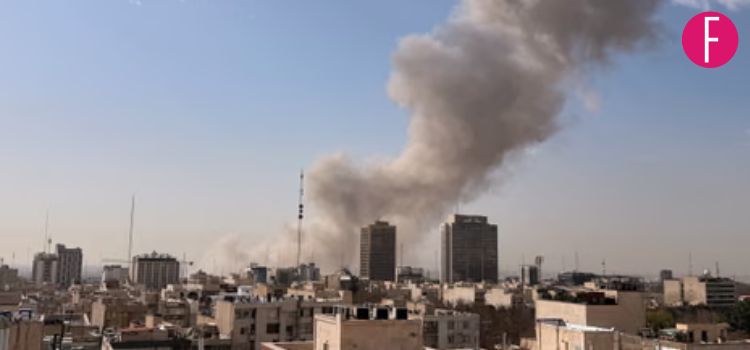
Image Credits: The Guardian
The US claims the strikes were necessary to stop “imminent threats” from the Iranian regime, targeting ballistic missile programs and military infrastructure. Israel described the operation as pre‑emptive, aiming to remove what Prime Minister Benjamin Netanyahu called an “existential threat” and encouraging Iranians to take control of their country’s future. Explosions were reported not only in Tehran but also in Qom, Isfahan, Kermanshah, Karaj, and other cities, hitting government offices, military bases, and nuclear facilities.
Iran Strikes Back
Iran responded quickly. The Islamic Revolutionary Guard Corps (IRGC) confirmed it had launched missiles and drones at Israel. They warned that all US and Israeli military assets in the region are now legitimate targets. Northern Israel reported explosions as air defenses worked to intercept Iranian missiles. While there were no immediate reports of Israeli casualties, the country remains on high alert.
Iran also targeted US military bases in the Gulf, including the 5th Fleet’s headquarters in Bahrain, where smoke was visible, and issued missile alerts in Qatar, Kuwait, and the UAE. Some missiles were intercepted, some airspaces were closed, and residents were warned to shelter in place. This marks a significant escalation, spreading the conflict beyond Iran itself.
Regional Impact
Airspace across Iran, Israel, Iraq, and the Gulf states has been closed, forcing flight cancellations. Countries have issued emergency advisories for civilians to seek shelter.Tehran called the US‑Israeli attacks a violation of international law and promised a “crushing response” to any further aggression.
This is one of the most significant military escalations against Iran since last year’s 12‑day conflict, when Iran fired missiles at US bases after Israeli strikes. The situation remains fluid, with missiles crossing borders, air defenses scrambled, and civilians under alert in multiple countries. Analysts warn that this could spiral into a broader regional confrontation.
This is a developing story and will be updated accordingly.
Sources: Al Jazeera, BBC, TRT World

