

Spend five minutes inside a typical government school in Pakistan and you’ll understand why hope often feels fragile.
Now spend five minutes inside a school adopted by Zindagi Trust, and something feels unmistakably different.
The corridors are alive. Classrooms are alert. Walls don’t just carry charts; they carry ambition. And most strikingly, the children are happy.
So what makes these children different?
The answer is simple: they have real reasons to come to school.
A Morning That Begins With Dignity
For many children across Pakistan, school begins on an empty stomach. Here, the day begins with a nutritious breakfast. A nourished child is attentive. An attentive child participates. Participation builds confidence.
When basic needs are met, learning stops being a struggle for survival and becomes an opportunity for growth. That shift alone changes the emotional temperature of a classroom.
Structured Play, Strategic Thinking, and the Joy of Competing
Step into the playground and you will find structured sports programmes, while in another classroom students may be deeply engaged in competitive mind sports such as chess and other strategic games. These activities are not decorative additions to the timetable; they are intentionally designed pedagogical tools. Through participation in physical sports and mind sports alike, students develop discipline, teamwork, emotional resilience, tactical and strategic thinking, and the ability to respond with grace to both success and failure.
Learning for Life — Not Just for Exams
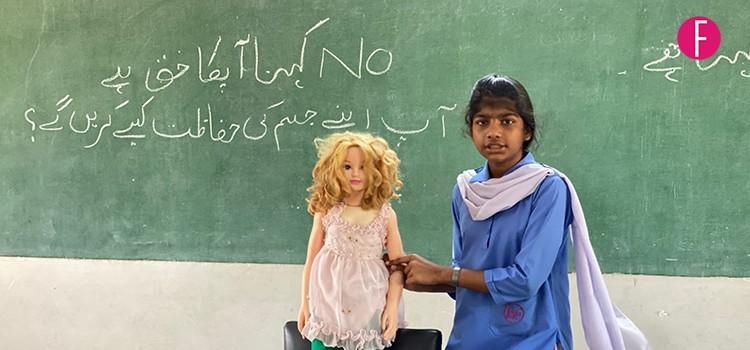
A defining feature of these schools is LSBE (Life Skills Based Education).
LSBE is not an extra subject, it is a structured, age-appropriate curriculum embedded within the school system to equip children with the knowledge and skills to protect themselves, understand their rights, and make informed decisions. It focuses on personal safety, emotional awareness, respectful relationships, consent, problem-solving, and responsible citizenship.
Through guided discussions, real-life scenarios, and reflective activities, students learn how to:
Think critically
Communicate confidently
Recognize unsafe situations
Resolve conflicts constructively
Navigate real-life challenges with awareness
In a society where many children are never taught how to articulate discomfort, identify inappropriate behavior, or seek help, LSBE becomes more than education, it becomes protection.
Because education that prepares children only for exams leaves them unprepared for life.
When children feel safe, aware, and capable of handling the world beyond the classroom, happiness becomes a natural byproduct.
Creativity Is Treated as Essential, Not Optional
Art studios. Music programs. Structured creative expression across grades.
In many under-resourced schools, creative subjects are the first to disappear. At Zindagi Trust adopted schools, they are foundational.
Creativity gives children ownership of their voice. It builds imagination, empathy, and self-worth. It teaches them that their ideas matter.
Teachers Who Never Stop Learning
No school system can rise above the quality of its teachers.
Zindagi Trust understands that reform does not begin with buildings. It begins with educators.
That is where Durbeen plays a critical role.
Through Government Elementary College of Education (GECE), managed by Durbeen, aspiring teachers complete a rigorous four-year degree program designed to equip them with modern pedagogical knowledge, classroom management skills, and an understanding of child psychology.
Graduates from this program go on to teach in Zindagi Trust adopted government schools, creating a powerful cycle:
Train educators deeply → Place them strategically → Sustain reform structurally.
It’s a long-term model built on one belief: quality education cannot exist without qualified teachers.
Why Adopt Government Schools Instead of Building New Ones?
This may be the boldest part of the story.
It would have been easier to build a private school from scratch. New branding. Controlled environment. Clean narrative.
But Zindagi Trust chose to adopt and reform existing government schools.
The goal was to prove that if governance is strengthened, infrastructure improved, teachers trained, and systems made accountable, government schools can deliver uncompromised quality.
The intention is systemic change.
Not islands of excellence.
But an improved standard.
So that one day, no parent hesitates before sending their child to a government school.
What Happiness Really Means
The happiness you see in these classrooms is not accidental. It is the result of children being treated not as beneficiaries, but as individuals with potential. And perhaps that is why the atmosphere feels different. These children are not waiting to be rescued. They are preparing to lead.
A Quiet Reflection This Ramadan
Ramadan asks us to reflect not only on generosity, but on impact.
When one government school improves, thousands of children benefit, year after year. When trained teachers enter public classrooms, the ripple effect lasts generations.
And maybe that is what sustainable charity looks like today.
If the sight of confident, happy children in public schools feels like the future Pakistan deserves, then perhaps the most meaningful way to be part of that future is to help sustain it.
Because sometimes, the most powerful act of giving is not a relief. It is reform.


Comments 1