

The assassination of Iran’s Supreme Leader, Ayatollah Ali Khamenei marks a turning point not just for Tehran, but for the wider region. What happens next will shape Iran’s internal power balance, test the resilience of its institutions, and potentially redraw the strategic landscape of the Gulf.
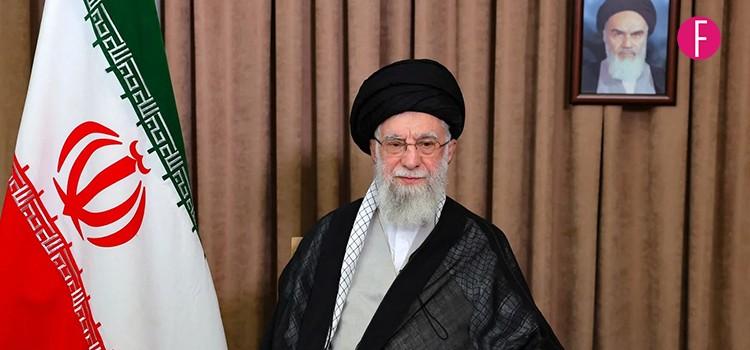
Iran’s Supreme Leader, Ali Khamenei, was assassinated in a joint air strike carried out by Israel and the United States. Iranian state television confirmed his death early Sunday, hours after former US President Donald Trump publicly stated that Khamenei had been targeted and killed in a coordinated attack on his residential compound.
Khamenei assumed Iran’s highest office in 1989 after the death of Ruhollah Khomeini, the revolutionary cleric who led the 1979 Islamic Revolution and toppled the Pahlavi monarchy. While Khomeini served as the spiritual and ideological architect of the revolution, it was Khamenei who spent decades consolidating and institutionalising the Islamic Republic’s power structure.
Long before becoming Supreme Leader, Khamenei was deeply embedded in Iran’s political and military landscape. He briefly served as defence minister in 1980 and later oversaw the Islamic Revolutionary Guard Corps after the outbreak of the Iran-Iraq War. Known for his fiery speeches, he also became Tehran’s influential Friday prayer leader — a role that strengthened both his religious and political standing.
The year 1981 marked a dramatic chapter in his life. Khamenei survived an assassination attempt carried out by the Mojahedin-e Khalq (MEK), an opposition group that had taken up arms against the newly formed Islamic government. The explosion left him permanently unable to use his right arm. Later that same year, he was elected president, becoming the Islamic Republic’s first cleric to hold the office.
As president during the brutal eight-year war with Iraq, Khamenei witnessed firsthand the devastation of prolonged conflict. The war claimed over a million lives and left Iran’s economy shattered. Many Iranians felt abandoned by the international community, particularly after Iraq’s use of chemical weapons drew limited global response. Khamenei frequently visited soldiers on the front lines, strengthening his ties with the Revolutionary Guards and reinforcing his reputation as a wartime leader.
When Khomeini died in 1989 — after sidelining his once-designated successor Hossein Ali Montazeri over disagreements about the mass executions of political prisoners in 1988 — Khamenei rose to become Supreme Leader. His early years in the role focused on rebuilding a war-ravaged nation while tightening the political and security framework of the Islamic Republic.
Under his leadership, the Islamic Revolutionary Guard Corps evolved far beyond its original paramilitary roots. It grew into a dominant force across Iran’s military, political and economic spheres, becoming central to Tehran’s regional influence. Khamenei championed what he called a “resistance economy,” promoting self-sufficiency to counter Western sanctions and reduce reliance on foreign powers.
Deeply distrustful of the United States and Western governments — a scepticism shaped by the Iran-Iraq War and decades of sanctions — Khamenei maintained a firm stance against Western pressure. Yet observers often described him as pragmatic: willing to negotiate when strategically necessary, but unwavering in preserving the ideological core of the revolution. He resisted calls for sweeping domestic reform, arguing that security and defence remained paramount in the face of external threats.
As Supreme Leader, Khamenei held ultimate authority over Iran’s armed forces, foreign policy and the direction of the Islamic Revolution itself. Beyond politics, he also held the religious status of Marja-e-Taqlid — a senior clerical authority whose rulings guided shia followers within and beyond Iran.
Power in Iran Was Never Meant to Be Personal
It is tempting to view Iran’s political system through the lens of one dominant figure. But structurally, the Islamic Republic was never designed to rise or fall with a single man. Its durability lies in layered authority — clerical institutions, security forces, bureaucratic networks, and an ideological spine rooted in Velayat-e Faqih, the doctrine that places ultimate political guardianship in the hands of a senior jurist.
The constitution reflects this logic of continuity. Under Article 111, the death or incapacitation of a Supreme Leader does not trigger institutional chaos. Authority shifts immediately to a temporary leadership arrangement composed of the president, the head of the judiciary, and a senior cleric selected through the Expediency Council. The emphasis is clear: preserve order first, decide succession second.
What stands out is not just the mechanism, but the flexibility embedded within it. There is no countdown clock forcing a rushed decision. The interim leadership can govern for as long as circumstances require — particularly during conflict. What might appear externally as paralysis can, internally, be a calculated pause to prevent fragmentation.
Succession in Iran is formally a vote by the Assembly of Experts. In practice, it is a filtration process. Names are tested quietly, loyalties weighed, risks assessed. The Islamic Revolutionary Guard Corps does not cast ballots, but it shapes the political climate in which those ballots are cast. Its priority is institutional continuity — defense capability, internal cohesion, and preservation of the system that secures both ideological and economic interests. Candidates perceived as destabilizing rarely survive this invisible vetting.
Religious legitimacy adds another layer. Authority in Iran is not merely political power; it must resonate through clerical networks, particularly in Qom. A successor lacking theological credibility would struggle to command even passive acceptance from senior scholars. The position demands not just governance, but symbolic weight.
Interestingly, the real test begins after a successor is chosen. Establishing authority quickly is essential — domestically to prevent uncertainty, internationally to signal continuity. In revolutionary systems shaped by decades of pressure, legitimacy is demonstrated through action, not ceremony.
Observers often anticipate instability during leadership transitions. Yet Iran’s post-1979 architecture was built with shock absorption in mind. Competing factions may maneuver, but they generally share one overriding interest: preventing systemic collapse. The preservation of the Islamic Republic outweighs individual ambition.
This principle echoes a sentiment long associated with Ruhollah Khomeini, who argued that safeguarding the Islamic Republic holds greater importance than preserving any individual.
In accordance with Article 111 of the constitution, Iranian authorities have activated a temporary three-member leadership council to assume the Supreme Leader’s responsibilities until a permanent successor is selected. This mechanism exists precisely for moments like this — to prevent a power vacuum and ensure continuity.
The interim council now consists of President Masoud Pezeshkian, Judiciary Chief Gholam-Hossein Mohseni-Ejei, and senior cleric Alireza Arafi, who is also a member of the Guardian Council. Together, they are tasked with managing state affairs while the Assembly of Experts deliberates over a successor.
The Assembly must choose the next leader from among qualified senior Shia clerics, but no clear consensus figure has yet emerged. Several prominent names are circulating in Tehran’s political circles. These include Sadeq Larijani, a former judiciary head long considered close to Khamenei; Alireza Arafi, who oversees Iran’s religious seminaries; Mohsen Araki, a veteran member of the Assembly; Mohsen Qomi, an adviser within the Supreme Leader’s office; and Hassan Khomeini, grandson of the Islamic Republic’s founder. Among these, Arafi is reportedly viewed by some insiders as a strong contender to step into the role.
Meanwhile, the United States, under President Donald Trump, has framed the assassination as both retribution and a potential turning point for Iran’s political future, describing it as an opportunity for Iranians to reclaim their country.
The Revolutionary Guard (IRGC) and the Iranian Cabinet have vowed a “crushing response,” immediately launching waves of missiles and drones toward Israel and U.S. assets in the region.
Whats Next
The assassination of Ali Khamenei on February 28, 2026, has fundamentally rewritten the geopolitical rules of the Gulf, transitioning the region from a state of “shadow war” to an open, high-intensity conflict. By declaring war on all U.S. assets and those of countries hosting them, Tehran has effectively dissolved the traditional “neutrality” that many Gulf states attempted to maintain. Countries like Qatar, the UAE, and Bahrain, which host significant American military installations, now find themselves on the front lines, with their airports, ports, and energy infrastructure becoming primary targets for Iranian missile and drone wings.
The most critical flashpoint in this escalation is the Strait of Hormuz, where the IRGC has already initiated a de facto blockade. As a chokepoint for 20% of the world’s oil and a significant portion of its liquefied natural gas, even the threat of sustained closure has sent global energy markets into a tailspin, with Brent crude prices surging and insurance premiums for maritime shipping reaching prohibitive levels. This “economic warfare” is a deliberate strategy by the Iranian regime to internationalize the crisis, betting that the resulting global inflationary shock will force Western powers to reconsider their support for the current military campaign.
Furthermore, the “Axis of Resistance”—comprising groups like Hezbollah, the Houthis, and various Iraqi militias—has been fully activated to conduct a coordinated war of attrition. Unlike previous cycles of violence where these proxies acted with a degree of restraint, they are now operating under a “total retaliation” mandate, targeting U.S. naval assets and commercial shipping in both the Red Sea and the Mediterranean. This multi-front pressure is designed to exhaust U.S. and Israeli defensive resources while creating a chaotic security environment that makes a managed “regime change” nearly impossible to execute.
Domestically, the Iranian state is navigating a precarious balance between administrative collapse and intense militarization. While the establishment of a provisional Leadership Council aims to prevent total dissolution, the IRGC has tightened its grip on the country’s remaining strategic assets. For the Gulf monarchies, the fear is no longer just a regional war, but the prospect of a “Scorched Earth” finale, where a cornered Iranian leadership might attempt to permanently disable the region’s oil-producing capacity as a final act of defiance.
Sources: Dawn, Foreign Policy, Al Jazeera


Comments 1