

In Pakistan, being a doctor doesn’t just shape a career — it often shapes marriage prospects too. Doctor Bahu taps into this familiar yet rarely questioned reality, where a woman’s years of hard work are reduced to a badge of honor for the family she marries into. The drama highlights how medical degrees, instead of empowering women, can sometimes become tools of validation within marriage. It also reflects a deeper, more troubling mindset — that a woman’s worth is often measured by titles like “doctor,” rather than who she is beyond them.
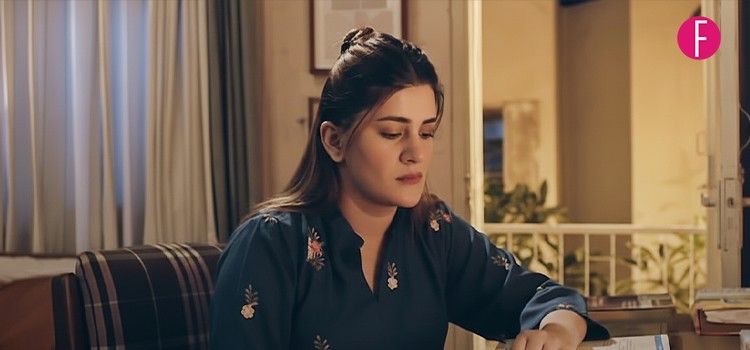
At the same time, the narrative smartly weaves in themes of everyday sexism and layered family politics, showing how these dynamics quietly reinforce such expectations and pressures.
After watching the first two episodes, we couldn’t help but reflect on a few things — here are seven that stood out.
1.For starters, Phupho was such a refreshing change from the usual portrayals we see in Pakistani dramas. Instead of the stereotypical meddling or toxic figure, she came across as warm, grounded, and genuinely invested in the well-being of the entire family. It was nice to see a character like that—someone who holds the household together rather than creating friction.
2.The conversations around Kubra’s character were also quite striking. Dr. Farheen’s assertion that she isn’t someone who will easily bow down sets the tone for a strong, self-assured female lead. Paired with Hajra Yamin’s line about how women themselves often condition other women into subservience, it adds an important layer of commentary on internalized patriarchy—something we don’t always see explored this directly.
3.At the same time, the show subtly highlights everyday sexism, especially through male characters who, despite being educated, still carry regressive expectations. Moments like Shahnawaz blaming a woman for not checking the laundry or Adeel Hussain’s character asking his equally tired wife to make coffee feel very real. It reflects how deeply ingrained these dynamics are, even among men who are otherwise portrayed as progressive.
4.Another theme that comes through quite clearly is society’s obsession with professions—particularly the idea that being a doctor is the ultimate measure of worth. The pressure and judgment surrounding this are depicted in a way that feels both familiar and uncomfortable, especially in a Pakistani context.
5.Shuja’s character also seems promising so far, and I like how Kubra Khan’s character has been shaped—confident and assertive, but not rude or disrespectful. It’s a balanced portrayal that avoids the usual extremes.
Overall, the pacing of the first two episodes worked really well. The narrative felt engaging without dragging, and it definitely leaves you curious about what’s coming next.
6. Sania’s mother calling her to make it home for her rishta although she was battling a medical emergency at the hospital, literally saving lives, showed how shaadi above all else, despite parents encouraging their daughters to obtain a professional degree, is still a battle we fight within our mindsets – educating our daughters on the one hand, but prioritising their shaadi on the other.
7. The car salesman telling Sania that only a man is allowed to test drive was another moment that revealed gender bias and misogyny in our society, and how the mindset runs across all classes, from Salman’s household to public workplaces – it supersedes education or social strata with everyone viewing women as lesser competent individuals of our society.
Doctor Bahu is written by Sanam Mehdi Zaryab and directed by Mehreen Jabbar. It is produced by Six Sigma Productions, and airs on ARY DIgital. It stars Kubra Khan, Shuja Asad, Saba Hamid, Hajra Yamin, Adeel Hussain, Shahzad Nawaz, Mohammed Ahmed, Marina Khan and more.


Comments 1