

Lebanese journalist Amal Khalil was killed on April 22, 2026, during Israeli airstrikes in southern Lebanon, in one of the most serious incidents involving media workers in the ongoing conflict.
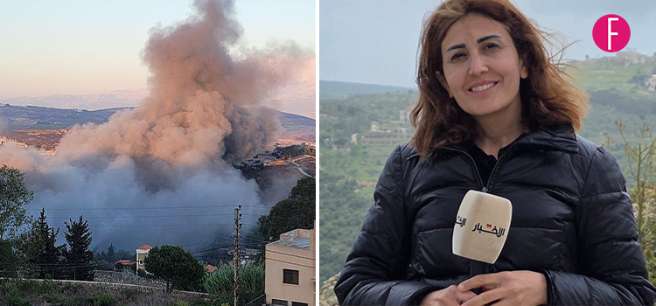
Khalil was reporting from the village of al-Tiri, close to the Israeli border, where Israeli strikes had hit earlier in the day. She was at the scene with photographer Zeinab Faraj, documenting the damage and speaking to local residents. According to reports, an initial Israeli strike targeted a vehicle nearby, killing at least two people. As the situation escalated, Khalil and Faraj rushed to take shelter inside a nearby house. Shortly afterwards, a second airstrike hit the same building where they had taken refuge.
The strike caused the structure to collapse, trapping both journalists under the rubble. Khalil was killed instantly, while Faraj was seriously injured and later rescued. Emergency teams faced major difficulties reaching the site due to continued shelling and security risks, delaying recovery efforts. The Israel Defense Forces (IDF) said the strikes were aimed at Hezbollah-related targets and denied deliberately targeting journalists.
Casualties And Immediate Impact
Khalil was among at least four people killed in Israeli strikes across southern Lebanon that day, according to multiple reports. Several others were injured, including civilians and media workers.
Her death has drawn strong reactions from international press organizations, including the International Federation of Journalists (IFJ), which condemned the attack and called for an independent investigation.
Media watchdogs have warned that the number of journalists killed in Lebanon has been rising since the latest escalation of the ongoing conflict, highlighting the increasing risks faced by reporters working near active combat zones.
Strikes After Trump-announced Ceasefire
The killing has drawn even greater attention because it occurred just days after a ceasefire was announced.
On April 16, Donald Trump announced a 10-day ceasefire between Israel and Lebanon, aimed at halting hostilities and creating space for peace negotiations. Under the agreement, both sides were expected to stop offensive military operations, although Israel retained the right to act in self-defence.
However, the truce has remained fragile from the beginning. Reports indicate that violations occurred almost immediately after it came into effect, including continued shelling and strikes in southern Lebanon. The airstrikes that killed Amal Khalil took place within this ceasefire period, making them part of what critics describe as ongoing breaches of the agreement. The day of the attack was reported as one of the deadliest since the ceasefire began.
Lebanese officials and international observers have accused Israel of repeatedly violating the ceasefire, while Israel maintains that its actions are defensive responses to threats from Hezbollah.
Who Was Amal Khalil?
Amal Khalil was an experienced Lebanese journalist who worked for the newspaper Al-Akhbar. She had been part of the publication since 2006 and was widely respected for her field reporting. Over nearly two decades, Khalil built a reputation for covering events in southern Lebanon, particularly Israeli military operations and their impact on local communities. Her reporting often focused on the human cost of war – destroyed homes, displaced families, and civilian casualties.
Colleagues described her as a dedicated and courageous journalist who frequently worked on the frontlines, determined to document events as they unfolded despite the risks. Khalil was actively reporting at the time of her death, continuing her long-standing work of documenting the realities of conflict in southern Lebanon. Her reporting gave voice to civilians living under constant threat and provided on-the-ground insight into the effects of military operations.
Her death has been widely described as a major loss to Lebanese journalism. Press freedom groups say it underscores the urgent need for greater protection of journalists in war zones. The Committee to Protect Journalists (CPJ) and other organizations have stressed that journalists are civilians under international law and must not be targeted.
Although a ceasefire was announced, continued strikes, counterattacks, and mutual accusations of violations have kept the situation unstable.
This is a developing news.
Sources: Al Jazeera, BBC, and IFJ.

