

“We cannot fill in ALL the colours of life for you…” Subuk to Zeba. And we felt a tear roll down our cheek… It’s not that Kafeel is perfect, say audiences, but this conversation hit hard, beautiful and right at the heart of the second marriage debate for mothers like Zeba.
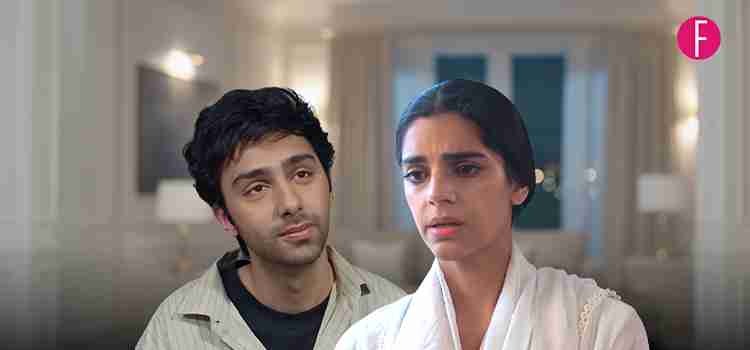
Her children are too young, now it is time for her to marry off her girls, how will the children adjust to a new father, she has daughters, thank Goodness she has a son, and a responsible one, he will take care of her, she’s finally found her freedom, now she can live peacefully and look forward to her grandchildren… the thoughts are endless. All of them might commiserate with the woman who has had the courage to walk out of a marriage that didn’t work out, but all of them strangely dismiss the fact that maybe, perhaps maybe, she might find happiness again? That one bad experience does not mean she should never happiness a second chance, if she wants to, that marriage is a beautful relationship and if she meets someone sincere, caring, understanding, compatible, as Subuk put it, and she feels she can laugh again with him, then… why not?
Subuk’s conversation with Zeba deftly addressed all her concerns, fears and also, yes, prejudices about ever wanting to settle down with another man. And the fact that it was her son taking the lead, made it all the more poignant. Here’s 5 takeaways that will hopefully shift perspectives on single mothers who might just have a second chance at love.
Why not, says Subuk? Why not says Usman, Sumera and Jami as well. And while Kafeel might have caught every tone, expression and nuance in every conversation, this one certanly hit the right notes. It also seems to dawn upon us that it is not really Zeba who is the heroine of her story – but rather, Zeba represents all those women who give in to society, parental pressure, internalizing their own fears and taking on the judgement society lays upon them with a staunch belief that it is perhaps the right mindset, the only mindset, and the only way to live one’s life…
Right? Wrong, says Subuk and many like him whose voices are growing stronger every day thankfully! Here’s what Subuk explained to her in ways that Aashir Wajahat delivered with pitch perfect expression:
1. For the Sake of a Happy Childhood
When Zeba protested that she doesn’t want to snatch her daughters’ childhood from them, he made her realize that children like them, raised in unhappy, volatile relationships, never had a childhood. They grew up too fast, too soon. So the childhood she thinks she’s saving is already over before it began. Hence, for Zeba to deny herself a chance at love and happiness, for the sake of her children’s childhood? The argument doesn’t stand.
2. Children Cannot Fill Every Gap in their Parent’s Life
While Zeba’s children are there for her, they are not necessarily enough. Although they share in her happiness, always supporting her, standing with her, they cannot fill in every colour of her life. The moment Subuk shared this thought, was a moment of realization for Zeba, so steeped in denial was she, that she refused to address she was more than a mother – she was in fact, a woman who needed to acknowledge that her life didn’t have to be over just because she walked through one bad relationship. Subuk reminding her that that’s not the person he sees before him – someone who should only live for her children, hopefully made her see a different Zeba, or at least try to figure out when and where she had lost her.
3. Her Children Will Always Stand By Her
Subuk had to navigate this one sensitively. When Zeba told him she can look after herself and doesn’t need him, feeling she might be a burden on him, which is why he’s suggesting marriage for her, it was an uphill battle for Subuk. No parent wants to feel they are dependent on their children, or they are preventing them from living life to the fullest. And a child like Subuk? He has to tread carefully when advocating a new relationship for his mother, the same mother who is emotionally and also partly financially dependent on him at the time – this is not a call to shift responsibility, but a genuine desire to see his mother live a fulfilling life in every sense of the word.
4. Islam Awards the Right of Marriage to a Woman at Every Stage in Life
There is no disrespect in talking about her marriage to people who mean well for her. Our religion makes our life easy, not difficult. The fact that a single mother’s marriage is a taboo conversation is exactly what society has made us believe. The argument addresses her age, her daughters, the fact that she is a mother in-law now, that people will gossip – life should be lived by what is right and not by how poeple want you to live it. And your religion grants you that right every step of the way.
5. Divine Intervention?
Meeting Jami at the right moment in life is perhaps divine intervention? When life didn’t allow them to meet earlier, here’s another chance and this time, the decision should be her’s. While we waited for the most divine of divine interventions throughout Zeba’s miserable marriage with Jami, and the narrative kept going – because, well, there are many Zeba’s in this world, who never call it quits from a Jami, Kafeel has finally given us the moment we desperately anticipated – the return of our fleeting hero, Jamal. But will Subuk’s words resonate with Zeba? Is this not just him and Sumera and Usman and of course, Jami, forcibly arranging a marriage, or rather, is there a deeper message there from the heavens, in the timing and the person who meets her just when she can turn to life finally, once more?
And while we understand Zeba’s apprehension, her fear of not wanting to enter another relationship after just walking out of a painful one, one hopes this one will be the healing that Zeba needs. Subuk isn’t the only one waiting for Zeba to say yes. So are Kafeel fans. Drop us a comment below to tell us what you think.

